 English
 简体中文
简体中文Zhejiang Bangchi Auto Parts Co., Ltd., established in 2016, is led by an initial team with over 20 years of specialized experience in the brake products industry. As a professional enterprise dedicated to the R&D, manufacturing, and sales of heavy-duty brake shoes and lined assemblies, Bangchi operates a production line with an annual capacity of 2 million units and a turnover exceeding 100 million RMB. Our core competence is built upon the IATF 16949 quality management system, ensuring that every 4515Q brake shoe meets the rigorous safety requirements of the global automotive market. Through strategic cooperation with domestic and overseas OEM customers, we focus on the precise mechanical parameters required for seamless integration into Meritor-style Q-Plus cam brake systems.
Geometric Precision and Web Plate Dimensional Control
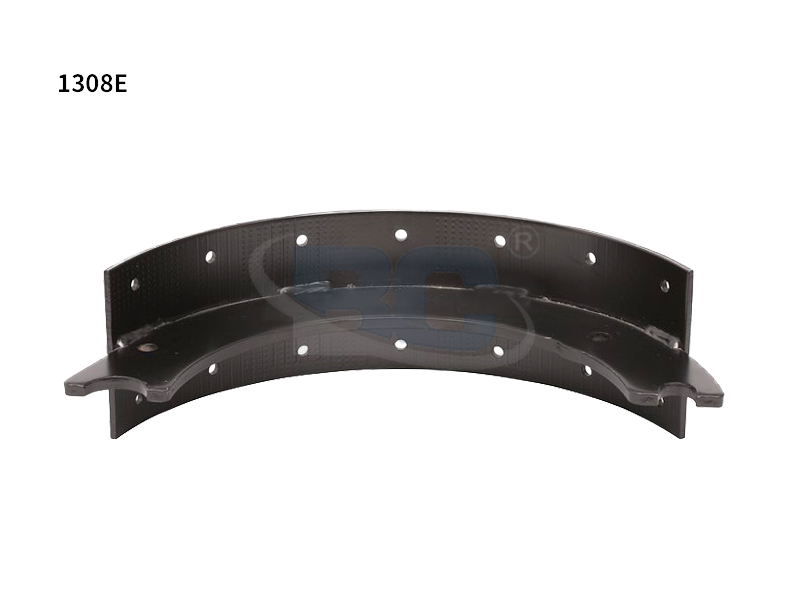
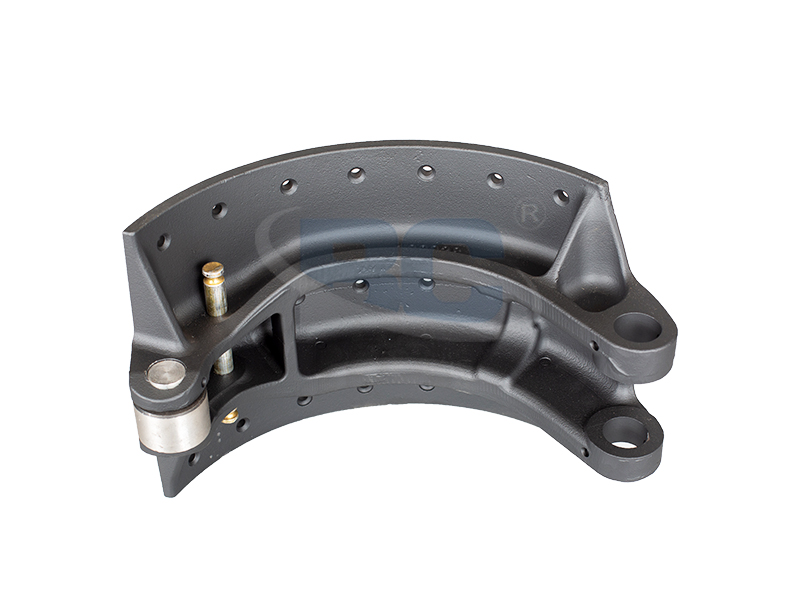
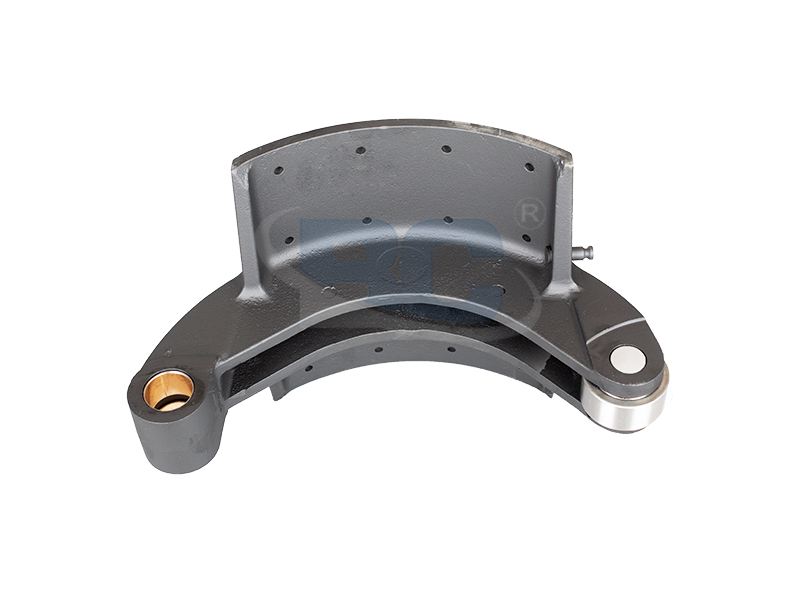
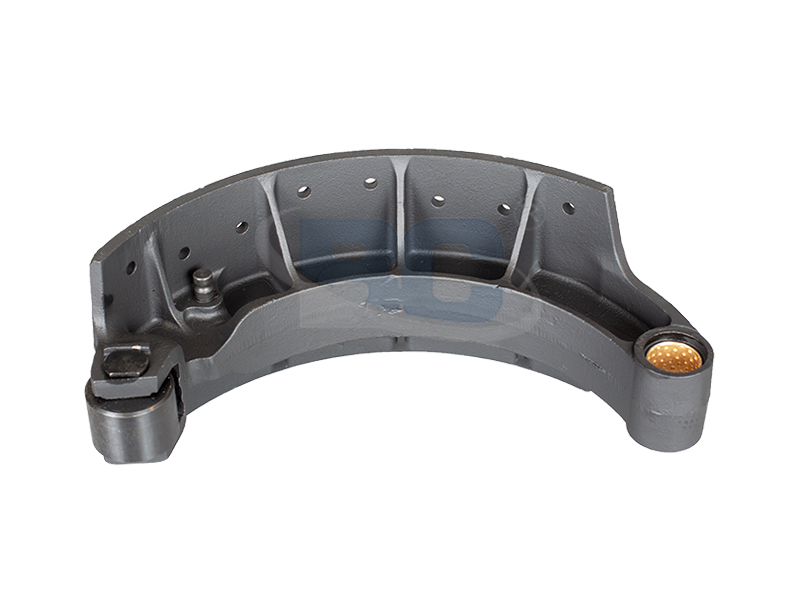
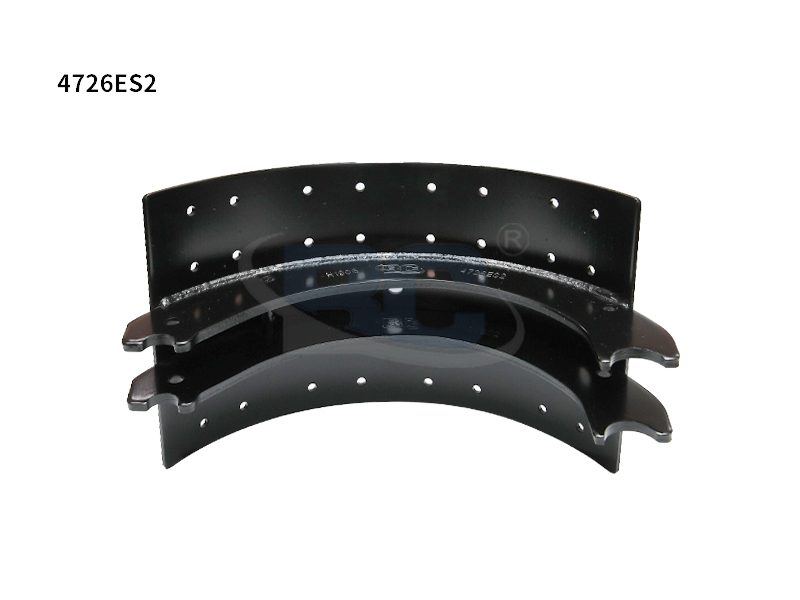
The primary factor for OEM compatibility of 4515Q brake shoes is the geometric precision of the web plate and table interface. What are the critical dimensions of a 4515Q brake shoe? The standard configuration requires a width of 7.00 inches and a nominal diameter of 16.50 inches. To prevent uneven lining wear and localized heat concentration, the flatness tolerance of the brake shoe table must be maintained within 0.2mm. Any deviation beyond these limits can lead to improper contact with the brake drum, reducing the effective friction area. At Bangchi, the stamping accuracy of 4515Q steel webs is strictly monitored to ensure that the center-to-center distance of anchor pin holes aligns perfectly with the spider assembly of heavy-duty axles, mitigating the risk of drag or incomplete release.
Material Hardness and Tensile Strength Specifications
Structural reliability in heavy-duty braking is dictated by the carbon steel grade utilized in the shoe's construction. Why web thickness matters in 4515Q brake shoes relates directly to the component's ability to resist deformation under high-torque emergency stops. What steel grade is used for 4515Q brake shoes? We typically utilize Q235B or Q355B steel, ensuring a tensile strength of brake shoe components that meets or exceeds 450 MPa. To ensure 4515Q durability in heavy-duty axles, the welding process between the web and the table must undergo ultrasonic or destructive testing to verify penetration depth. This prevents structural failure during the high-cycle fatigue environment of long-haul transport. Furthermore, the surface hardness of 4515Q roller pockets is induction-hardened to HRC 45-55 to minimize wear from the S-cam roller contact point.
Interchangeability and Aftermarket Comparison
When analyzing the 4515Q vs 4515P brake shoe differences, engineers must note that while the basic dimensions are similar, the 4515Q (Q-Plus) utilizes a specific web design optimized for quick-change hardware. How to identify a genuine 4515Q brake shoe involves inspecting the anchor pin end and the camshaft end for the "Q-Plus" characteristic notches. For heavy-duty axle compatibility, the riveting pattern must comply with FMSI standards to ensure the friction lining is secured with a minimum shear strength of 15 kN. Our manufacturing process ensures that 4515Q rivet hole alignment is precise within +/- 0.1mm, allowing for standard-sized rivets to be seated without stress concentrations that could lead to lining cracking during thermal expansion at 300°C.
| Technical Parameter | OEM Standard Requirement | Bangchi 4515Q Specification |
| Table Width | 7.00 inches (177.8 mm) | 177.8 mm (+/- 0.5 mm) |
| Brake Diameter | 16.50 inches (419.1 mm) | 419.1 mm (+/- 0.8 mm) |
| Steel Web Thickness | 0.312 - 0.375 inches | 8.0 mm / 10.0 mm Options |
| Anchor Pin Hole Diameter | 1.25 inches nominal | 31.75 mm (+/- 0.05 mm) |
| Surface Finish (Coating) | Electrophoretic Paint (ED) | Salt Spray Resistance > 240h |
Corrosion Resistance and Coating Standards
Environmental exposure is a major degradation factor for brake components. Why electrophoretic coating is used for 4515Q brake shoes involves the need for a uniform protective layer that covers internal bores and recessed areas. Bangchi utilizes a high-performance ED coating that ensures rust resistance for 4515Q shoes in high-salinity winter conditions. The impact of corrosion on brake shoe clearance can be severe, as oxidation buildup (rust jacketing) can force the lining away from the shoe table. By maintaining a Ra surface finish of the 4515Q table at 3.2 um prior to coating, we optimize the bonding surface for both the paint and the subsequent lining attachment, ensuring that the 4515Q assembly remains operational throughout its intended service life in the most demanding commercial vehicle applications.
Industrial Hardcore FAQ
Q1: What is the maximum allowable wear on a 4515Q brake shoe web?
A1: The web should be inspected for thinning at the roller and anchor pin contact points. If the thickness is reduced by more than 1.5mm from original technical specifications, the shoe must be replaced to prevent structural collapse.
Q2: Can 4515Q brake shoes be reused with new linings?
A2: Yes, provided the shoe is cleaned, de-rusted, and inspected for "table stretch" or warping. If the table curvature deviates by more than 0.5mm from the 16.5-inch radius, it should not be relined.
Q3: How does IATF 16949 certification affect the 4515Q production process?
A3: IATF 16949 requires full traceability of raw materials (steel heat numbers), calibrated measurement tools for all dimensional checks, and a failure mode and effects analysis (FMEA) for every step of the manufacturing process.
Q4: Why is induction hardening necessary for the 4515Q roller pocket?
A4: The S-cam roller exerts extreme localized pressure. Without induction hardening to HRC 45+, the steel would undergo plastic deformation (pitting), leading to erratic brake timing and reduced stopping power.
Q5: Are Bangchi 4515Q brake shoes compatible with all Meritor axles?
A5: They are compatible with the Q-Plus series 16.5" x 7" S-cam brakes. Always verify the axle model number as some older "Standard Q" or "P" series axles require different shoe geometries.
Technical References
- SAE J661: Brake Lining Quality Control Test Procedure.
- FMVSS 121: Air Brake Systems for Trucks, Buses, and Trailers.
- IATF 16949: International Quality Management Standard for the Automotive Industry.