 English
 简体中文
A 4515E brake shoe that measures correctly on the bench can still fail on the road, because drum diameter is only one of several dimensions that decide whether the shoe seats, centres and releases cleanly.
Meritor's brake shoe identification chart (document TP12162) lists the 4515E as a 16.5 in x 7 in shoe in a high-mount configuration, while identification charts published by Abex tie the same number to Fruehauf XEM3 trailer applications. Two references, one number, different hardware expectations. That gap is where most ordering errors begin.
This guide breaks the 4515E down into the specifications that matter for procurement, fitment and service life on heavy-duty drum brake systems, and shows which values must be verified against the OE drawing before a purchase order is raised.
What the 4515E Number Encodes
4515E identifies a heavy-duty drum brake shoe built for a 16.5 in (419.1 mm) brake drum with a 7 in (177.8 mm) lining width, supplied in a high-mount web configuration for commercial truck and trailer axles.
Definition. FMSI numbering is a cross-reference system maintained by the Friction Materials Standards Institute. A base number fixes the friction part envelope, meaning drum diameter, lining width and mounting geometry, so that a 4515 from one manufacturer physically replaces a 4515 from another. Suffix letters mark variants inside that envelope.
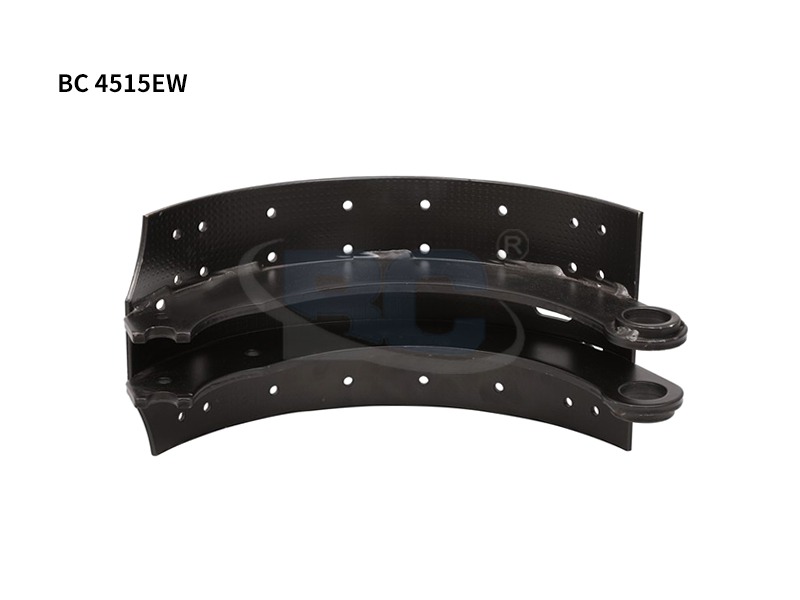
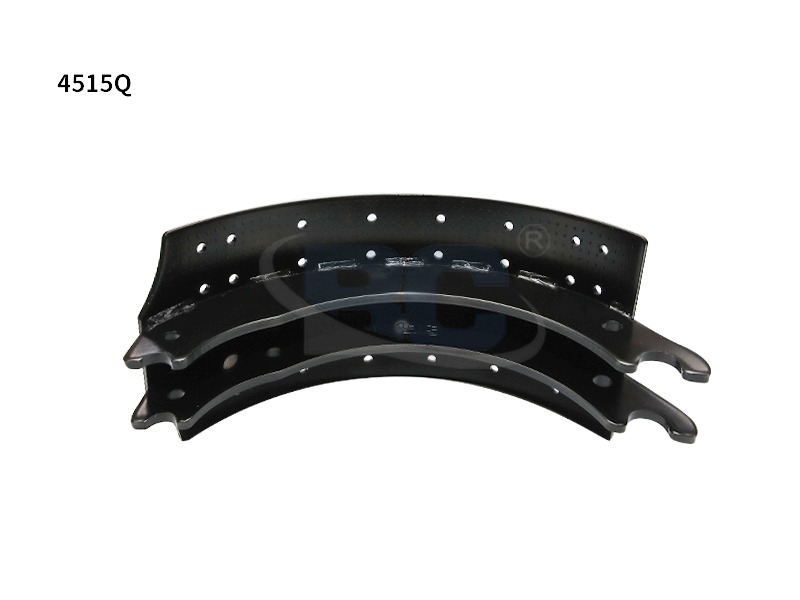
Inside the 4515 family, the base number groups the size and the suffix distinguishes variants. The numbers 4515, 4515E, 4515Q and 4515EW share the same nominal envelope but differ in web form, hardware holes or lining setup. Manufacturer catalogues define what each suffix means for their own platform, so treat E, Q and PQ as non-interchangeable until a dimensional check says otherwise.
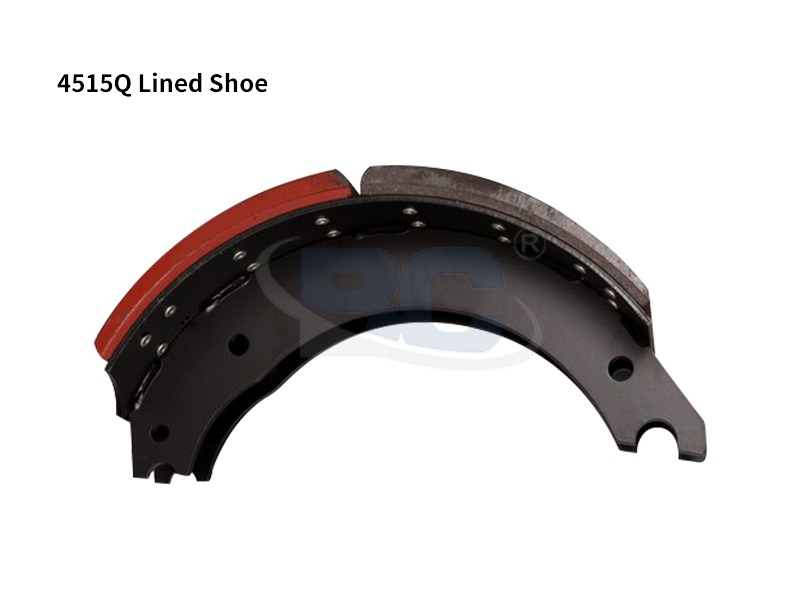
The same family is produced in several forms, which matters at the quotation stage. A bare steel shoe, a cast shoe, a lined assembly and a repair kit can all carry the 4515 designation. Confirm which form the order requires before comparing prices, because a bare shoe and a lined assembly are not a like-for-like comparison.
Core Dimensional Specifications
The 4515E envelope is defined by three primary dimensions: 16.5 in (419.1 mm) nominal drum diameter, 7 in (177.8 mm) lining width and a high-mount web, with every secondary dimension taken from the OE drawing.
| Specification | 4515E reference value | Why it decides fitment |
| Nominal drum diameter | 16.5 in (419.1 mm) | The shoe must match the drum bore; a shoe built for a smaller drum cannot seat correctly on the anchor pin |
| Lining width | 7 in (177.8 mm) | Sets friction area and the contact patch against the drum face |
| Web and mount style | High mount | Determines roller, cam and anchor pin contact height |
| Roller and anchor pin holes | Per OE drawing | Undersized or oversized holes cause binding or uneven lining wear |
| Return spring holes | Per OE drawing | Wrong spacing prevents correct spring tension and shoe retraction |
| Shoe construction | Steel stamping or cast section | Affects stiffness, mass and heat behaviour under load |
Measure the drum, not the old shoe. A worn drum can read above its nominal bore, and a shoe selected from a worn drum measurement may not centre correctly in a new or resurfaced drum. Use a drum gauge at two points 90 degrees apart and record both readings, together with the ambient temperature if the workshop is not temperature controlled.
Lining width deserves a separate check. A 7 in shoe fitted to a drum machined for a narrower lining runs with an overhanging edge, which concentrates load and accelerates edge chipping. If the drum has been resurfaced, confirm the maximum rebore allowance from the axle manufacturer before ordering replacements.
Steel or Cast Construction
Steel 4515 shoes suit line-haul duty where mass and unit cost dominate, while cast 4515 shoes suit high-torque, high-temperature duty such as heavy haul, refuse collection and construction, where section rigidity resists deformation.
Steel, stamped and welded
- Web and table formed from stamped steel and welded
- Lower mass per shoe, which reduces unsprung weight
- High dimensional repeatability in volume production
- Common on line-haul tractor and trailer axles
Cast, moulded section
- Thicker section with higher bending stiffness
- Resists web deformation under sustained brake temperature
- Preferred for stop-start cycles and steep grades
- Higher mass and typically a higher unit price
Neither construction is universally better. The decision follows the axle platform, the duty cycle and the brake torque the drum is expected to absorb, and the OE drawing remains the final authority on which form the platform was designed around.
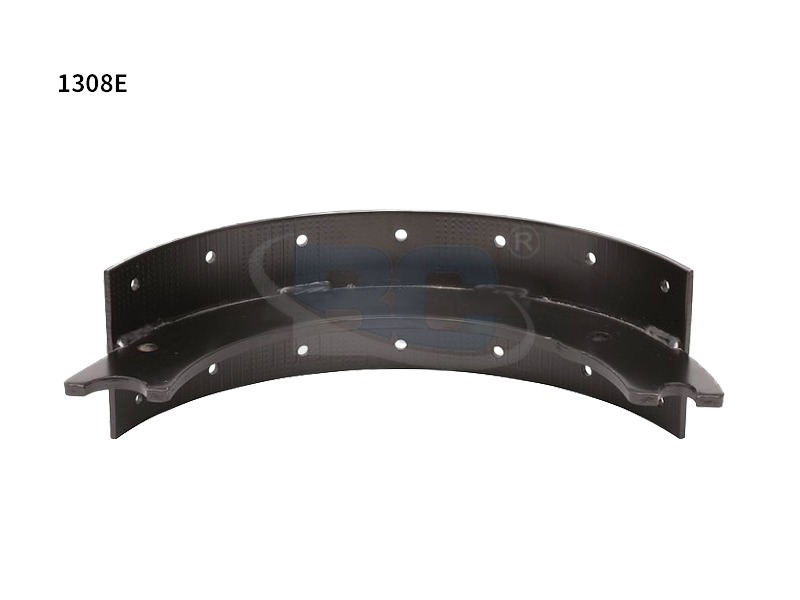
 4515 Steel Brake Shoe for Heavy-Duty TrucksThe 4515 steel brake shoe is listed at 16.5 x 7 with 32 rivet holes and OE reference R4515F3 for heavy-duty truck brake applications.View Product →
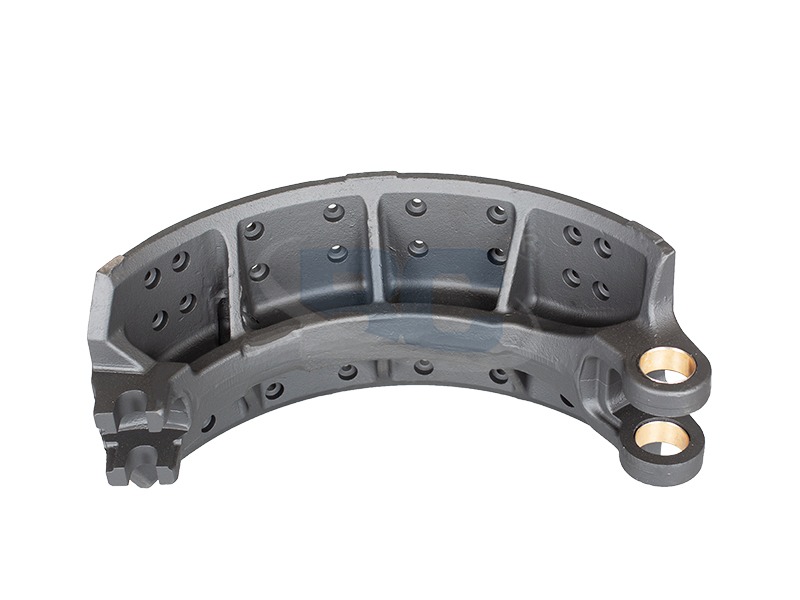 4515 Casted Brake Shoe for Meritor ApplicationsReview the 4515 casted brake shoe, listed at 16.5 x 7 with 32 riveting holes and Meritor application, as a custom OEM heavy-duty truck option.View Product →
Lining Specifications That Decide Service Life
Lining grade, friction code and attachment method decide 4515E service life more than the steel underneath, because the lining is the only part of the assembly designed to wear away.
| Lining parameter | What to verify | Practical impact |
| Friction code | Two letters marked on the lining edge, following the SAE J866 code format | Predicts cold and hot friction behaviour; a code change alters brake balance across an axle |
| Lining thickness | Nominal block thickness against the wear limit stated by the supplier | Sets the usable service interval between replacements |
| Attachment method | Riveted or bonded, with shear strength evidence for bonded linings | Rivet contact or bond failure can score the drum |
| Edge form | Chamfered leading edge and consistent block length | Reduces initial grab, noise and edge chipping |
| Temperature capability | Binder and fibre formulation declared for the application | Fade resistance on long descents and in stop-start duty |
FMVSS 121 sets the performance baseline for air-braked heavy vehicles in the United States, and a friction pair that cannot hold its declared friction level at elevated temperature will not deliver consistent stopping performance across repeated applications. Fleet buyers should request the friction code and the batch test record rather than accept a generic heavy-duty description.
Buyer caution
Two 4515E linings can carry identical dimensions and different friction codes. Mixing codes across an axle changes brake balance and can produce pull during braking, so keep one code per axle and record it in the vehicle file.
Fitment and Interchange Verification
Never approve a 4515E substitution on the strength of a cross-reference list alone; four dimensional checks and one OE number verification should precede every first order.
- Read the number off the old shoe. The FMSI number is stamped or cast into the web and is the only reliable starting point.
- Measure the drum bore and the lining width, and record actual values rather than catalogue values.
- Check web height and mount style against the OE drawing, including roller and anchor pin positions.
- Confirm hardware holes: roller pin, anchor pin and return spring spacing.
- Cross-check the OE part number against at least two independent references.
- Request a sample shoe and a dimensional report before committing to a container order.
Dimensional tolerance is where low-cost alternatives usually fail. A web that is slightly out of flat, or a roller hole drilled a fraction off centre, shows up as uneven lining wear and heat build-up long before the lining reaches its wear limit. A worked example of how tolerance stack-up affects heavy-duty axle assemblies is covered in this analysis of 4515Q shoe tolerances and structural integrity.
Wear Signs, Replacement and Repair Kits
Replace 4515E shoes when the lining reaches the wear limit declared by the supplier, when rivet heads or the bond line become exposed, or when the drum shows scoring or heat checks.
- Lining thickness at or below the declared wear limit
- Oil, grease or brake fluid contamination on the lining surface
- Cracked, bent or heat-discoloured web and table
- Elongated roller or anchor pin holes
- Drum scoring deep enough to require resurfacing or replacement
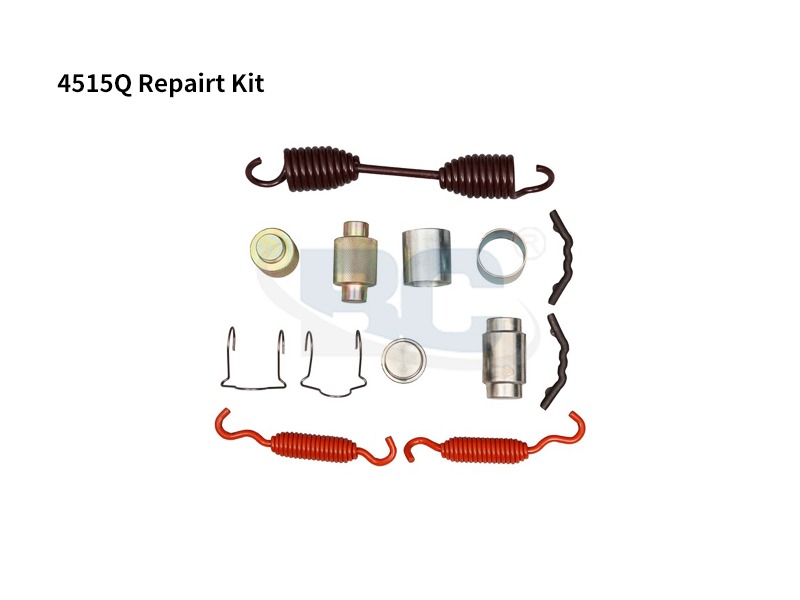
Repair kits exist because the components around the shoe wear at the same rate as the lining. Reusing stretched return springs, worn rollers or a pitted anchor pin on a new 4515E shoe shortens its service life and can produce uneven drum contact. Confirm the kit bill of materials with the supplier, because contents differ between numbers and between manufacturers.
 4515E Brake Shoe Repair KitCheck the 4515E brake shoe repair kit for heavy-duty truck brakes; confirm kit contents and supplier documentation before approving it for service.View Product →
Sourcing, Documentation and Batch Control
Four documents should be on file before a 4515E supplier is approved: a dimensional inspection report, a material certificate for the shoe body, a friction code declaration for the lining, and a batch traceability record linking shipped parts to production dates.
Zhejiang Bangchi Auto Parts Co., Ltd. is a heavy-duty brake shoe manufacturer founded in 2016, producing steel brake shoes, cast brake shoes, brake linings, lined brake shoes and repair kits under the FMSI numbering system. The company states that it operates a production line rated at 2 million brake shoes and an annual capacity of 3,000,000 units from a facility of more than 13,000 square metres, and that it passed an IATF 16949:2016 system certification audit. Buyers evaluating a supplier can review the full manufacturing and quality profile before requesting a quotation.
Packaging is part of the specification. A 4515E order should arrive as matched pairs, with rust-preventive coating on the shoe body and labels carrying the FMSI number, batch code and lining friction code. Missing labels make traceability impossible once the parts reach a workshop shelf.
Practical Answers for Buyers and Workshops
Is a 4515E brake shoe the same as a 4515?
No. They share the same FMSI base envelope of 16.5 in drum diameter and 7 in lining width, but the suffix marks a variant in web form or hardware. Until the roller hole diameter, anchor pin position and web height are measured against the OE drawing, treat 4515 and 4515E as separate SKUs in the warehouse system.
Can a 4515Q or a 4707 shoe replace a 4515E?
4707 belongs to a different FMSI family, so it is not a substitute. 4515Q shares the 4515 envelope and may fit the same drum, but the Q variant can differ in hardware holes or lining setup, so the replacement must be confirmed against the OE part number and a physical dimensional check before installation.
How long should a 4515E brake shoe last?
Service life is set by lining thickness and duty cycle, not by a universal mileage figure. Inspect at every scheduled brake service, measure lining thickness against the supplier's declared wear limit, and replace the shoe when the limit is reached, when rivets or the bond line are exposed, or when the drum shows heat checks.
What information should a supplier receive to quote a 4515E correctly?
Send six items: the FMSI number, the OE part number, the measured drum bore, the lining width, the required construction (steel or cast), and the required friction code. Add annual volume, packaging format and labelling requirements, and request a dimensional inspection report with the first sample shipment so the quote and the delivered part can be compared against the same numbers.