 English
 简体中文
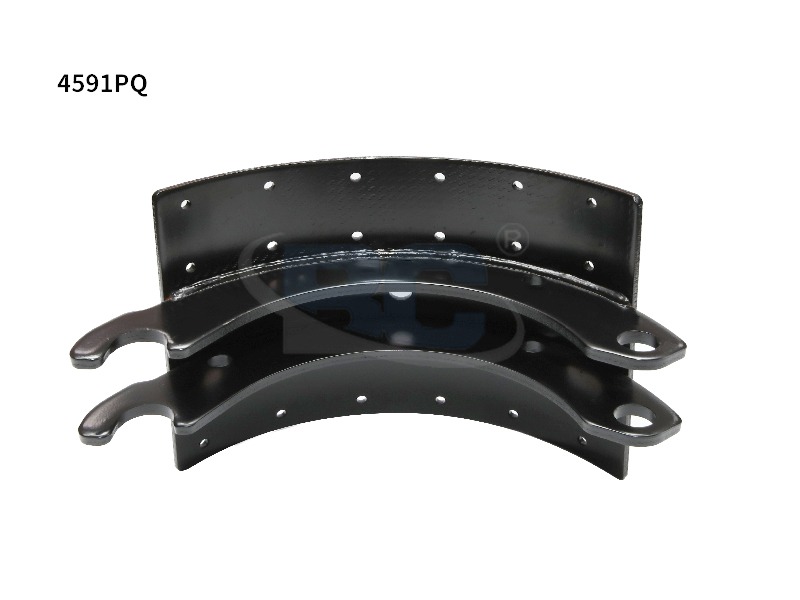
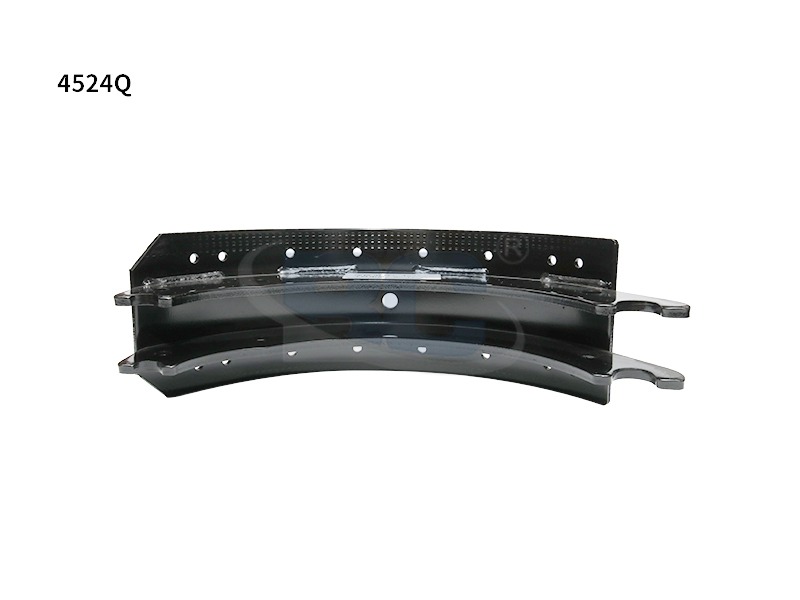
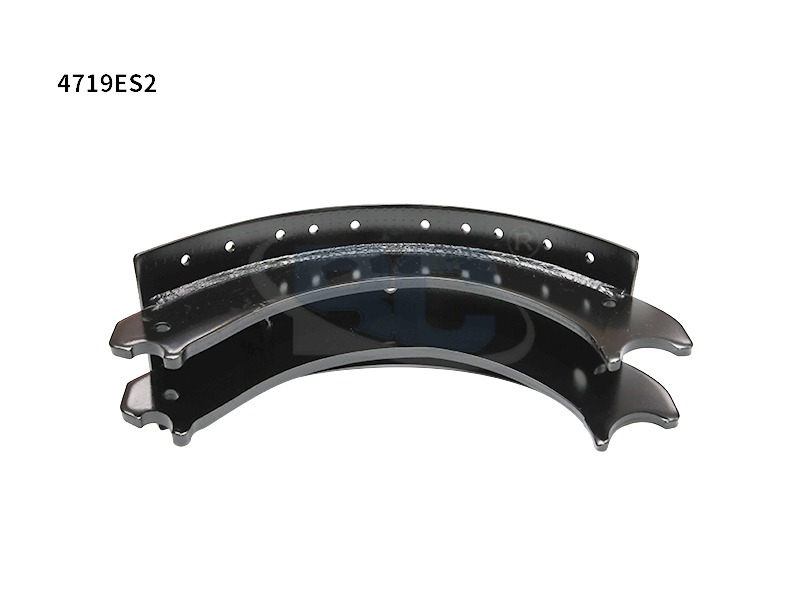
简体中文The 4591PQ brake shoe is a precision-engineered friction component used in drum brake systems to slow and stop vehicles through controlled contact with the rotating brake drum. Found across a wide range of light trucks, SUVs, and passenger cars, this part plays a foundational role in rear-axle braking performance, heat dissipation, and overall vehicle safety.
What the 4591PQ Brake Shoe Does in Drum Braking Systems
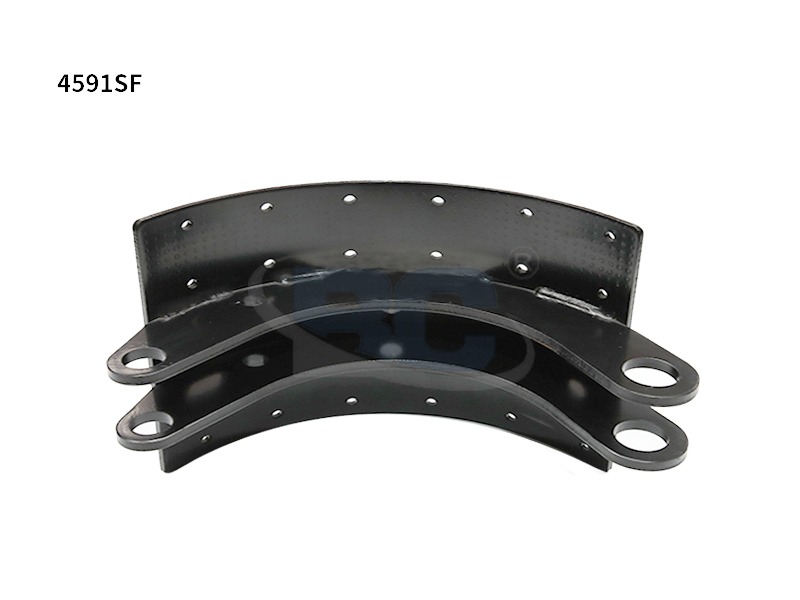
In a drum brake system, the brake shoe is a curved metal platform lined with friction material. When the driver presses the brake pedal, hydraulic pressure forces the wheel cylinder pistons outward, pushing the shoes against the inner surface of the spinning drum. The resulting friction converts kinetic energy into heat, decelerating the wheel.
The 4591PQ designation identifies a specific geometry, arc length, and lining compound grade suited to particular vehicle applications. Unlike disc brake pads, which squeeze a rotor from two sides, brake shoes expand radially outward — a design that delivers strong self-energizing braking force and effective parking brake integration.
"A brake shoe is the curved friction assembly inside a drum brake that presses outward against the drum surface to generate stopping force — the drum brake equivalent of a disc brake pad."
How to Know When 4591PQ Brake Shoes Need Replacement
Worn brake shoes reduce stopping power and can damage the brake drum, turning a straightforward shoe replacement into a far more expensive repair. Recognizing replacement indicators early is essential.
Industry standard practice recommends inspecting brake shoes every 20,000 to 30,000 kilometers, or whenever tires are rotated. High-load applications — towing, frequent downhill driving, or stop-and-go urban use — accelerate wear significantly.
What Causes Uneven Wear in 4591PQ Brake Shoes
Uneven wear is one of the most common and consequential brake shoe problems. It reduces braking consistency and shortens component service life.
| Cause | Mechanism | Result |
| Improper shoe adjustment | Shoe-to-drum clearance is unequal across the arc | Leading edge wears faster than trailing edge |
| Contaminated lining | Oil or grease from axle seals coats friction surface | Glazing and spotty contact across shoe width |
| Weak or broken return springs | Shoes fail to retract fully after braking | Continuous drag wear and overheating |
| Out-of-round drum | Drum surface is not concentric with axle | Intermittent contact creates patterned wear |
| Single-sided hydraulic failure | One wheel cylinder applies more force than the other | Side-to-side imbalance across the axle |
How Brake Shoe Quality Directly Affects Safety
Brake shoe quality determines friction coefficient consistency, heat resistance, and fade behavior under repeated hard stops. The 4591PQ brake shoe uses a formulated lining compound engineered to maintain stable friction across a defined temperature range — typically 100°C to 400°C for rear drum applications.
Low-quality brake shoes can lose up to 40% of their friction coefficient under repeated hard stops due to thermal fade — a dangerous degradation that premium-grade linings like the 4591PQ are specifically engineered to resist.
Key quality factors to evaluate in any brake shoe include bonding strength between lining and platform (delamination is a critical failure mode), lining hardness uniformity, and arc geometry accuracy. A shoe with incorrect arc radius will contact the drum at only two points rather than across the full surface, concentrating heat and causing accelerated localized wear.
Vehicle Compatibility: Can 4591PQ Shoes Fit Multiple Applications
The 4591PQ part number corresponds to a defined dimensional specification — including shoe width, arc length, lining thickness, and hole pattern — that may be shared across multiple vehicle platforms from the same manufacturer or across different makes that use identical drum brake assemblies.
Cross-referencing the 4591PQ confirms fitment across several light truck and SUV platforms, particularly those using rear drum brake assemblies with matching drum diameter and shoe width specifications. Always verify fitment using the vehicle's year, make, model, and trim level before installation, as brake components are safety-critical and dimensional mismatches are not acceptable.
Brake Shoes vs. Brake Pads: Understanding the Distinction
Brake shoes and brake pads both use friction material to slow vehicles, but they operate in fundamentally different brake system architectures.
- Curved metal platform with lining on outer face
- Expand outward against drum interior surface
- Self-energizing design amplifies applied force
- Integrated with parking/emergency brake mechanism
- Lower replacement frequency in rear-axle applications
- More enclosed — better protection from water and debris
- Flat pad with lining on one face
- Clamp inward against rotor from both sides
- No self-energizing effect; linear force application
- Separate parking mechanism required
- Higher replacement frequency due to caliper design
- Exposed — superior cooling but more contamination risk
Drum brakes remain the preferred rear-axle solution for vehicles where parking brake integration, cost efficiency, and durability in loaded conditions outweigh the advantages of all-disc setups. The 4591PQ brake shoe is specifically designed to perform within this architecture at a high level.
Key Takeaways for Buyers and Technicians
Replace 4591PQ brake shoes when lining thickness drops below 1.5mm or at the first sign of grinding, pulling, or reduced stopping distance.
Always replace brake shoes in axle pairs — never replace one side only — to maintain balanced braking force across the axle.
Inspect wheel cylinders, return springs, and adjuster mechanisms simultaneously. A failed spring or leaking cylinder is the most common cause of premature shoe wear.
Confirm drum surface condition before installing new shoes. A drum with excessive scoring or out-of-round measurement exceeding 0.05mm should be machined or replaced.
Verify vehicle fitment using year, make, model, and drum diameter before ordering — never assume cross-reference compatibility without checking specifications.