 English
 简体中文
When a fleet maintenance supervisor orders replacement brake shoes for tractors and trailers running BPW, SAF, and Volvo axles, the most common cause of a returned part is not a material defect; it is a mismatch in dimensional specifications, FMSI numbering, or axle generation. A loaded heavy commercial vehicle can push brake shoe contact pressure past 1 MPa at the lining surface, and the difference between a correct fit and a near fit is measured in millimeters. This article explains the key specifications that determine whether a brake shoe will fit, stop reliably, and survive the full service interval.
Commercial drum brakes on heavy vehicles routinely operate at lining surface temperatures of 300 to 500 degrees Celsius during repeated mountain-grade braking.
Why Custom Brake Shoes Are Defined by Specifications
Custom brake shoes are replacement or OE-equivalent brake shoes manufactured to match a specific axle model, vehicle platform, or original equipment reference number, rather than a generic universal part.
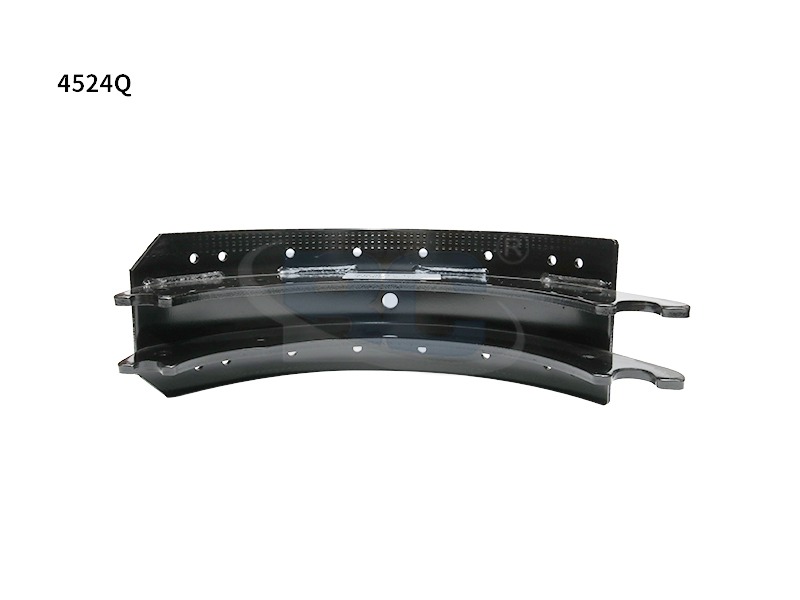
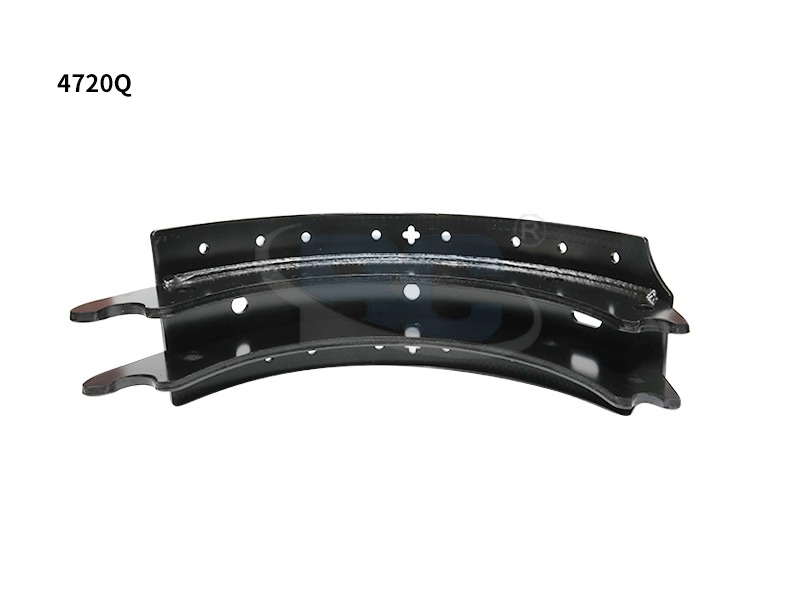
Commercial brake shoes are engineered around the axle system, not the vehicle model alone. Two trucks of the same make can require different brake shoes if one rides on BPW axles and the other on SAF axles. The industry therefore relies on the Friction Materials Standards Institute (FMSI) numbering system, which standardizes the identification of lining contour, width, and mounting geometry. A reference such as 4515Q or 4707Q communicates the friction surface profile that a brake shoe must carry.
Zhejiang Bangchi Auto Parts Co., Ltd. organizes its entire production catalog around FMSI numbering, covering steel brake shoes, casted brake shoes, brake linings, and lined shoe kits. A buyer can cross-reference a local parts-book number against an FMSI code and arrive at a matching component without trial fitting. The company states that its manufacturing background and quality system are built on more than 20 years of brake component experience, as detailed in its company profile.
Core definition: a custom brake shoe is a brake shoe whose geometry, friction surface dimensions, and mounting features are specified to match a defined axle or OE reference, typically identified by an FMSI number.
Critical Dimensional Specifications for Commercial Brake Shoes
The starting point for any brake shoe order is the friction surface dimension: lining width, lining arc length, and shoe web thickness.
These three values define the contact patch between the lining and the brake drum. A 10 mm error in lining width can reduce the effective friction area by roughly 5 percent and cause uneven wear, while an incorrect arc radius creates a high spot that can produce brake grab or thermal fade during repeated stops.
| Reference / OE | Lining Dimensions | Typical Application | Shoe Type |
| BPW200 | 420 x 200 mm | BPW axles, new generation | Steel brake shoe |
| Benz 220 | 410 x 200 mm | Mercedes-Benz commercial vehicles | Steel brake shoe |
| VL200 Volvo | 410 x 225 x 8 mm | Volvo axle systems | Steel brake shoe |
| SAF SK9 | 420 x 180 mm | SAF trailer axles | Steel brake shoe |
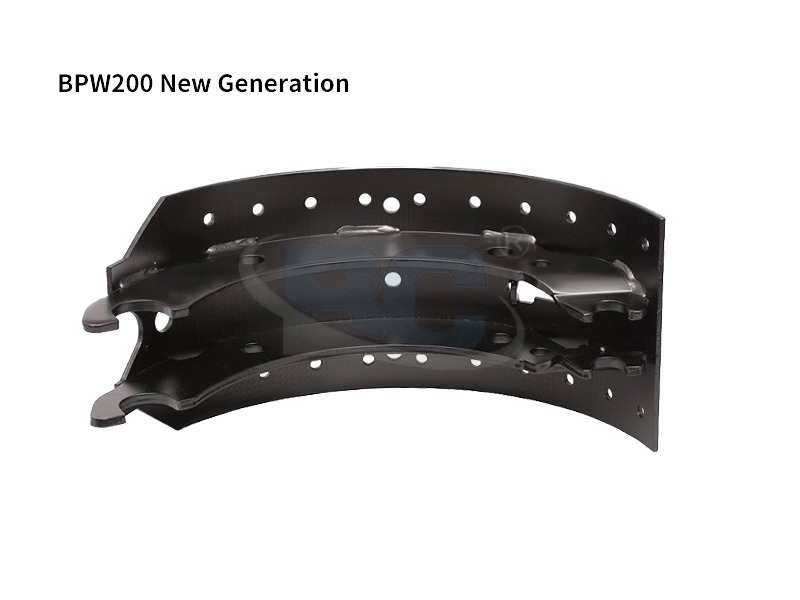 BPW200 New Generation Brake Shoe 420x200mm with 20 Rivet HolesThis next-generation BPW200 brake shoe is sized for modern heavy-duty axles and features a wider friction profile that does not interchange with older versions, so confirming axle generation and actuation type is essential before ordering.View Product →
Generational changes matter as much as gross dimensions. BPW axles, for example, have distinct old-generation and new-generation brake shoes; the new-generation BPW200 part uses a wider friction surface profile and a revised web thickness that will not interchange with the earlier version. Ordering by FMSI number alone is not sufficient: the supplier must also confirm the axle generation and the brake actuation type.
Practical rule: always confirm the axle brand, axle generation, and brake actuation type before ordering. A brake shoe that matches the lining width but misses the web height will not seat correctly on the actuator.
Material and Manufacturing: Casted vs. Steel Brake Shoes
Casted brake shoes and steel brake shoes are the two dominant manufacturing families for commercial brake shoe construction, and the choice affects strength, weight, relining behavior, and cost.
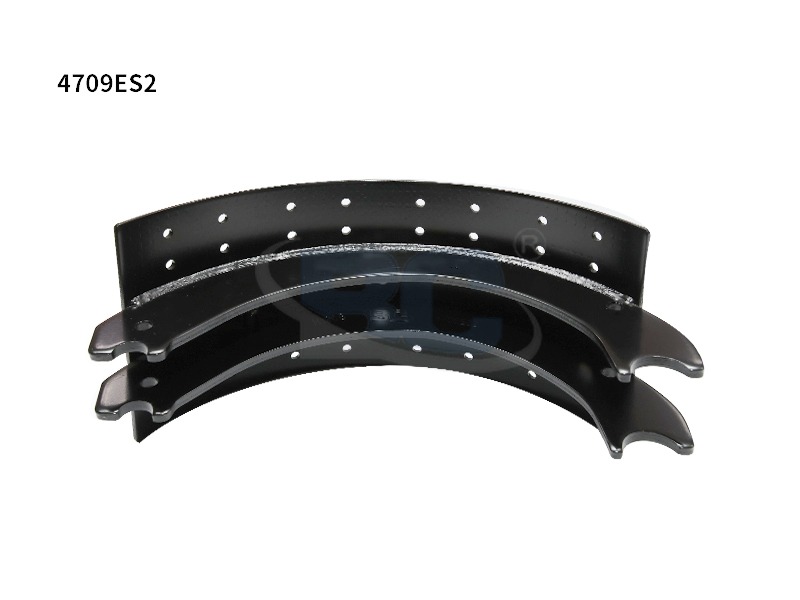
A casted brake shoe is produced as a single cast-metal component with high rigidity and dimensional stability. Casted designs are frequently specified for older European and Asian axle platforms, including MAN, DAF, Hino, and Nissan systems. A steel brake shoe is fabricated from rolled steel sections that are formed and welded into a web-and-rim profile. Steel shoes offer a higher strength-to-weight ratio and dominate the current FMSI-coded replacement market.
Casted brake shoe
- Single-piece casting, no weld seams
- High rigidity and vibration damping
- Common for MAN, DAF, Hino air and oil systems
- Slightly heavier per unit
Steel brake shoe
- Welded web-and-rim construction
- Higher strength-to-weight ratio
- Dominant in modern FMSI-coded catalogs
- Easier to reline in the shop
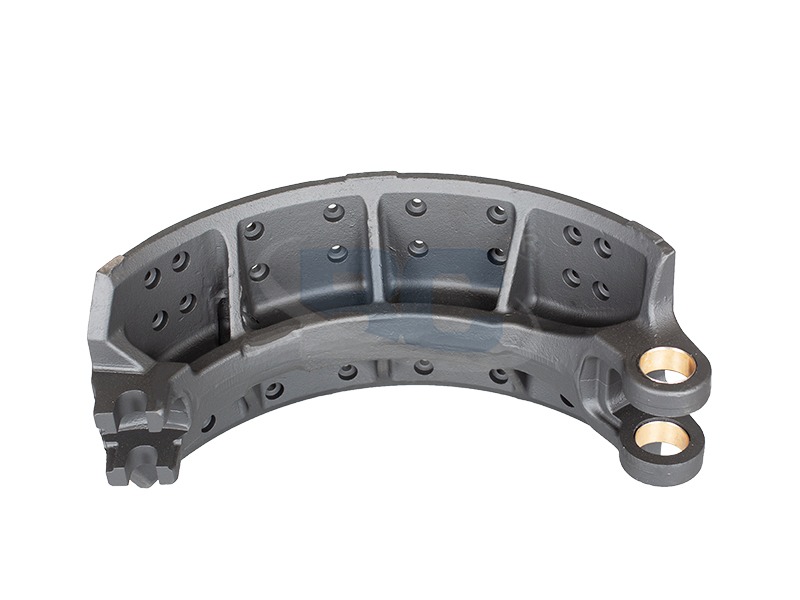 4515 Casted Brake Shoe for Meritor Axle ApplicationsA rigid single-cast-metal brake shoe suited for older European and Asian platforms such as MAN, DAF, Hino, and Nissan. Its dimensional stability and high rigidity make it a reliable choice when replacing casted original equipment.View Product →
The chart below compares the friction surface width of four common brake shoe references. This value directly affects lining volume, heat absorption, and replacement interval.
In practice, the choice between casted and steel is rarely a preference decision. The axle platform and the existing drum geometry dictate the correct construction; installing the wrong family can wear the drum unevenly and shorten lining life.
Tolerances and Quality Control That Determine Safe Fit
Dimensional tolerance is the specification most often overlooked when purchasing custom brake shoes, and it separates a safe fit from a forced fit.
Commercial brake shoe manufacturing under IATF 16949 requires documented control of web thickness, rivet countersink depth, lining arc profile, and shoe web concentricity. These values control how the lining seats against the drum and how load transfers through the actuator. Zhejiang Bangchi states that it operates under the IATF 16949 quality system and has passed the new-version IATF 16949:2016 certification audit.
- Web thickness tolerance: affects structural strength and actuator alignment
- Rivet countersink depth: must sit below the lining surface to prevent drum scoring
- Arc profile: controls the contact patch against the drum
- Concentricity: prevents brake grab and vibration
Key specification: a quality brake shoe holds the lining arc radius within a controlled tolerance across the full lining width. A forced fit may still stop the vehicle, but it will wear unevenly, overheat the drum, and fail before the expected service interval.
Application-Specific Configurations: Air, Oil, and Generational Variants
Custom brake shoes for commercial vehicles must also match the actuation system and the component generation of the specific axle.
The catalog of Zhejiang Bangchi lists separate air and oil versions for Hino and Nissan casted brake shoes, reflecting the two dominant brake actuation architectures in Asian commercial vehicles. Air-actuated systems use S-cam or air wedge mechanisms, while oil-actuated systems rely on hydraulic wheel cylinders. The same axle model can require different web widths and anchor pin locations depending on the actuation type. New-generation and old-generation designations for BPW and Volvo platforms add a further layer: the variants can change the friction surface width, the web height, or the rivet pattern.
Many fleets choose lined brake shoes or lined shoe kits to simplify the replacement job. A lined brake shoe arrives with the friction material already bonded or riveted by the manufacturer, which removes the separate relining step and reduces the risk of bond failure from improper shop procedures.
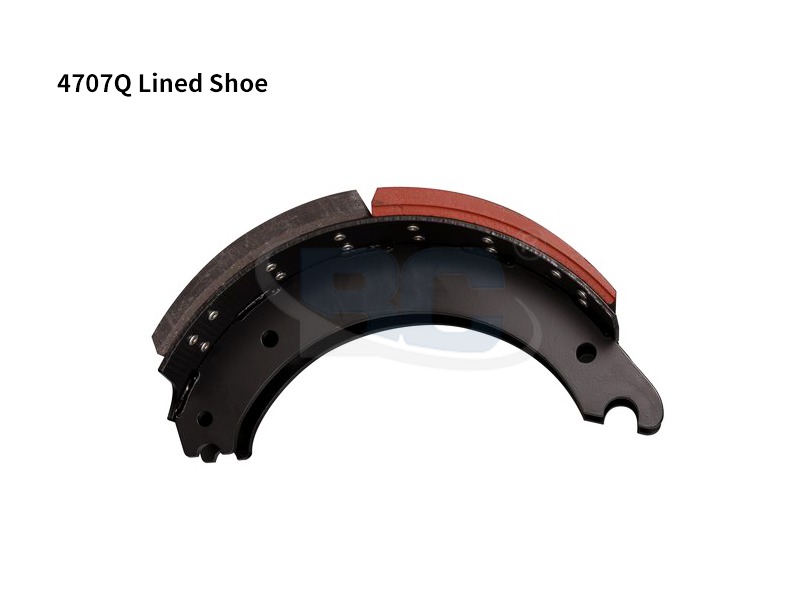 4707Q Lined Brake Shoe 16.5x7 Inches with 32 Rivet HolesFactory-lined brake shoe that simplifies replacement by eliminating the need for in-house relining. The consistent manufacturer-controlled lining attachment reduces bond failure risk, ideal for fleets seeking dependable, turnkey brake maintenance.View Product →
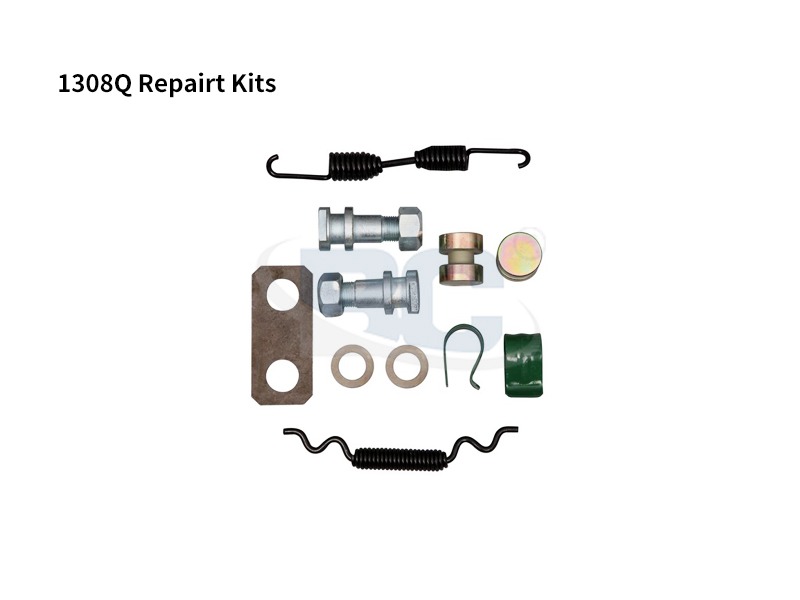
Decision point: if the shop relines shoes in-house, order bare steel or casted shoes. If consistent, factory-controlled lining attachment matters more, order lined shoes or lined shoe kits with matching repair kits.
Frequently Asked Questions
What does the FMSI number mean on a brake shoe?
The FMSI number identifies the friction surface geometry, including lining width, arc length, and contour, so that brake shoes from different manufacturers can be cross-referenced against a common standard.
Can the same brake shoe fit different axle brands?
No. Brake shoes are designed around the axle brand, model, and generation. A BPW200 brake shoe will not fit a SAF SK9 axle even if the lining width looks similar, because web height, anchor pin spacing, and arc profile differ.
What is the difference between a bare brake shoe and a lined brake shoe?
A bare brake shoe is the metal component only; a lined brake shoe has friction material already attached by the manufacturer. Lined shoes reduce shop labor and guarantee a factory-controlled bond between the lining and the shoe.
How often should commercial brake shoes be inspected and replaced?
Heavy trucks typically need brake service every two to three years depending on duty cycle, but the actual interval depends on mileage, load, terrain, and braking frequency. Inspect lining thickness and shoe web condition at every scheduled maintenance stop.
Bottom line: match the FMSI number, confirm the axle generation, verify air or oil actuation, and work with a manufacturer that documents its quality system under IATF 16949.