 English
 简体中文
Placing a bulk order for commercial vehicle brake shoes is a specification exercise, not a price negotiation. A 420x200 mm BPW brake shoe and a 420x180 mm SAF shoe look similar on a pallet, yet they fit completely different drum brake assemblies.
Procurement teams that skip dimensional verification, FMSI cross-referencing, and generation checks routinely receive batches that cannot be installed. The result is idle maintenance bays, expedited freight, and warranty disputes. The fix is to define every critical specification before the purchase order is signed.
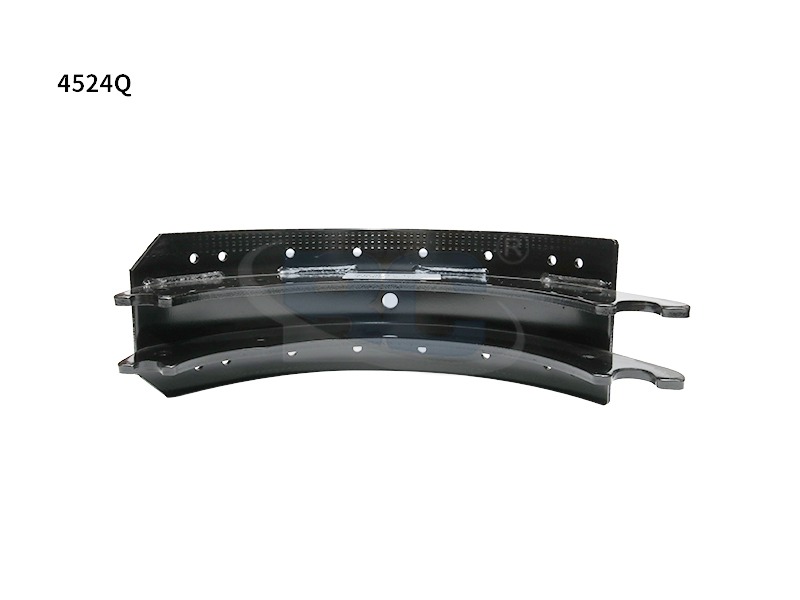
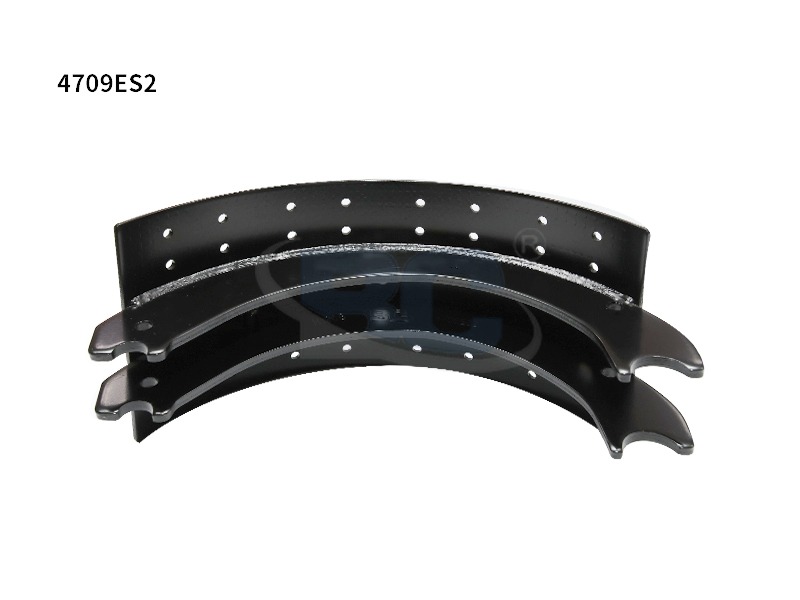
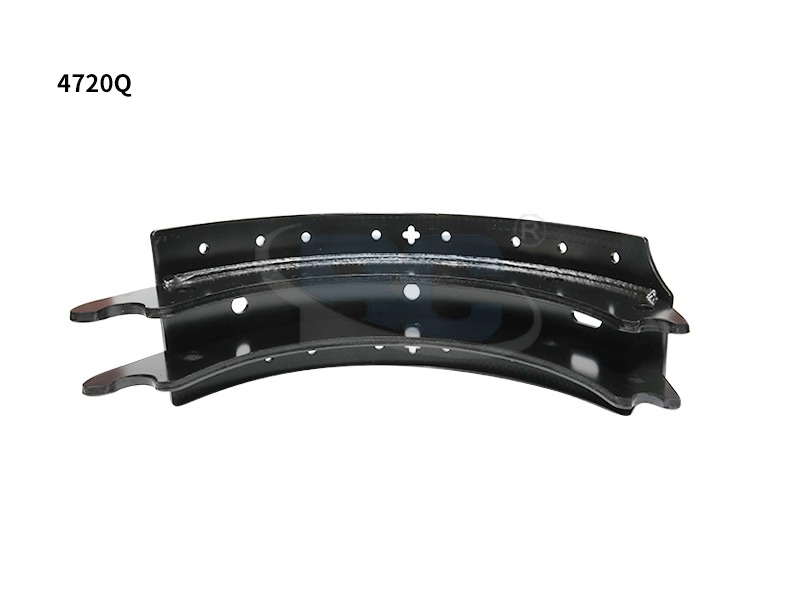
A commercial vehicle brake shoe is the curved steel or casted component that carries the friction lining inside a drum brake assembly. It converts hydraulic or air pressure from the brake chamber into mechanical clamping force against the brake drum. Getting this component right matters more than the unit price on the quotation.
Why Specification Discipline Decides Bulk Order Success
Bulk orders fail when a single specification is assumed instead of verified, usually the lining width, the cam-offset, or the generation variant of the axle platform.
Every drum brake family uses a specific shoe geometry. The table profile, the web height, the lining arc, and the attachment hole pattern are all tied to the axle model. A FMSI (Friction Materials Standards Institute) number is the shortest way to index that geometry across manufacturers. When you quote a FMSI reference such as 4515 or 4707, the supplier immediately knows the shoe shape, the lining contour, and the common OE equivalents.
Zhejiang Bangchi Auto Parts Co., Ltd. is a heavy-duty brake parts manufacturer that organizes its entire catalog around FMSI numbering. The company runs a dedicated production line with an annual capacity of two million brake shoes and manages quality under the IATF 16949 system. For a bulk buyer, a supplier that can map every order line to a verified FMSI number reduces the risk of receiving a visually similar but technically wrong part.
Core Dimensions Every Bulk Buyer Must Verify
Four measurements define fit: drum diameter, lining width, arc length, and web thickness.
Commercial vehicle brake shoes are usually specified as width by arc length, with drum diameter and thickness stated separately. A common European referencing style appears as 420x200 mm, meaning a 420 mm lining arc and a 200 mm lining width. The axle platform determines which combination is correct. Suppliers that hold stock of FMSI-referenced shoes can typically confirm these four values within a day; suppliers without technical files cannot guarantee any of them.
| Axle platform | Lining width | Arc length | Typical application |
| BPW 200 | 200 mm | 420 mm | Trailer axles |
| Benz 220 | 200 mm | 410 mm | Mercedes-Benz truck axles |
| SAF SK9 | 180 mm | 420 mm | SAF trailer axles |
| VL200 (Volvo) | 225 mm | 410 mm | Volvo truck axles |
Steel vs. Casted Brake Shoe Construction
Steel brake shoes are stamped and welded from rolled strip steel, while casted brake shoes are formed in one piece; the choice affects rigidity, weight, and fatigue behavior.
Both types are used in commercial vehicle drum brakes, and the correct choice depends on the axle design and the operating load. The decision is dictated by the original axle design, not by preference. A steel shoe designed for a BPW trailer axle will not perform correctly in a casted-only drum assembly. Bulking the two types into one order without distinguishing construction is a common sourcing error.
Steel brake shoes
- Formed from steel strip and welded at the table or web joints
- Higher strength-to-weight ratio for the same section thickness
- Common on European trailer and truck axles, including BPW, SAF, and Volvo
- Compatible with bonded or riveted lining attachment
Casted brake shoes
- Cast as a single piece with a continuous grain structure
- Higher rigidity in the web under repeated braking loads
- Common on heavy single axles, buses, and Asian truck platforms
- Different crack and deformation behavior under overload
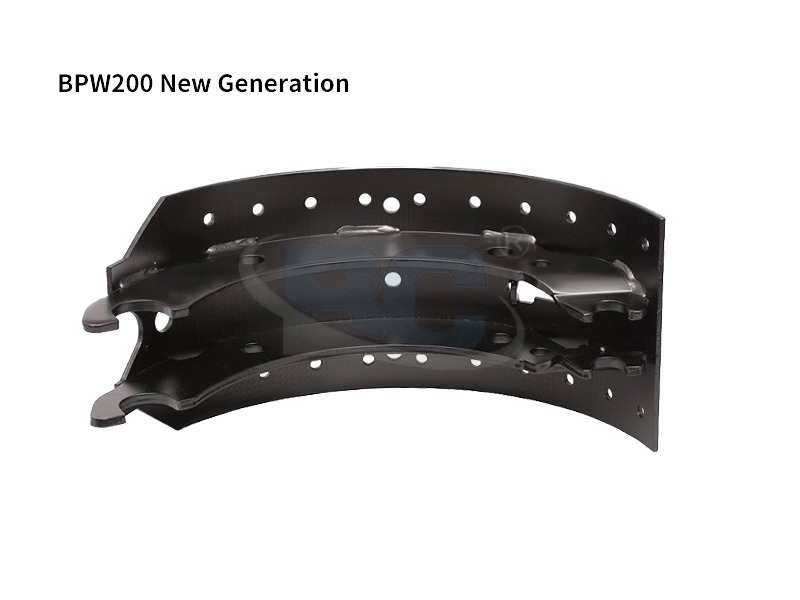 BPW200 New Generation Brake Shoe with 20 Rivet HolesThis 420mm by 200mm steel brake shoe for BPW axles features 20 precision rivet holes and is suited for modern heavy-duty trailer systems, making it a key option when sourcing new-generation shoes.View Product →
Lining Grade and Attachment Method
Lining attachment method, bonded or riveted, determines service life, replacement procedure, and drum wear characteristics.
The friction lining is the wear surface of the brake shoe, and its grade controls the braking coefficient, heat fade resistance, and drum compatibility. Lining grade selection also affects inventory: a fleet operating long-haul routes may need a harder grade for durability, while a regional stop-and-go operation may need a higher-friction grade for response. For bulk procurement, the specification should include the friction classification, the lining thickness, and the attachment method.
- Bonded linings use a high-temperature adhesive, allow more lining material for the same shoe envelope, and are common in continuous heavy braking applications.
- Riveted linings use mechanical fasteners, provide visible wear indicators, and are easier to reline in the field.
- Friction grades typically range from 0.35 to 0.45 for heavy-duty commercial linings; match the grade to the application rather than always choosing the highest number.
- Chamfered edges and slot patterns improve heat dissipation and reduce noise, but they must match the original lining specification.
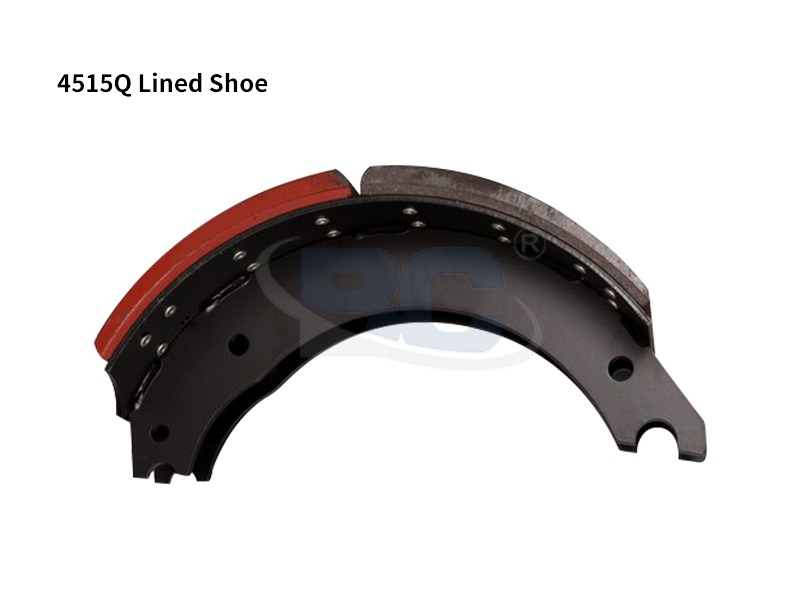 4515Q Lined Brake Shoe for Heavy-Duty TrucksThis lined brake shoe matches OE number 152.05533/3222 Q 1291 and comes in a 16.5-inch by 7-inch size with 32 rivet holes, relevant when choosing friction grades for fleet needs.View Product →
Generation and Actuation Variants
Old-generation and new-generation brake shoes for the same axle family are rarely interchangeable, and air-actuated versus oil-actuated systems require different shoe geometries.
The same axle name can cover two entirely different brake generations. BPW, for example, lists both old-generation and new-generation shoes, and Volvo separates VL200 old-generation from VL225 new-generation. In the same way, Hino and Nissan platforms are split into air and oil actuation variants. A bulk order that does not capture these distinctions will almost certainly produce a wrong fit and an avoidable return.
| Platform family | Variants to specify | What changes |
| BPW | Old generation / new generation | Shoe table profile and lining width |
| Volvo VL | VL200 old gen / VL225 new gen | Drum interface and lining dimensions |
| Hino | Air / oil | Brake chamber interface and web geometry |
| Nissan | Air / oil | Actuation point and lining specification |
Bulk Procurement Checklist
A complete purchase order for commercial vehicle brake shoes must include axle platform, generation, lining size, friction grade, attachment method, and quality certification.
Use the following sequence to build a verified order that the warehouse can issue without returns.
- Confirm the axle model, generation, and brake chamber type for every vehicle in the batch.
- Cross-reference the FMSI number or the OE part number stamped on the existing shoe.
- Verify lining width, arc length, drum diameter, and web thickness against the drawing.
- Specify the friction grade and whether the lining must be bonded or riveted.
- Request IATF 16949 documentation and batch traceability before approving the shipment.
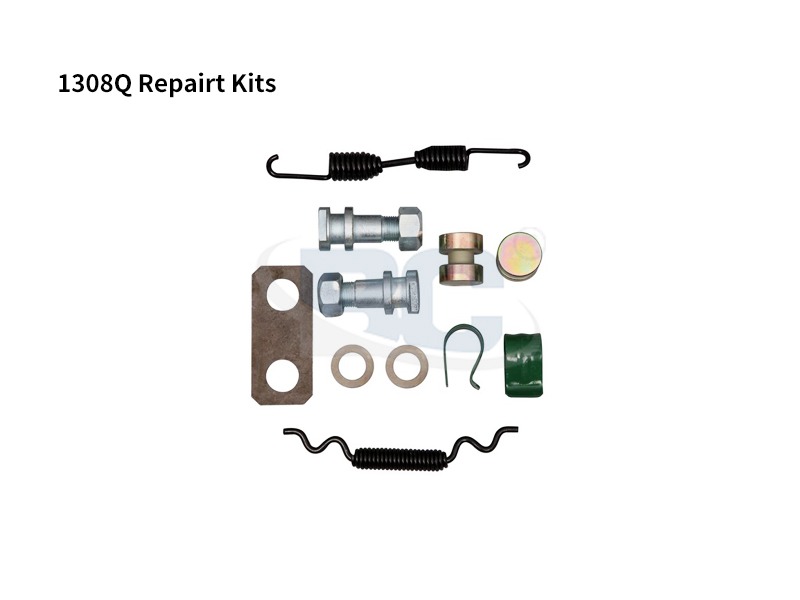
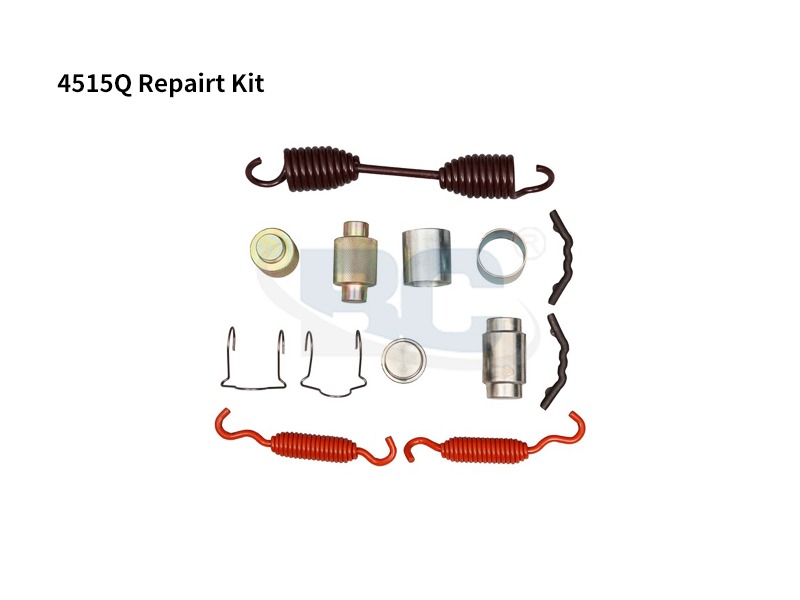 4515Q Brake Shoe Repair Kit for Heavy TrucksThis repair kit corresponds to FMSI numbers 4515Q/4707Q and OE E2769HD, providing a standardized way to verify shoe geometry across suppliers for heavy-duty truck replacement.View Product →
Frequently Asked Questions
What does an FMSI number tell a bulk buyer?
An FMSI number is a standardized index for friction material shapes and shoe configurations. It lets a buyer match a replacement shoe to an axle platform without memorizing every OE part number, and it is the most reliable shorthand for confirming geometry across suppliers.
How do I measure a brake shoe before ordering?
Measure the lining width across the curved face, the arc length along the circumference, the drum diameter against which the shoe seats, and the web thickness. Compare all four values to the manufacturer's data sheet before confirming a bulk order.
Are steel and casted brake shoes interchangeable?
No. Steel and casted shoes differ in table construction, web rigidity, and weight distribution. Even when the lining size matches, the mounting geometry is not guaranteed to align. Replace like-for-like according to the axle specification.
Can old-generation and new-generation brake shoes be used on the same axle?
No. Generation changes alter the drum interface and sometimes the brake chamber position. Fitting the wrong generation can cause partial lining contact, uneven wear, and reduced braking force. Always confirm the generation before ordering.