 English
 简体中文
简体中文Two brake linings can carry the same FMSI number and still behave completely differently in service. One holds up for 200,000 km of line-haul work; the other fades on the first long downgrade and leaves the drum scored. The part number only describes the shape and the vehicle application. The performance comes from the manufacturing process: how the raw materials are weighed, blended, pressed, cured, and ground before the lining is riveted or bonded to a brake shoe. For fleet managers, distributors, and technicians, understanding how brake linings are made is the most practical way to predict wear life, stopping consistency, and whether a supplier can hold the tolerances that keep a heavy truck safe.
What a Brake Lining Actually Is
A brake lining is the replaceable friction surface that presses against the inside of a brake drum to slow a vehicle. The lining is attached to a steel or cast brake shoe; when the brake system is actuated, the shoe expands and pushes the lining into contact with the drum. In heavy-duty service, the lining must survive high thermal loads, resist fade, and wear at a predictable rate. None of those properties can be added after installation. They are locked in during manufacturing.
Linings are wear components by design, which is why the material used in a brake shoe lining matters so much for maintenance intervals and drum condition.
Raw Materials: The Recipe Behind Friction
A modern heavy-duty lining is a composite. It combines four functional groups, and each one influences braking performance in a measurable way. Changing a single ingredient, or even the percentage of a single ingredient, shifts the friction curve and the wear rate.
| Ingredient group | Examples | Function |
|---|---|---|
| Binders | Phenolic resin, modified resin systems | Hold the structure together and maintain strength at high temperature |
| Reinforcing fibers | Aramid, glass, mineral, steel or copper fibers | Provide mechanical strength and resist cracking and delamination |
| Friction modifiers | Graphite, cashew dust, ceramic particles | Control the friction level, smoothness, and fade resistance |
| Fillers | Barium sulfate, calcium carbonate, rubber dust | Balance cost, stabilize volume, and fine-tune hardness |
The resin binder is the backbone of the lining. Heavy-duty grades typically use phenolic resin because it keeps its structural integrity in the temperature range produced by repeated truck braking. Too little resin, and the lining crumbles or delaminates. Too much, and it becomes brittle and prone to heat fade. Formulation is therefore a balancing act, not a fixed recipe. The best results come from matching the formulation to the axle load, drum size, and duty cycle of the intended application.
The Manufacturing Process, Step by Step
Although every manufacturer has its own formulation, the production sequence is similar across the industry. Each step is a control point where defects can be introduced or eliminated.
Weighing and mixing
Raw materials are weighed according to the formulation and blended in high-speed mixers. Mixing time, blade speed, and temperature are recorded because they affect fiber distribution and resin coverage. An uneven mix produces hard spots or weak zones that later show up as noise, vibration, or irregular wear.
Preforming
The mixed powder is placed into a preform mold and compacted at room temperature to create a shape close to the final lining. Preforming removes trapped air and gives the material enough green strength to survive handling before the main pressing step.
Hot pressing
The preform is loaded into a heated mold and pressed at temperatures typically between 140°C and 180°C, depending on the resin system. Heat and pressure fuse the resin and densify the material to the final thickness and curvature. Cycle time, temperature uniformity, and pressure are recorded for every batch. A lining that leaves the press with voids or uneven density cannot be corrected by later machining.
Curing and post-curing
After hot pressing, the lining is baked to complete the resin cross-linking reaction. This step stabilizes the material so it will not continue to shrink or swell after installation. Post-curing also helps the lining hold a consistent friction coefficient as the operating temperature rises during heavy braking.
Grinding and finishing
The cured lining is ground to a precise thickness and surface finish. Dimensional accuracy is critical in heavy-duty brakes: a lining that is too thick prevents correct assembly, while one that is too thin increases shoe-to-drum clearance and reduces braking force. Grinding also produces the flat, parallel surface that contacts the drum. Some linings receive chamfers, slots, or countersunk holes for riveting. These details affect how the lining and brake shoe work together as a system.
Inspection and packaging
Finished linings are checked for cracks, voids, dimensional accuracy, and hardness before packaging. Each product carries an FMSI reference and a batch code, allowing any field issue to be traced back to the exact production run and raw material lot.
Molded vs. Rolled: How the Process Changes the Product
The forming method has a direct effect on cost, consistency, and suitability for a given application. Buyers rarely need to specify the process, but they should understand what they are buying.
Dry-mix molded linings
Most heavy-duty linings are made by the dry-mix molded process described above: dry powders are mixed, preformed, hot-pressed, and cured. This method offers the tightest control over density, thickness, and curvature, which is why it dominates truck and trailer applications.
Rolled or woven linings
Some linings are made by rolling or weaving fibers with resin into a flexible sheet that is then cured. Rolled linings can be produced at a lower cost, but they generally do not match molded linings for high-temperature stability and wear life. They are more common in light-duty or older applications.
Wet-mix process
The wet-mix process disperses the ingredients in a solvent or water-based medium before drying and pressing. It creates a very uniform mixture, but it adds complexity and cost. In practice, a buyer should confirm that the supplier uses a documented, controlled production process rather than a lab-scale method that cannot hold batch-to-batch consistency.
Quality Control and Testing
High-volume production is where quality control is proven. A manufacturer that tests during the process, not just at final inspection, catches drifting raw materials, press temperature variations, and grinding errors before they reach customers.
- Dimensional inspection: Thickness, width, arc length, and hole positions are checked against the drawing tolerance, usually with dedicated gauges or measuring equipment.
- Hardness testing: Hardness is measured at multiple points across the surface. A lining that is too hard can score the drum; one that is too soft wears too quickly.
- Shear strength testing: Verifies that the lining will not separate from the shoe under repeated braking loads.
- Friction and fade testing: Samples are tested on an inertia dynamometer to measure friction level, stability, and recovery after high-temperature stops, following applicable standards such as FMVSS 121.
- Batch traceability: Each batch is linked to its raw material lots and process records, so any field problem can be investigated and corrected quickly.
Suppliers that operate under structured quality systems, such as IATF 16949, tend to produce more consistent products and better documentation. This matters when linings are supplied as part of a lined brake shoe or a repair kit, because the components must fit together and perform as one assembly.
Matching the Lining to the Axle
Heavy-duty linings are identified by their FMSI number and by physical dimensions such as width, thickness, and arc length. A lining for a BPW trailer axle, for example, has a different friction width and drum contact geometry than a lining for another common European axle system. Fitting the wrong reference creates installation problems, uneven contact patterns, and reduced braking performance.
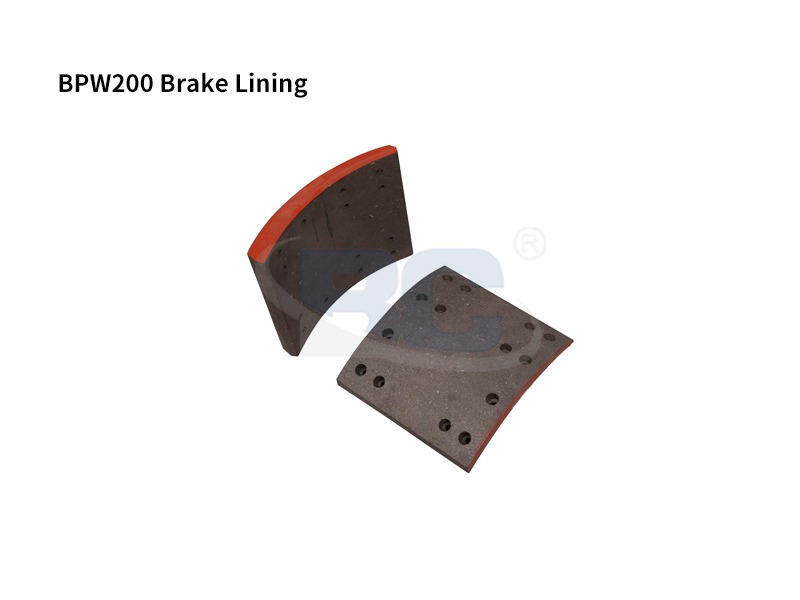
This is where a supplier's range becomes practical. A manufacturer that offers the FMSI 4515 brake lining as a standard dry-mix molded product, and also keeps the FMSI 4707 brake lining in stock for other popular heavy-duty platforms, makes life easier for a distributor managing multiple fleets. When a fleet is standardized on BPW axles, a BPW 200 brake lining in 420 x 200 mm provides a direct replacement reference that matches the original format.
 19094 OEM Manufacturers, Brake Lining 19094 Exporter, CompanyWe Are China 19094 OEM Manufacturers, Exporter, Company, Zhejiang Bangchi Auto Parts Co., Ltd. Offer Custom 19094 Brake Lining For Sale.View Product →
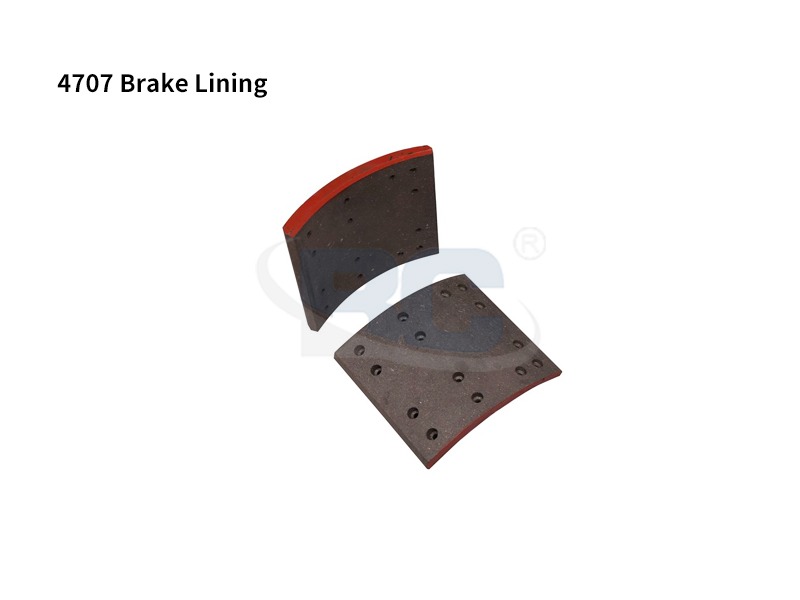 Custom 4707 Brake Lining OEM Manufacturers, Exporter, CompanyZhejiang Bangchi Auto Parts Co., Ltd. Is China Custom 4707 Brake Lining OEM Manufacturers, Exporter, Company, Part Number:4707 Brake Lini...View Product →
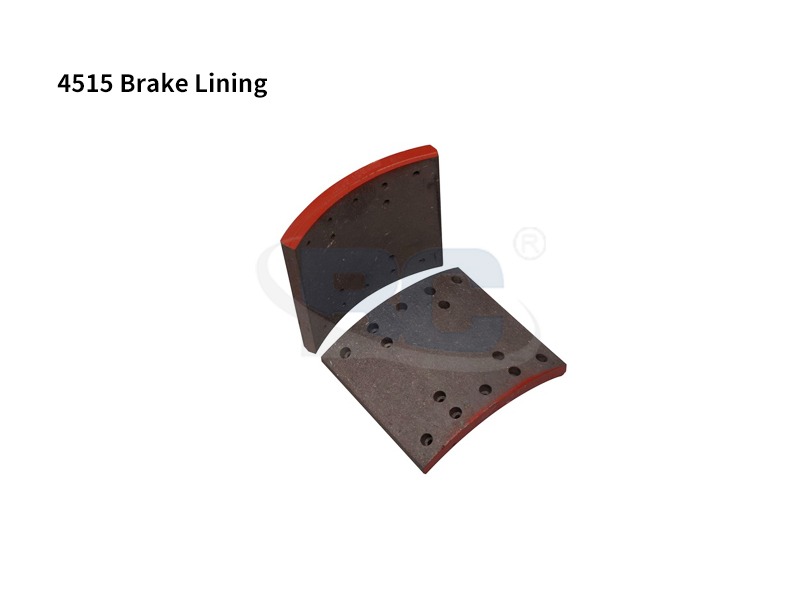 Custom 4515 Brake Lining OEM Manufacturers, Exporter, CompanyZhejiang Bangchi Auto Parts Co., Ltd. Is China Custom 4515 Brake Lining OEM Manufacturers, Exporter, Company, Part Number:4515 Brake Lini...View Product →
Questions to Ask a Brake Lining Manufacturer
- Request the dimensional drawing and tolerance for each FMSI reference, and compare it to the original lining you are replacing.
- Ask about the resin system and whether the lining is dry-mix molded or produced by a different process.
- Ask how batch traceability is maintained and whether test reports can be provided with each shipment.
- Check the intended duty cycle. A lining developed for logging trailers with long descents is not automatically the right choice for a line-haul fleet with frequent stops.
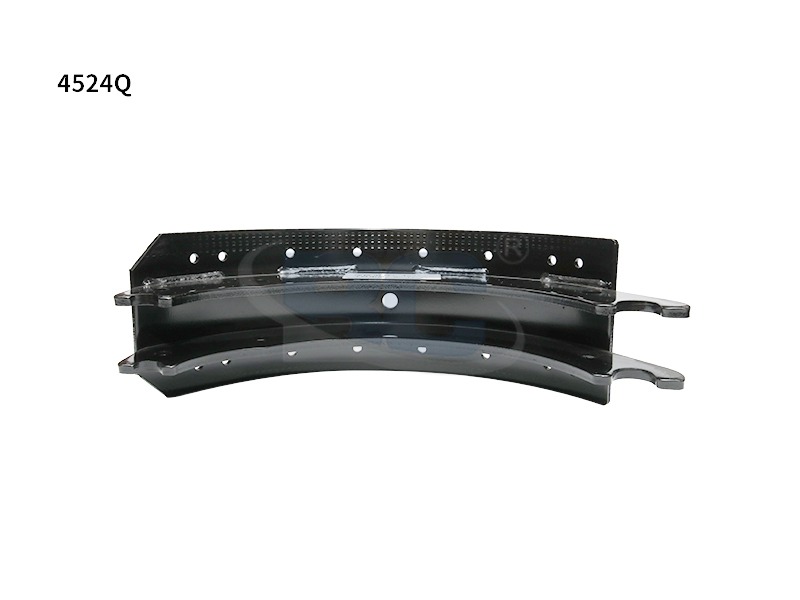
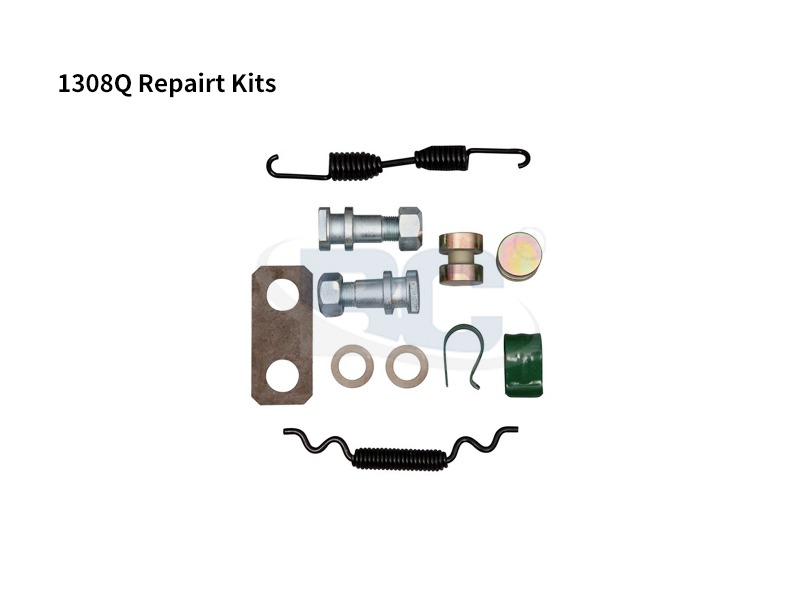
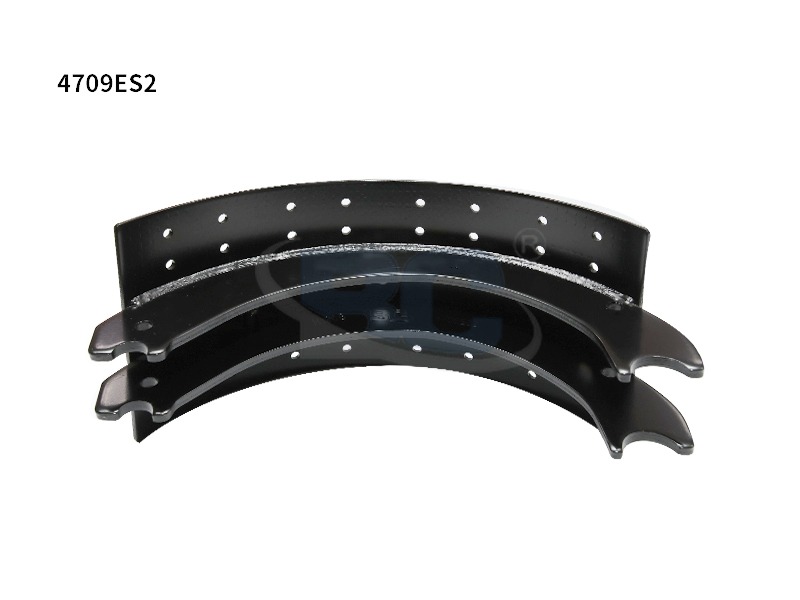
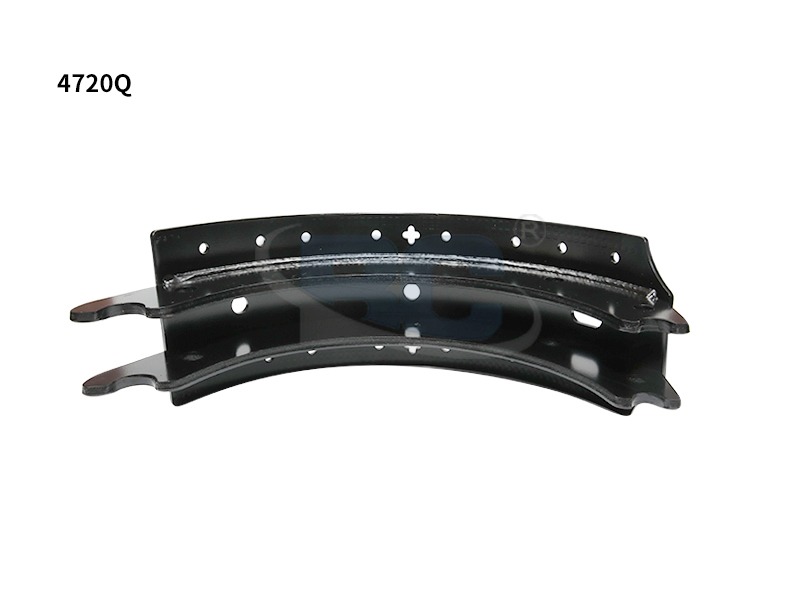
- Confirm whether the supplier can provide complete lined shoes and repair kits in addition to loose linings. Fewer sources mean simpler procurement and more consistent compatibility.
A capable manufacturer will welcome these questions. If a supplier cannot explain how its brake linings are made, what tolerances they hold, or which applications they were developed for, the risk shows up later as downtime, drum wear, and warranty disputes.
Why the Manufacturing Process Deserves Your Attention
Brake linings are not interchangeable in behavior just because they share an FMSI number. The formulation, pressing parameters, curing profile, and finishing tolerances determine whether a lining delivers consistent braking over hundreds of thousands of kilometers. In a heavy truck, a failed brake component is not an inconvenience; it is a safety risk. Choosing a supplier that can document its process, hold dimensional tolerances, and trace every batch is the most reliable way to protect both your fleet and your budget.