 English
 简体中文
简体中文How Temperature Resistance Affects Brake Lining Performance
On a loaded truck, braking is not a routine operation. Every time the driver presses the pedal, the vehicle's kinetic energy becomes heat at the drum-lining interface. On a mountain descent, the heat stays concentrated in the brake assembly for minutes. The brake lining absorbs the most direct thermal stress. If it cannot maintain a stable friction coefficient as the temperature climbs, stopping distance grows and the lining itself starts to fail.
The conclusion is straightforward: temperature resistance controls friction stability, wear rate, recovery, and structural survival. Brake fade is the first direct consequence of insufficient temperature resistance. When the friction material gets too hot, the coefficient of friction drops. The driver presses harder, the brakes feel weak, and the vehicle takes longer to stop.
Temperature resistance is not a single "maximum temperature" rating. It is the lining's ability to keep producing predictable friction under heat, resist surface degradation, and recover after cooling. In heavy-duty applications, that capability is often the difference between a controlled stop and a lining that glazes, cracks, or wears out early.
What Happens to a Brake Lining as Temperature Rises
Most heavy-duty friction materials do not fail at one exact temperature. They pass through a predictable sequence of changes. The exact values depend on formulation, curing, and drum condition, but the general pattern is consistent.
| Temperature Range | Performance Effect | Practical Result |
|---|---|---|
| Below 180°C | Stable friction, normal wear | Predictable braking and normal service life |
| 180–300°C | Resin begins to soften; friction can fluctuate | Mild fade under heavy use, faster wear near the top of the range |
| 300–400°C | Binder degradation and surface oxidation accelerate | Longer stopping distances, visible wear or glazing |
| Above 400°C | Severe fade, cracking, and delamination risk | Lining life drops sharply; immediate inspection or replacement required |
Fade and Recovery
A temperature-resistant lining should fade gradually rather than suddenly. Sudden fade is dangerous because the driver cannot adjust before the vehicle loses braking force. Recovery is equally important. When the drum temperature drops, the friction material should regain most of its original output. If the lining does not recover, the next brake application starts from a weakened condition.
Wear and Surface Damage
Heat accelerates wear through oxidation and resin decomposition. The binder that holds the friction ingredients together loses strength, and the surface can glaze or develop microcracks. Glazing reduces friction and creates hot spots on the drum. Cracks can spread until pieces of lining separate from the shoe. Temperature resistance is therefore more than a fade test; it is also a measure of mechanical survival.
What Makes a Brake Lining Temperature-Resistant
A brake lining is a composite material. Its temperature resistance comes from the interaction of binder, fibers, fillers, friction modifiers, and the manufacturing process that turns them into a stable part.
Binder Stability
The binder holds the friction material together. Heavy-duty linings usually use phenolic resin or modified resin systems. At high temperature, a standard resin can soften and lose strength. Modified resins are designed to survive the heat generated by loaded commercial vehicles. This is one of the first areas where a low-cost lining shows its limit.
Fibers, Friction Modifiers, and Process Consistency
Metal fibers and high-temperature mineral fibers improve heat transfer and structural strength. Friction modifiers shape the friction curve at different temperatures, keeping output steady enough for the driver to control. But even a strong formula fails if the production process is inconsistent. Mixing, pressing, and curing all need to be controlled so every batch behaves the same way. Suppliers with real brake-shoe production experience understand this interaction between the friction material and the metal shoe table.
One common mistake is assuming an FMSI number defines temperature resistance. It does not. The FMSI number identifies the lining profile and mounting dimensions, not the friction material formula. A replacement 4707 brake lining has the same basic shape as another 4707, but its thermal behavior can be completely different. The FMSI number tells you which shoe it fits; it does not tell you how it behaves at 350°C.
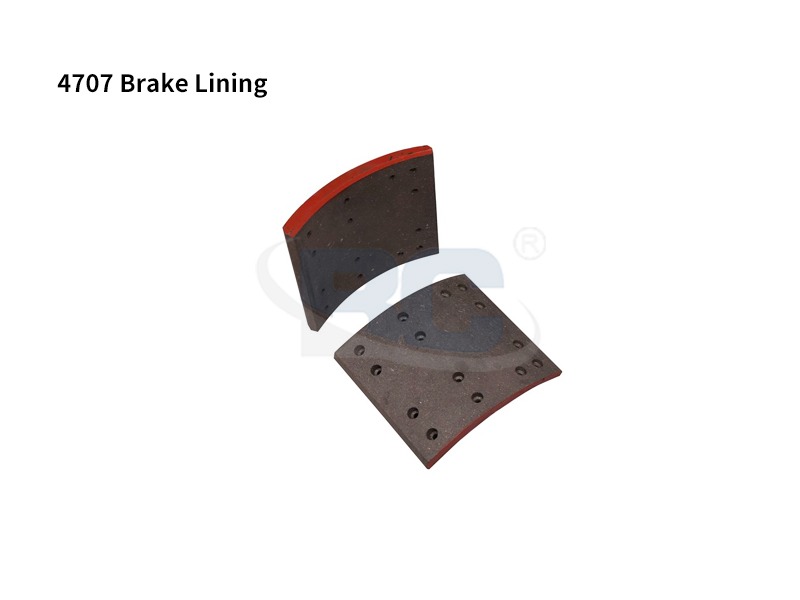 Custom 4707 Brake Lining OEM Manufacturers, Exporter, CompanyZhejiang Bangchi Auto Parts Co., Ltd. Is China Custom 4707 Brake Lining OEM Manufacturers, Exporter, Company, Part Number:4707 Brake Lini...View Product →
How to Evaluate Temperature Resistance Before Buying
For a fleet, distributor, or workshop, temperature resistance should be checked through a few targeted questions. A serious supplier should be able to show data for friction level, fade, recovery, and wear under elevated temperatures.
- Does the friction curve stay stable across the expected operating temperature range?
- Is the wear rate documented after temperature cycling, not only at a constant low temperature?
- Does the lining recover after a high-temperature stop?
- Is the lining compatible with the drum type, vehicle load, and route profile?
- Is there batch-to-batch consistency supported by quality system documentation?
Match the Lining to the Duty Cycle
A lining used on a line-haul trailer at legal weights on flat roads does not need the same thermal capacity as a lining used in stop-and-go urban operation or on a truck that regularly descends grades. Heavy trucks generate heat in short bursts, so the lining's thermal class should be compared with the fleet's worst-case stop, not the average stop.
The FMSI 4515 profile is widely used across trailer and truck axle applications. If your existing lining fades or wears early, choose a FMSI 4515 brake lining with a suitable thermal specification and confirm the friction and wear data with the supplier.
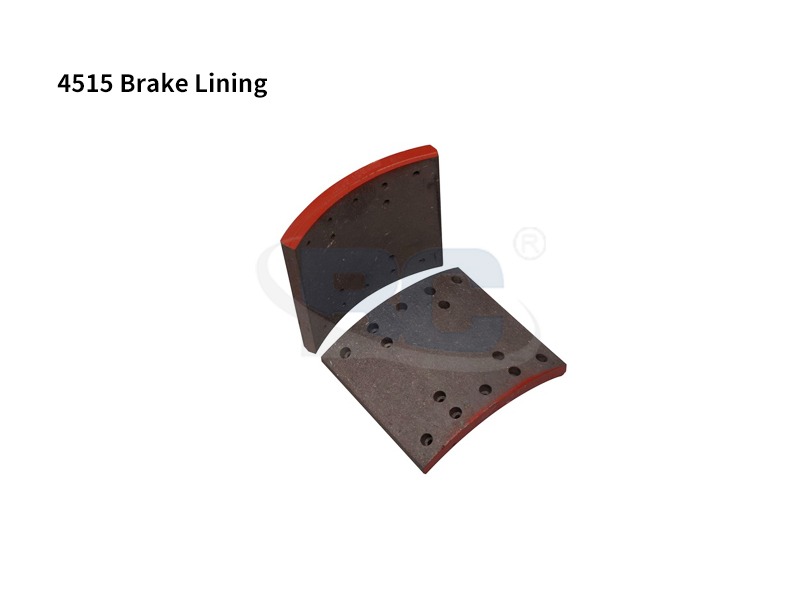 Custom 4515 Brake Lining OEM Manufacturers, Exporter, CompanyZhejiang Bangchi Auto Parts Co., Ltd. Is China Custom 4515 Brake Lining OEM Manufacturers, Exporter, Company, Part Number:4515 Brake Lini...View Product →
Ask for Data, Not Just a Part Number
When a supplier describes a lining as "high temperature," ask what test data supports the claim. Fade and recovery curves, coefficient of friction values, and wear rates matter more than marketing language. If the data is not available, treat the lining as an unverified product. For heavy-duty brake replacements, that risk is unacceptable. When in doubt, ask the manufacturer directly for technical documentation and application guidance.
Practical Consequences for Maintenance and Replacement
Temperature resistance also affects the economics of brake maintenance. A lining that survives thermal stress wears more evenly and lasts longer. It causes less drum wear and fewer repeat repairs. A lining that cannot handle heat glazes, cracks, or wears quickly, forcing earlier replacement and increasing vehicle downtime.
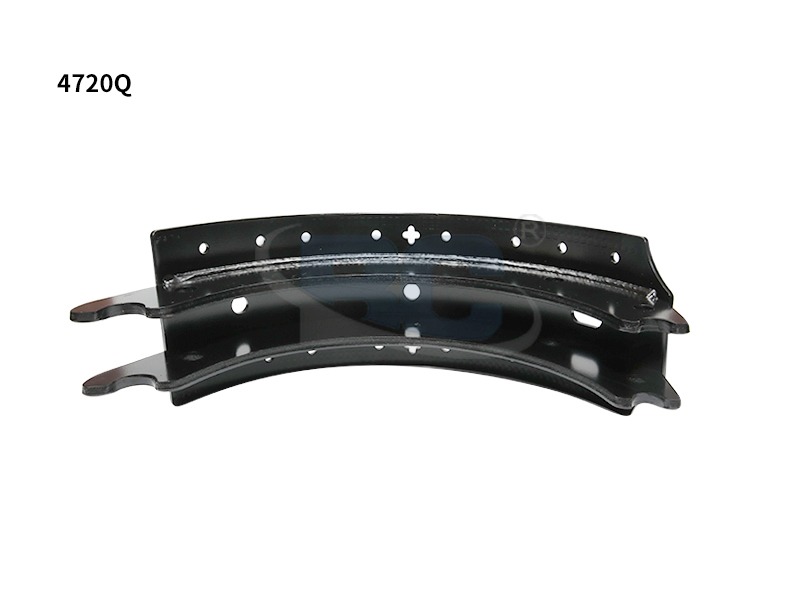
For a repair workshop, using a verified lining is part of quality control. The right lining reduces the chance of noise, pull, or uneven contact after installation. When the lining is supplied with a brake shoe as a complete assembly, installation risk is lower because lining position and fastening are controlled by the manufacturer. A 4707Q lined shoe is an example of a complete replacement assembly for that profile. If you are still evaluating how to match a lining to a specific shoe, common repair questions are covered in the FAQ section.
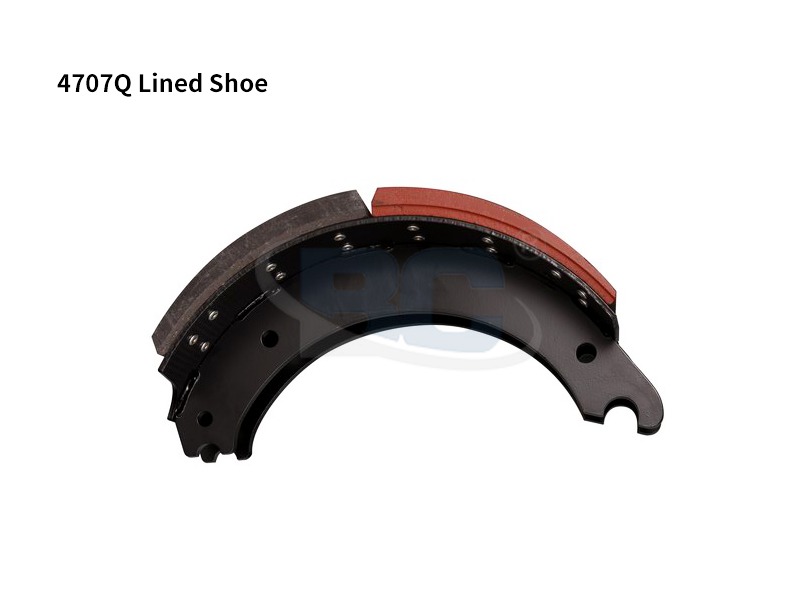 Custom 4707Q Lined Brake Shoe OEM Manufacturers, Exporter, CompanyZhejiang Bangchi Auto Parts Co., Ltd. Is China Custom 4707Q Lined Brake Shoe OEM Manufacturers, Exporter, Company, Part Number:4707Q Prod...View Product →
The brake lining is the part that turns kinetic energy into heat without losing its composure. Temperature resistance decides whether that heat is managed in a controlled way or becomes fade, glazing, and early failure. When choosing a heavy-duty brake lining, match the thermal performance to the real operating demand, ask for data, and treat the FMSI number as a fitment reference rather than a quality specification.