 English
 简体中文
简体中文A Class 8 tractor rolls into the shop after a long downgrade run. The driver reports a hard pedal, longer stopping distances, and a burned smell from the rear axle. When the technician pulls the drum, the lining tells the story: a polished surface on one end, cracks near the edge, and rivet heads showing on the other.
The conclusion is straightforward: most common brake shoe lining problems are not random defects. They follow predictable patterns caused by heat, contamination, mechanical wear, and installation errors. Every pattern has a known cause, a reliable way to confirm it, and a practical solution.
Why Brake Shoe Linings Fail Prematurely
A brake shoe lining is the friction material attached to the steel or cast brake shoe. In modern heavy-duty products, it is an asbestos-free, resin-bonded compound engineered for high temperature and high pressure. Its job is to convert the vehicle's kinetic energy into heat when the brake mechanism presses the lining against the drum.
Heat, mechanical stress, and road contaminants eventually end every lining's service life. Linings fail early when one of those factors is pushed beyond the material's design envelope, so most failures trace back to overheating, contamination, mechanical damage, or poor installation. Identifying the correct root cause before ordering parts is the difference between a lasting repair and a repeat failure.
Six Common Brake Shoe Lining Problems and How to Spot Them
After years of building heavy-duty brake shoes for the replacement and OEM markets, we keep seeing the same failure patterns in the field. These six problems account for nearly all premature lining failures.
1. Glazed Linings That Lose Friction
Glazing is the most often misdiagnosed lining failure. It develops when the lining surface is heated repeatedly without enough braking pressure to clean it. The resin binder softens and hardens into a dense, smooth film. The lining looks intact, but its coefficient of friction is gone.
How to spot it: a glossy, mirror-like surface, a hard pedal, and brake fade on long stops. Light glazing can be recovered by scuffing with coarse abrasive paper. Deep glazing, where the hardened skin has penetrated the material, is not recoverable, and the lining must be replaced.
2. Uneven and Tapered Lining Wear
When one end of the lining is worn thin and the other end looks almost new, the lining is usually the victim rather than the cause. The usual suspects are worn S-cam bushings, stretched return springs, seized rollers, or an out-of-round drum, all of which tilt the shoe and concentrate contact.
How to spot it: measure the lining thickness at the top, middle, and bottom. A taper of more than about 1.5 mm from one end to the other points to hardware or drum condition, not friction material. Replace the worn hardware, recondition or replace the drum, and only then fit new lining.
3. Cracking and Heat Checking
Surface cracks, often called heat checks, are the signature of thermal fatigue. Heavy or repeated braking heats the lining surface faster than the compound can conduct heat away, so it expands, contracts, and eventually cracks. Severe cases leave charred edges.
How to spot it: fine crack lines across the lining face, dark burn marks near the ends, or missing chips at the edges. Shallow checks within the wear allowance can be sanded smooth. A charred or deeply cracked lining must be replaced, and the overheating cause, typically overloading, excessive speed, or a dragging brake, must be fixed at the same time.
4. Delamination and Loose Lining
Delamination is the separation of the lining from the brake shoe at the bond line or around the rivets. It is the most dangerous lining failure because it can lead to sudden loss of braking. Causes include bonding defects, water or chemical attack at the edges, and impact damage during installation.
How to spot it: a hollow sound when tapping the lining with a hammer, visible gaps along the edges, or lining movement under finger pressure. Never try to re-glue or re-rivet a delaminated lining. The only safe repair is a complete lined brake shoe assembly.
5. Oil, Grease, and Brake Fluid Contamination
Contaminated lining is common on trucks with leaking hub seals, over-greased bearings, or leaking brake chambers. Petroleum products soak into the porous friction material and permanently change its friction properties, making the brake weak or grabby, often unevenly from left to right.
How to spot it: dark, oily patches, a greasy film when touched, and a strong oil smell near the wheel end. Fix the leak first, then replace the lining. Cleaning contaminated friction material with solvent is never an acceptable fix, because the contamination soaks below the surface and reappears under braking heat.
6. Noise, Vibration, and Drum Scoring
Grinding, squeal, groan, or pedal pulsation usually means the lining has worn down to the rivets or backing table, or hard debris has embedded itself in the friction surface. The same condition also scores the brake drum.
How to spot it: metallic noise during braking, visible grooves on the drum face, or lining thickness below the manufacturer's minimum at the wear indicator. Stop the vehicle immediately and replace the lining before the drum is machined or replaced.
Diagnosing Brake Shoe Lining Problems at a Glance
The table below condenses the six failure modes into a quick field reference.
| Symptom | Most Likely Cause | First Check | Remedy |
|---|---|---|---|
| Shiny, hardened surface | Glazing from heat | Surface texture and color | Lightly scuff or replace |
| Worn at one end only | Worn hardware or drum | S-cam bushings, springs, drum runout | Renew hardware, replace lining |
| Cracks and charring | Thermal overload | Brake adjustment, GVW, drag | Replace lining, fix root cause |
| Lining separated from shoe | Bond or rivet failure | Tap test, edge inspection | Replace complete lined shoe |
| Oily or greasy surface | Wheel seal or chamber leak | Hub seal, backing plate, chamber | Repair leak, replace lining |
| Metal-to-metal noise | Lining worn through | Thickness at wear indicator | Replace immediately, inspect drum |
Practical Solutions: What to Do After the Diagnosis
Once the root cause is confirmed, the repair follows a set sequence.
- Inspect the drum first. Check inside diameter, out-of-round, taper, and score depth, and machine or replace the drum before fitting new lining, because a damaged drum will wear out new lining just as quickly.
- Renew the hardware. Replace return springs, S-cam bushings, rollers, and slack adjusters when there is any doubt. Old hardware is the number one reason new lining wears unevenly.
- Select the right friction rating. Lining friction materials are formulated differently for line-haul, vocational, and severe-service work. A material matched to the duty cycle prevents both glazing and overheating.
- Complete the burnish procedure. Most manufacturers specify a break-in sequence of controlled stops before a newly lined brake enters service. Skipping burn-in is a fast way to glaze a brand-new lining.
Prevention: Getting More Miles from Brake Shoe Lining
Prevention costs less than parts and labour, which is why fleets that track lining service life tend to have the lowest brake cost per mile.
- Maintain correct brake adjustment. Automatic slack adjusters should be checked at every service interval, because misadjusted brakes create drag, heat, and glazing.
- Fix small leaks immediately. A slow wheel-seal leak can ruin a complete set of lining in a matter of days.
- Respect gross vehicle weight ratings. An overloaded axle pushes drum temperature well past the lining's design limit.
- Plan downhill operation. Engine braking and retarders keep continuous brake application within the heat capacity of the system.
- Inspect at every scheduled service window. Catching a heat check or a loose bond early saves both the drum and the lining.
Teardown data shows that wear patterns develop consistently for each brake shoe design. The 4700PQ brake shoe wear performance and service life guide explains how wear limits and replacement intervals behave for a specific FMSI platform.
Replacement Options: Reline, Replace, or Rebuild
Once the lining is beyond recovery, there are three practical paths to restoration, depending on shop capacity and the condition of the shoe.
Reline the Existing Brake Shoe
Riveted or bonded relining requires the correct arbor press, rivets or oven-cured adhesive, and a flat shoe table. Shops that service a high volume of heavy-duty brakes can make relining economical. Before reusing a shoe, check for table deformation and elongated rivet holes, because a bent table transfers its distortion into the new lining. See our step-by-step brake lining replacement guide for the full sequence.
Fit a Complete Lined Brake Shoe
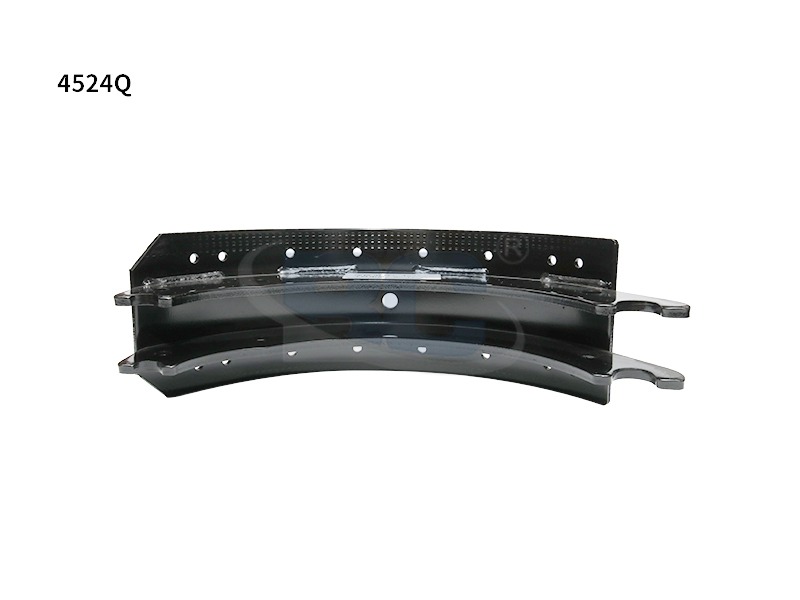
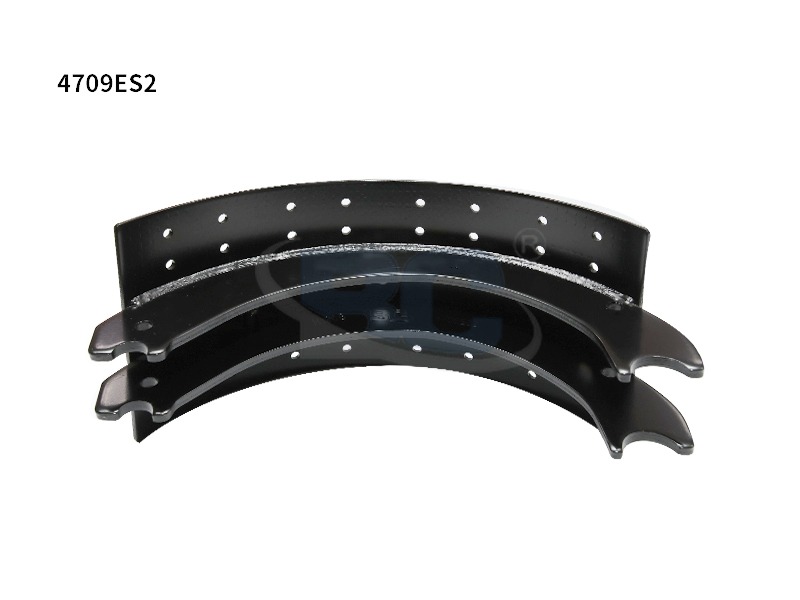
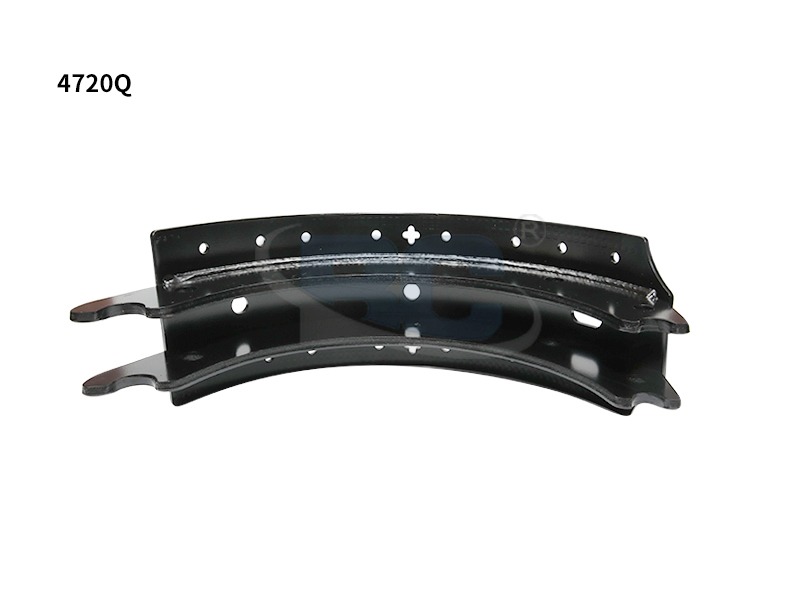
For most fleets and repair shops, a factory-lined brake shoe is the faster and more consistent option. The lining is applied under controlled conditions, the shoe table is verified flat, and riveting or bonding meets the manufacturer's specification. FMSI numbers make matching straightforward. A 4515Q lined brake shoe with premium friction material is a typical replacement choice for heavy-duty tractor and trailer axles.
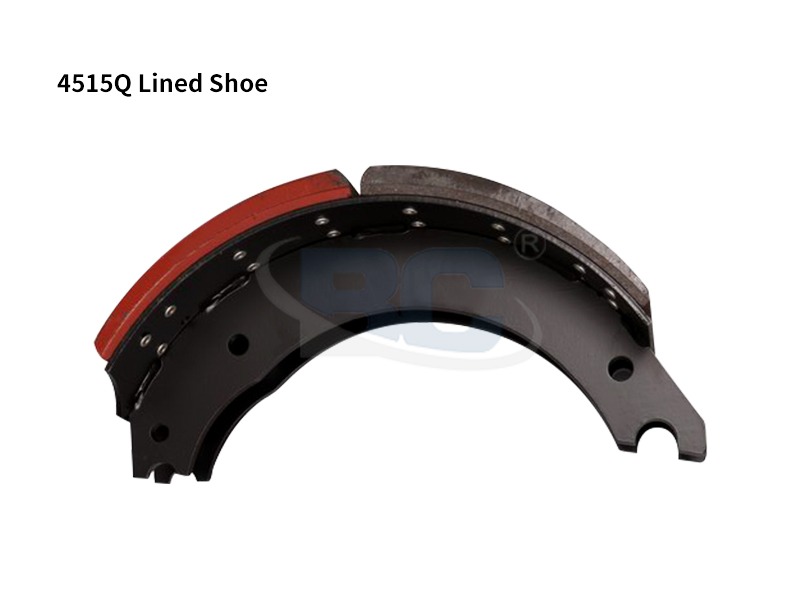 Custom 4515Q Lined Brake Shoe OEM Manufacturers, Exporter, CompanyZhejiang Bangchi Auto Parts Co., Ltd. Is China Custom 4515Q Lined Brake Shoe OEM Manufacturers, Exporter, Company, Part Number:4515Q Prod...View Product →
Rebuild with a Brake Shoe Repair Kit
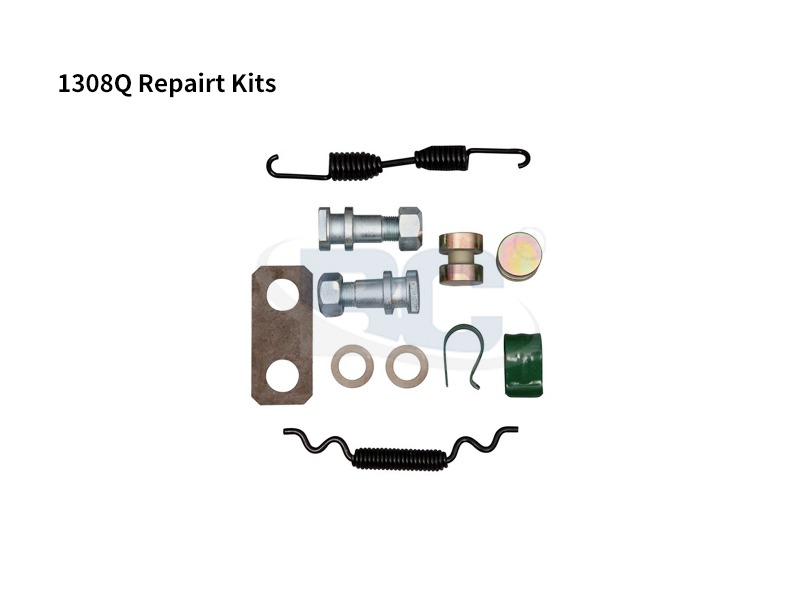
When the shoe table is still within specification but the hardware is questionable, a repair kit keeps the job economical without gambling on worn parts. The 4515Q and 4707Q E2769HD brake shoe repair kit is assembled around OE cross references, so all components are compatible.
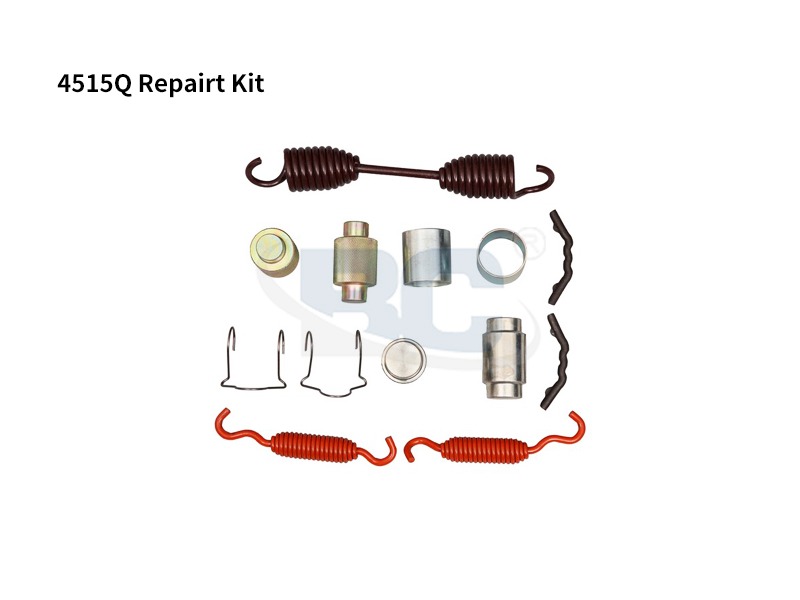 4515Q Brake Shoe Kit, 4707Q Brake Shoe Kit ManufacturersZhejiang Bangchi Auto Parts Co., Ltd. Offer Custom 4515Q Brake Shoe Kit, 4707Q Brake Shoe Kit, We Are China 4515Q/4707Q E2769HD Brake Sho...View Product →
Choosing the Right Friction Material
The friction material is the easiest place to save money and the worst place to compromise. Choose a lining with a stable friction coefficient across the working temperature range, adequate shear strength, and consistent thickness. The 4707 heavy-duty brake lining is a common FMSI choice across European and Asian truck and trailer axle programs. When in doubt, compare the friction rating and FMSI number against the original specification.
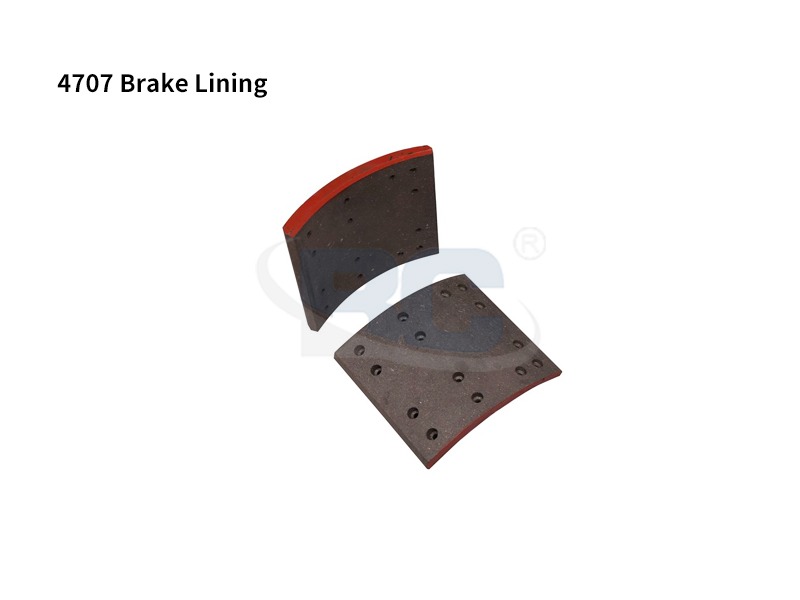 Custom 4707 Brake Lining OEM Manufacturers, Exporter, CompanyZhejiang Bangchi Auto Parts Co., Ltd. Is China Custom 4707 Brake Lining OEM Manufacturers, Exporter, Company, Part Number:4707 Brake Lini...View Product →
Fitment guidance for specific axle platforms matters as much as material choice. The 4702PQ brake shoe compatibility guide for heavy-duty truck brake systems explains how dimensional verification and material selection work together in practice.
Conclusion
Brake shoe lining problems are rarely mysterious. Six patterns, glazing, uneven wear, cracking, delamination, contamination, and wear-through noise, account for nearly every premature failure. Each has a clear diagnostic signature and a direct remedy. Quality friction material, installed on a sound shoe with fresh hardware, delivers the longest life. When lining is beyond recovery, replace it with a properly engineered lined brake shoe or reline with proven friction material, and fix the underlying cause before the vehicle returns to the road.