 English
 简体中文
When a fully loaded Class 8 truck descends a mountain grade, the brake shoe friction material at each wheel can exceed 400°C while continuously generating the friction needed to control a 36-tonne combination vehicle. That single operating condition explains why heavy-duty brake shoe friction material is an engineered safety component with measurable performance requirements, not a generic consumable. For fleet maintenance teams and commercial parts buyers, the practical question is not which friction material is good in the abstract, but which performance targets must be verified before a brake shoe is signed off for service.
Why Friction Material Performance Dictates Heavy-Duty Brake Safety
Heavy-duty brake safety depends on friction material that maintains a stable friction coefficient across the full operating temperature range and under repeated high-energy stops. The brake shoe carries the friction material inside a drum brake system, and that lining converts kinetic energy into heat. When the friction coefficient drops because of thermal fade, stopping distance expands measurably, and FMVSS 121 stopping-distance targets can no longer be met, even with a fully charged air system.
On a loaded vehicle, braking from 60 mph on a 5% grade requires about 20 times more energy per stop than the same vehicle on a flat surface. A friction material that holds a coefficient above 0.40 at 100°C and drops below 0.30 at 350°C will pass a short road check but fail a sustained descent.
Shorter inspection intervals and a conservative lining compound are the two cheapest ways to offset the operational risk of a heavy-duty vehicle.
What poor friction material actually causes in service
- Longer stopping distance while descending grades
- Drum cracking from uneven friction load and thermal stress
- Lining delamination when shear strength drops below safe levels
- Unplanned downtime and premature replacement of both drum and shoe
Core Performance Requirements for Heavy-Duty Brake Shoe Friction Material
Five performance requirements govern heavy-duty brake shoe friction material: stable friction coefficient, thermal fade resistance, controlled wear rate, mechanical integrity, and low noise and dust generation. Each of these has a recognized test method and a target value that can be verified in a laboratory or on a dynamometer before a lining is released to the market.
| Requirement | Test method | Target value | Practical impact |
| Friction coefficient | SAE J661 chase test | 0.35 to 0.45 at 200°C | Predictable stopping power |
| Thermal fade resistance | FMVSS 121 dynamometer | Fade at no more than 20% at 300°C | Safe behavior on descents |
| Wear rate | Tread wear dynamometer | Below 0.5 mm per 10,000 km | Maintenance cost control |
| Shear strength | SAE J840 | At least 3.5 MPa | Lining stays bonded to shoe |
| Noise generation | Noise dynamometer | Below 80 dB steady state | Driver comfort and compliance |
How Friction Material Compounds Are Engineered for Commercial Vehicles
Three friction material families dominate heavy-duty brake shoe compounds: metallic, semi-metallic, and non-asbestos organic, with ceramic-reinforced semi-metallics gaining ground because they resist fade and extend drum life. Compound formulation, not the shoe geometry alone, determines how much heat the lining can accept before friction collapses.
Metallic compounds
High steel fiber content delivers excellent heat resistance and keeps a stable coefficient at elevated temperature, but metallic linings generate more brake noise and wear the drum surface faster.
Semi-metallic compounds
Balanced metallic and organic fibers provide good fade resistance, lower noise, and longer drum life. This family is the practical choice for linehaul and mixed vocational fleets.
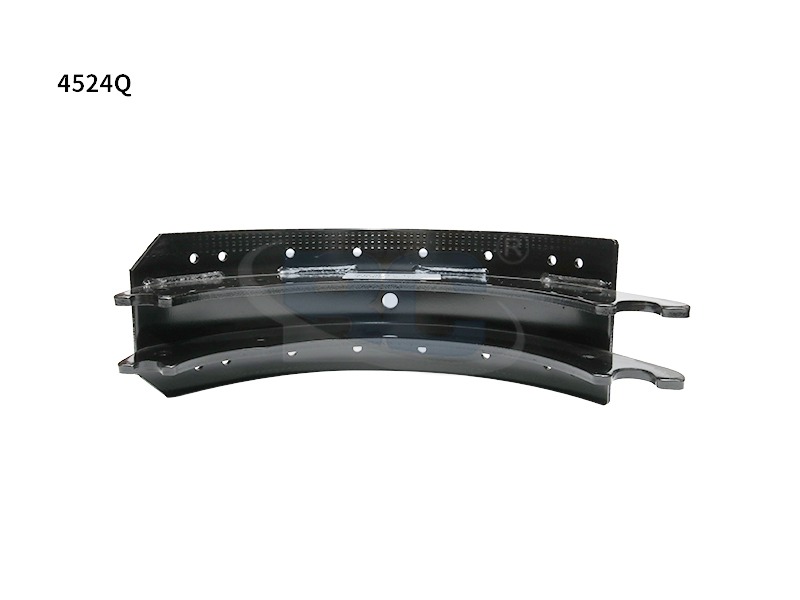
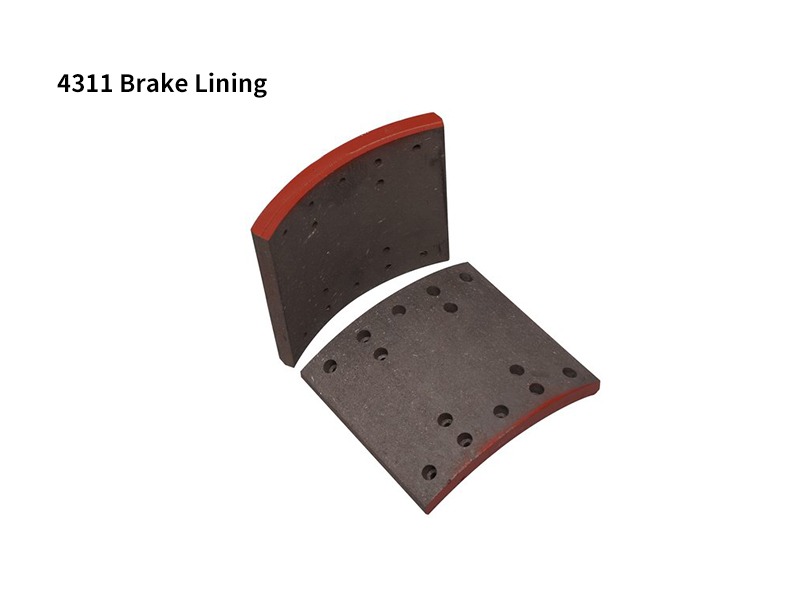 4311 Brake Lining for Heavy-Duty LinehaulDesigned for 16.5" x 7" brake shoes with 14 rivet holes, this lining offers balanced metallic and organic fibers for good fade resistance and long drum life, ideal for linehaul and vocational fleets.View Product →
For heavy-duty linehaul in mountainous terrain, semi-metallic compounds with ceramic reinforcement usually deliver the best balance between fade resistance and drum wear. Specify a formulated lining with documented dyno data, not a generic blend.
Environmental and Regulatory Factors Affecting Friction Material Selection
Friction material selection is now governed by regulatory limits on copper, asbestos, and volatile organic compounds, which have reshaped heavy-duty lining formulations over the past two decades. Non-asbestos organic and low-copper formulas are the compliance baseline in most global markets, and manufacturers operating under IATF 16949 are better positioned to control batch-to-batch variation.
- Asbestos is banned in heavy-duty brake linings across Europe, North America, and Japan
- California and Washington maintain copper limits at or below 0.5% for friction material
- Emission rules for dust and volatile organic compound release apply during lining curing
Copper-free formulations also reduce the environmental load on waterways, which matters for fleets operating in regions with strict runoff regulations.
Service Life, Maintenance, and Replacement Indicators
Heavy-duty brake shoe friction material in normal linehaul service typically delivers 80,000 to 120,000 km, but operating conditions can cut or extend that range by 50 percent. The indicators are visible to a trained technician: friction material thickness, wear grooves, and brake noise all signal when a lining needs replacement, and the minimum lining thickness is generally specified at 1.6 mm for heavy drum brakes.
- Measure lining thickness against the 1.6 mm minimum
- Check the wear groove position on the shoe web
- Monitor fade or pulling during braking with a loaded trailer
- Inspect the drum surface for oil or grease contamination
Detailed service life data for the 4700PQ brake shoe confirms how wear signs correlate with replacement intervals.
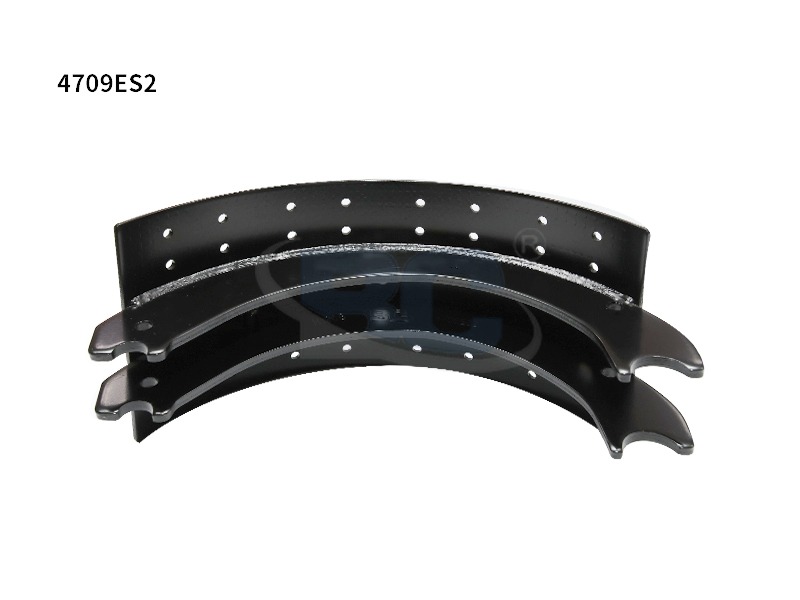
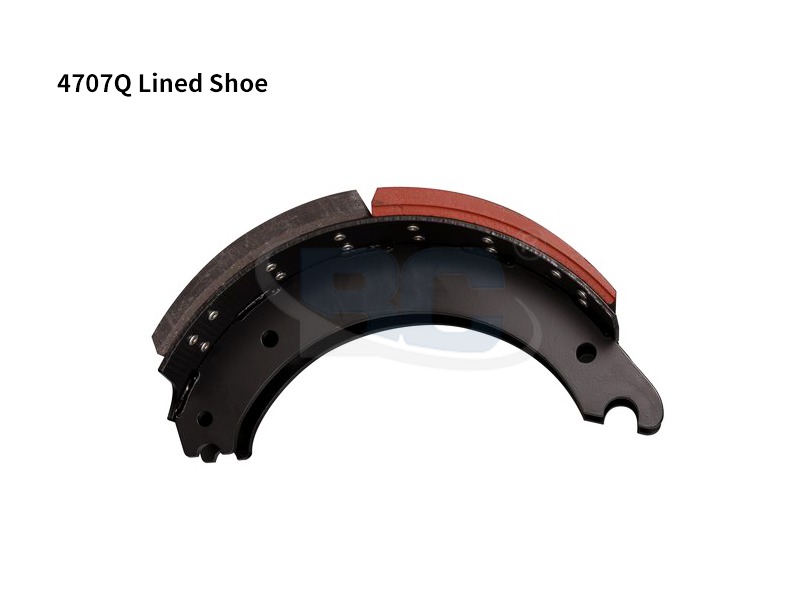 4707Q Lined Brake Shoe for BPW and VL AxlesThis lined brake shoe fits 16.5" x 7" drums with 32 rivet holes and is compatible with various BPW and VL axle generations, providing reliable performance and documented service life.View Product →
How to Choose the Right Friction Material for Your Fleet
Choose friction material by matching the vehicle application, axle load, and drum type to a compound that meets the OEM friction rating and regulatory requirements. A standardized FMSI part number and a documented test report are the minimum evidence needed before a supplier can be approved.
- Confirm the FMSI cross-reference and OE part number
- Check the SAE J866 friction grade (EE, FF, or GG)
- Verify drum compatibility and recommended drum hardness
- Request dynamometer test reports for fade and wear
- Confirm IATF 16949 certification and batch traceability
The cost of a single drum replacement, including labor and downtime, often exceeds the entire lining set. Selecting a compound that protects the drum is therefore a financial decision, not only a technical one.
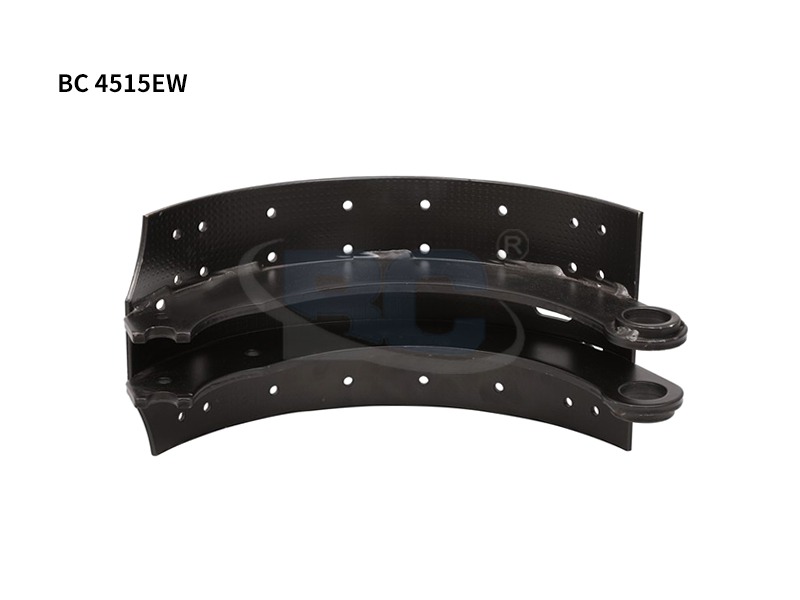
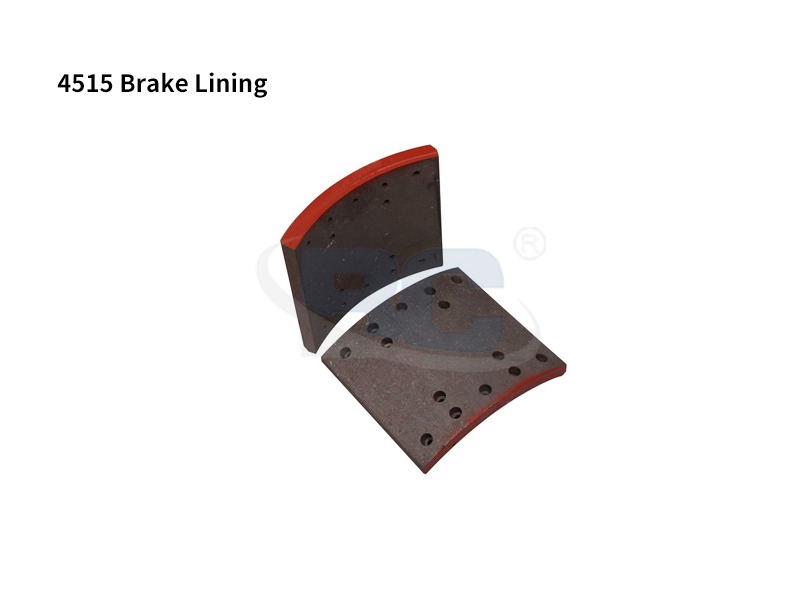 4515 Brake Lining with WVA Number for Custom ApplicationsA 16.5" x 7" lining with 16 rivet holes and WVA number 19036/37, this product protects drums and can be customized for OEM-specific requirements.View Product →
For custom drum dimensions or OE-specific requirements, Zhejiang Bangchi Auto Parts Co., Ltd. can develop and manufacture products from customer drawings.
Frequently Asked Questions
What friction coefficient should a heavy-duty brake shoe lining have?
A heavy-duty lining should hold a friction coefficient of 0.35 to 0.45 at 200°C. Values below 0.30 after a fade sequence indicate material that is unsuitable for loaded commercial vehicles.
How often should heavy-duty brake shoe friction material be replaced?
Under linehaul use, 80,000 to 120,000 km is typical, but inspection should follow the 1.6 mm minimum lining thickness rather than a fixed mileage interval. Vocational duty and mountain routes require shorter service cycles.
What causes friction material fade during a descent?
Thermal fade occurs when the lining exceeds its formulation limit, usually above 400°C. Semi-metallic and ceramic-reinforced compounds have higher fade thresholds than non-asbestos organic compounds.
What is the difference between a brake lining and a lined shoe?
Brake lining is the friction material itself, while a lined shoe is a brake shoe assembly with the lining already bonded to the web. Both are used in drum brake systems, and the choice depends on whether you are replacing only the lining or the complete shoe.