 English
 简体中文
简体中文A fleet maintenance manager in Germany ordered 500 lined brake shoes in January, installed them on two test tractors, and by April one lining had delaminated and another showed more than 3 mm of taper wear across its width. The failure was not a single bad lot. The supplier had passed the commercial review and failed the engineering one. When you source brake shoe linings in volume, the manufacturer you choose determines stopping distance, drum life, warranty exposure, and the safety of every vehicle that leaves your shop. The practical question is not which factory quotes the lowest price, but how to verify that a brake shoe lining manufacturer can hold consistent friction performance, dimensional accuracy, and batch traceability across thousands of units.
A reliable brake shoe lining manufacturer, put simply, is one that can document its friction material formulation, control the metal shoe and the lining within tight tolerances, operate under a recognized quality system, and trace every batch back to raw materials and production records. Price, lead time, and brand reputation matter only after those conditions are met. The four verification points below separate dependable suppliers from risky ones.
What separates a reliable brake shoe lining manufacturer from a risky one
Reliability in brake components is not a marketing claim; it is a measurable combination of friction stability, dimensional control, process discipline, and record keeping. Each of the four points below should be tested with documents and samples, not accepted on the strength of a sales presentation.
Friction formulation and performance stability
The lining is where braking energy becomes heat, and the friction material decides how that heat is managed. The friction coefficient must stay inside a usable band from cold starts to repeated heavy braking at high drum temperatures. The lining must also wear at a predictable rate without scoring the drum, and the bond between lining and shoe must resist shear forces far beyond normal brake application.
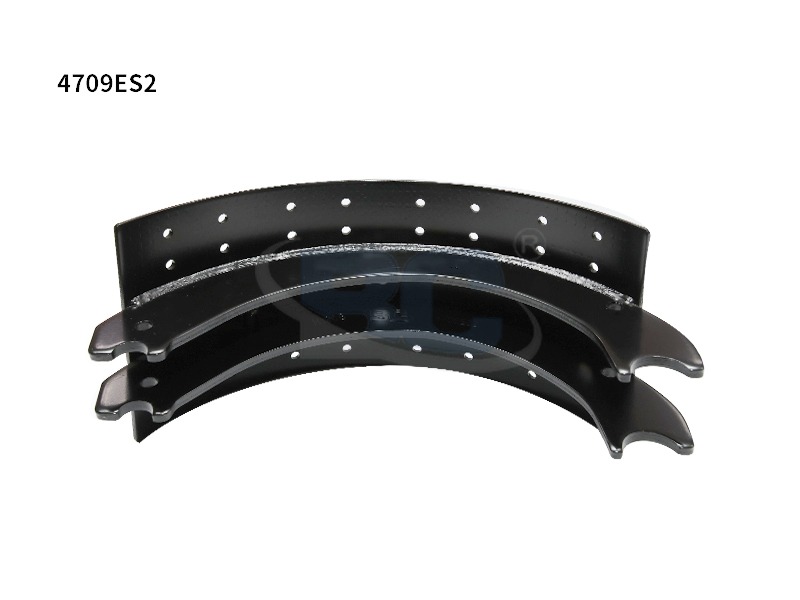
Ask the manufacturer for batch-level test data covering friction coefficient at cold, normal, and elevated temperatures; wear rate in millimeters per distance or per brake application; and shear strength of the assembled lining-to-shoe bond. If a supplier cannot produce these numbers for recent, traceable batches, then claims about premium material carry no engineering weight. A manufacturer that maintains a structured product range, such as the 4709 brake lining for heavy-duty drum applications, can usually demonstrate stable formulation control across production runs.
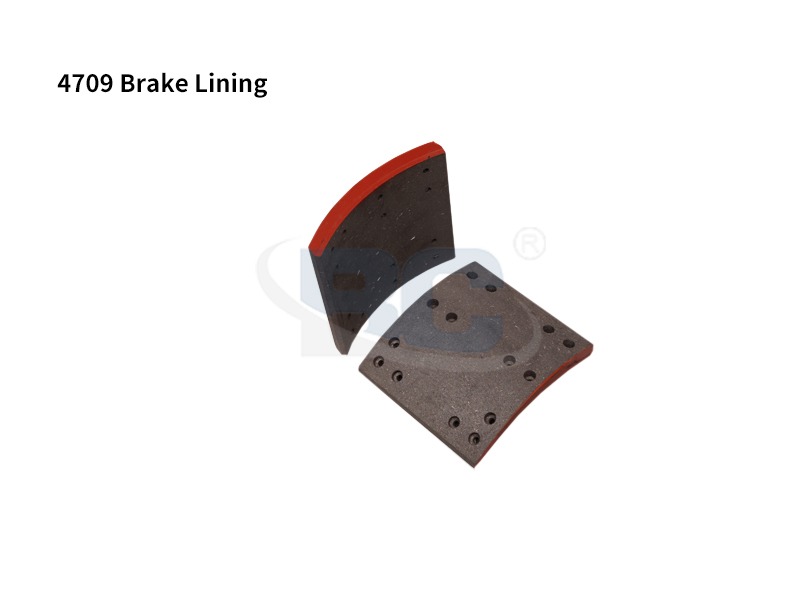 Custom 4709 Brake Lining OEM Manufacturers, Exporter, CompanyZhejiang Bangchi Auto Parts Co., Ltd. Is China Custom 4709 Brake Lining OEM Manufacturers, Exporter, Company, Part Number:4707 Brake Lini...View Product →
Dimensional accuracy and mechanical integrity
Brake shoes and linings are precision assemblies, not stamped approximations. A rivet hole misaligned by half a millimeter, a table profile slightly out of flat, or a lining edge protruding past the shoe creates uneven contact, vibration, or premature drum damage. Verify how the manufacturer inspects these features. Does the production line use dedicated fixtures, profile gauges, and torque checks? Are dimensional records kept per batch or per shift?
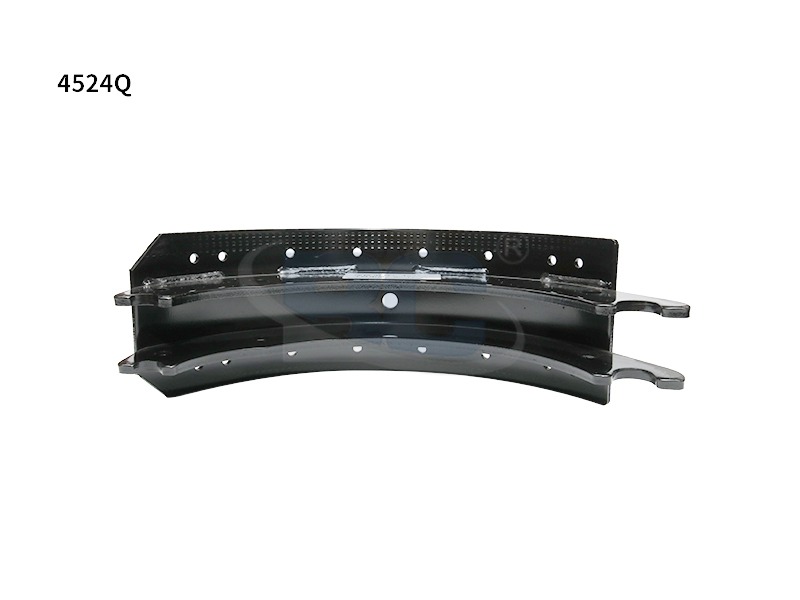
For heavy trucks, the shoe table must resist deformation under repeated high-temperature braking. If you buy bare shoes and line them in-house, the same tolerance logic applies to the steel brake shoe: web position, rivet hole pattern, and table dimensions determine how the lining seats and wears. Ask for a dimensional report on the exact part number you plan to source.
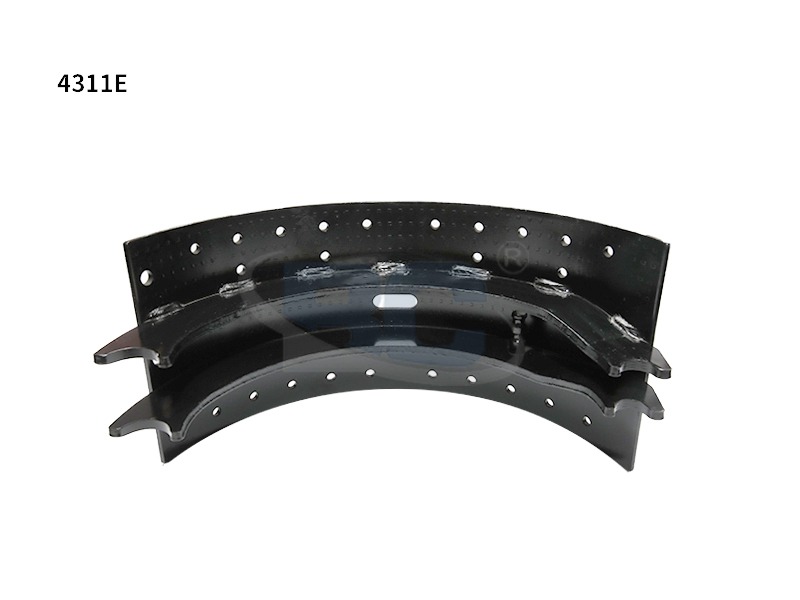 Custom 4311E Brake Shoe OEM Manufacturers, Exporter, CompanyZhejiang Bangchi Auto Parts Co., Ltd. Is China Custom 4311E Brake Shoe OEM Manufacturers, Exporter, Company, Part Number:4311E Product Si...View Product →
A quality system you can verify
A certificate displayed on a website is not proof of process control. Ask for the certificate number, confirm its validity window, and check which production sites and product groups it covers. In automotive component manufacturing, a current IATF 16949 certification carries more weight than a generic ISO 9001 statement, because it requires documented control plans, change management, and corrective action procedures that are periodically re-audited. If the certificate has lapsed or the scope does not mention brake friction products, the supplier's real quality level is unknown.
Traceability from raw material to finished part
When a batch of linings fails in the field, the cost of investigation multiplies without traceability. Batch codes on cartons are the minimum requirement. A reliable manufacturer keeps records that connect raw material lot numbers, pressing parameters, curing cycles, and operator identifiers to each finished part. Ask how the supplier handles a quality complaint: if the answer is a vague promise to look into it, treat the risk as high. Also confirm how the manufacturer separates old and new generation parts, because European axle platforms such as BPW and Volvo change shoe geometry between generations. Mixing generations creates fit failures that are easy to blame on the manufacturer but often start with a wrong part number.
Production capability and customization
The supplier's manufacturing depth determines what it can actually control and how fast it can respond to specification changes.
Lined shoes, loose linings, or repair kits
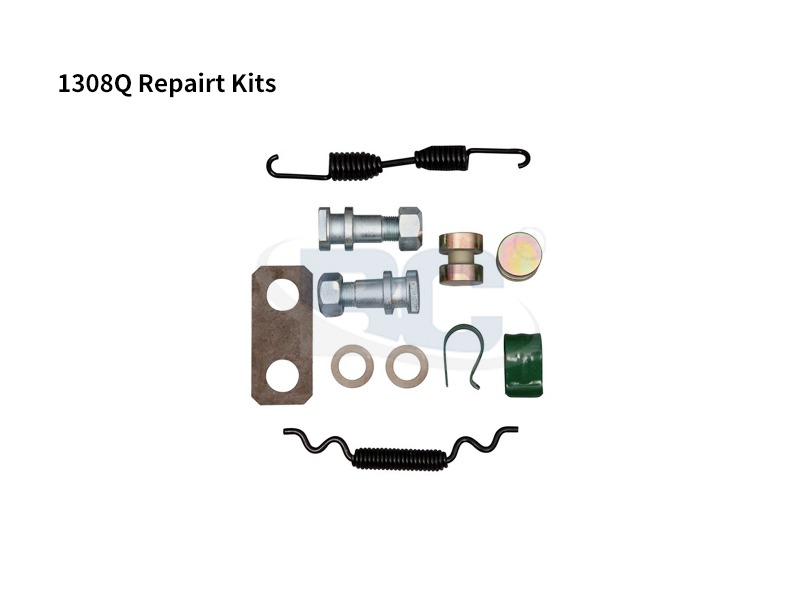
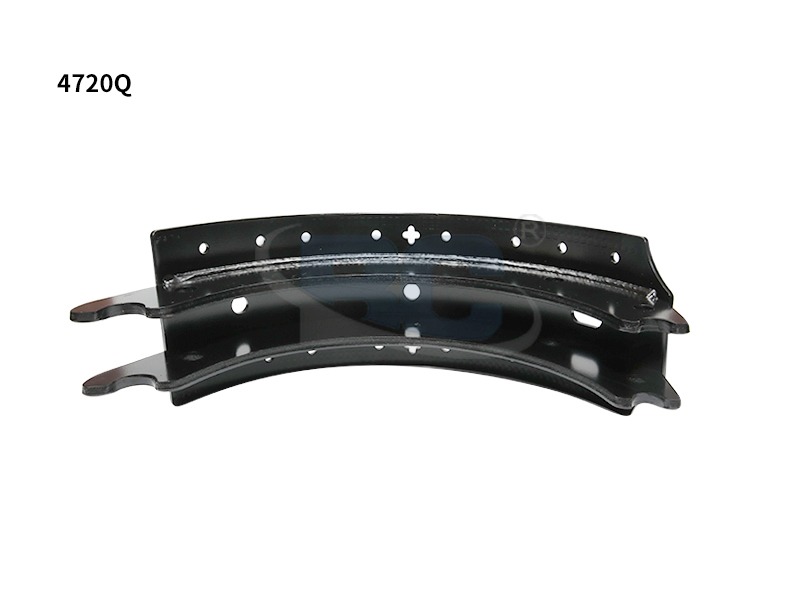
Match the supplier structure to your business model. A distributor may want lined shoes ready for installation; a re-lining workshop may want loose linings and rivets; a dealer network may want complete repair kits with springs, adjusters, and hardware. Define the product form before evaluating manufacturers. A supplier that controls both the metal shoe and the friction material can supply lined brake shoe assemblies as a single responsibility point, which removes the classic problem of one vendor blaming another when a bonded assembly fails.
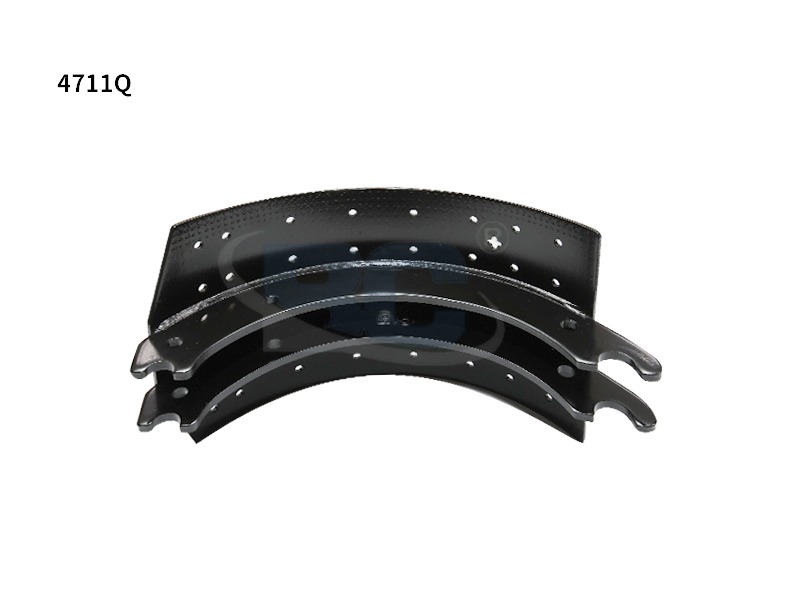
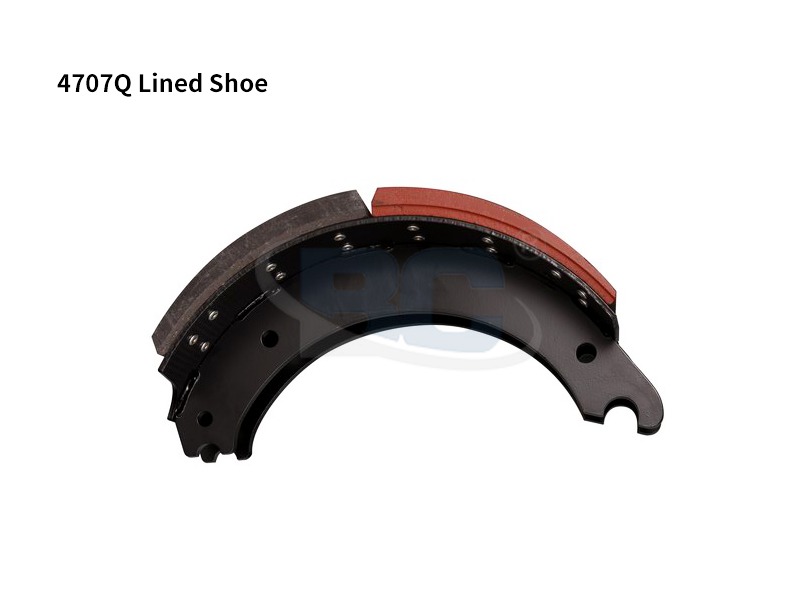 Custom 4707Q Lined Brake Shoe OEM Manufacturers, Exporter, CompanyZhejiang Bangchi Auto Parts Co., Ltd. Is China Custom 4707Q Lined Brake Shoe OEM Manufacturers, Exporter, Company, Part Number:4707Q Prod...View Product →
Custom development is another consideration. If you need a specific lining thickness, a non-standard rivet pattern, or a private label marking, the manufacturer should be able to work from your drawing or a sample. Confirm that the supplier's engineering team reviews the application rather than only quoting a price.
FMSI numbering and OE cross-references
FMSI numbers are the industry's common language for lining shapes, and a supplier organized around FMSI numbers can respond quickly to part requests. But FMSI defines the lining outline, not the complete shoe geometry. Verify that the manufacturer also maintains OE cross-references and understands the axle application. BPW, SAF, Volvo, MAN, and DAF platforms differ in shoe width, drum diameter, lining thickness, and rivet layout. A 420 x 200 mm BPW application, for instance, is not interchangeable with a 420 x 180 mm SAF application even when the lining profile looks similar at a glance. Ask the manufacturer to confirm fitment data for the specific part number and to state which OE numbers it replaces.
Red flags to look for when evaluating brake shoe lining manufacturers
Some warning signs are visible before a single sample is ordered. The table below summarizes the red flags that purchasing teams most often miss and the questions that reveal them.
| Red flag | Why it matters | What to ask |
|---|---|---|
| No test data, only a sales brochure | Friction and wear claims cannot be verified | Can you share batch-level test reports from the last six months? |
| Unclear material formulation | Resin, fiber, and filler ratios affect fade and drum wear | What is the target friction coefficient and at which temperatures? |
| No batch traceability | Field failures cannot be isolated economically | Show the batch records for the sample parts you send. |
| Price far below the market | Often means thinner linings, cheaper resins, or skipped inspection steps | Walk me through the cost breakdown for one FMSI number. |
| No engineering support | Sourcing issues cannot be resolved without technical dialogue | Who answers technical questions during sampling and trials? |
A practical sourcing checklist before you commit
Use a staged process so that a mistake at one step is caught before it becomes a large order. The sequence below works for both first-time buyers and teams switching suppliers.
- Document your requirements. Write down FMSI numbers, OE cross-references, lining thickness, rivet type, allowable tolerances, and marking or packaging rules.
- Shortlist manufacturers that control the full process: metal shoe production, friction material formulation, assembly, and inspection.
- Request samples from regular production rather than hand-made prototypes. Measure critical dimensions yourself and run a shear or torque test on the assembled lining.
- Run a trial order of realistic volume. Monitor scrap rates, installation time, and early wear reports before scaling up.
- Agree on quality documents. Batch certificates, dimensional data, and inspection reports should travel with every shipment, not arrive on request weeks later.
Choosing a brake shoe lining manufacturer is a procurement decision with direct safety consequences. Start with documented friction performance, verified dimensional control, a current quality system, and real traceability. Then evaluate production depth, FMSI and OE coverage, and the supplier's willingness to discuss engineering details. To assess a specific supplier, its company profile and production background shows manufacturing scale and quality certifications, and a direct conversation with its engineering team is the quickest way to test technical competence. A few hours of verification cost far less than a lining failure in the field.