 English
 简体中文
简体中文A 6x4 tractor pulling a loaded trailer needs the same predictable stopping torque at every wheel position, whether the drums are cold in the morning yard or hot after a long mountain descent. When a replacement brake shoe lining is fitted with the wrong friction coefficient, the first complaint is usually vague: long brake treadle travel, one warm drum, or a lining that glazes within a few weeks. The root cause is rarely lining thickness or the automatic slack adjuster. It is the coefficient of friction of the lining material.
The coefficient of friction (μ) is the single most influential parameter in brake shoe lining performance. It decides how much braking torque the actuator can produce, how fast that torque decays as drum temperature climbs, and how quickly the lining and the drum wear out. Get it wrong, and no amount of careful installation or premium hardware will fix the brake.
What friction coefficient actually measures for a brake lining
Friction coefficient is the ratio between the tangential force generated at the lining-to-drum interface and the normal force pressing the lining against the drum (μ = F/N). It is not a fixed physical constant. The same formulation can deliver different values depending on temperature, sliding speed, contact pressure, drum surface finish, and humidity.
For heavy-duty drum brakes, a practical lining has a nominal coefficient between 0.35 and 0.45, and many European OE specifications sit in the 0.38–0.42 band. If a lining rates 0.40 on a cold bench test but falls to 0.28 once the drum surface passes roughly 350°C, the brake is no longer producing the torque the pneumatic circuit was designed around. The driver pushes harder, or the electronic system compensates, and the remaining brakes become overloaded. That is why experienced fleets read friction as a curve, not a single number. Before evaluating that curve, it is useful to understand how brake linings and brake shoes work together, because the lining generates the friction while the shoe carries it inside the drum assembly.
Friction letter codes and what they mean
To keep the issue manageable, lining grades are expressed with two-letter codes under the SAE J661 and similar ECE R90 conventions. The first letter describes friction during the normal (cool) phase, and the second letter describes the hot phase. An EE grade — 0.35 to 0.45 in both phases — is a common heavy-duty choice. An FF grade (0.45 to 0.55) gives more aggressive cold bite but needs a drum and lining combination that can manage the extra heat. Chasing a higher letter is not automatically an upgrade.
Why the nominal rating is not enough
The two-letter code is a broad band, not a guarantee. Two linings stamped with the same code can show very different fade slopes and recovery behavior. What matters for a truck in revenue service is the full friction curve: the cold value, the behavior as temperature climbs, the point where fade begins, and how completely the material recovers after cooling. The printed code only tells you which zone the material lives in.
Burnish also shifts the apparent coefficient. A fresh lining must seat to the drum before its real-world friction stabilizes; until the two surfaces share the same radius, contact is concentrated on a narrow band, local temperatures spike, and effective friction sits below the material's rated value.
How friction coefficient changes real stopping performance
Stopping torque and actuation demand
Braking torque in a drum brake is roughly proportional to the friction coefficient, multiplied by the actuation force and the drum radius, with an additional gain from the S-cam or wedge geometry. Raise μ from 0.35 to 0.45 and the same air pressure produces close to 28% more torque. That sounds like free performance, but it comes with real costs: more heat generated at the interface, higher stress inside the friction material, and faster drum wear.
Thermal fade, recovery, and brake balance
Every stop converts the vehicle's kinetic energy into heat at the lining-drum interface. The lining's job is to keep delivering friction as that temperature rises. Resin-based materials soften and oxidize when overheated, which is why the hot-phase letter in the friction code matters as much as the cold-phase letter. A thermally stable lining keeps its hot-phase coefficient inside the same band as its cold-phase value, so the driver does not suddenly discover a different brake feel halfway down a grade.
Friction also needs to match across an axle. A left shoe at 0.42 and a right shoe at 0.32 create a pull under hard braking, uneven drum temperatures, and premature wear on the side working harder. On multi-axle groups, mismatched friction codes shift the braking contribution between axles during an emergency stop, which can push a vehicle out of compliance with FMVSS 121 stopping-distance requirements.
The friction-versus-wear trade-off
Higher friction does not mean better; it means different engineering consequences. At the same actuation force, a high-μ lining generates more heat per stop and removes more drum material each revolution. The lining itself also wears faster, because the shear stress transmitted through the friction layer increases. Lower-μ linings are gentler on the drum but demand more force to generate the same torque — a problem when the air system is marginal, the slack adjusters are worn, or the vehicle operates near maximum load.
The highest operating cost usually comes from a mismatch: a lining fitted with higher friction than the OE specification in an attempt to fix fade, which then glazes, scores the drum, and wears out early. The lower-friction specification often outlasts it because the brake is not being driven into thermal overload on every cycle. From a procurement standpoint, the cheapest lining is rarely the cheapest brake; a 0.05 drop in real-world μ often shows up as a measurable increase in stopping distance on a loaded vehicle.
| Friction band | Typical duty pattern | Wear and thermal behavior | Actuation demand |
|---|---|---|---|
| 0.30–0.35 | Line-haul, steady-speed motorway routes | Slower lining and drum wear, lower running temperatures | Higher; needs full pneumatic force to reach required torque |
| 0.38–0.42 | Mixed regional haul, standard OE specification | Balanced wear, moderate thermal load | Balanced; the most common design point for S-cam brakes |
| 0.45–0.55 | Vocational, steep grades, repeated heavy loads | Faster wear, higher risk of drum scoring if the drum surface is rough | Lower per stop, but heat control becomes the critical factor |
Choosing a friction level for your duty cycle
Selection should start with the OE friction code stamped on the original lining, not with the ambition to improve the brake. Long-haul trucks running at steady speeds generate less heat per stop and can live comfortably with a middle-band lining. Vocational vehicles — dump trucks, mixers, refuse trucks — repeatedly shed heavy kinetic energy; they need a formulation whose hot phase stays stable, even if the nominal friction is not the highest number in the catalogue. A documented medium-friction option such as the 4311 brake lining is a good reference point for mixed regional use. For fleets with standard 16.5-inch drums, staying within a known friction class simplifies inventory, fitting, and driver training. Fleets that prefer to replace the complete assembly rather than handle separate linings can specify the 4707Q lined brake shoe, which arrives with the friction material already attached and ready to install.
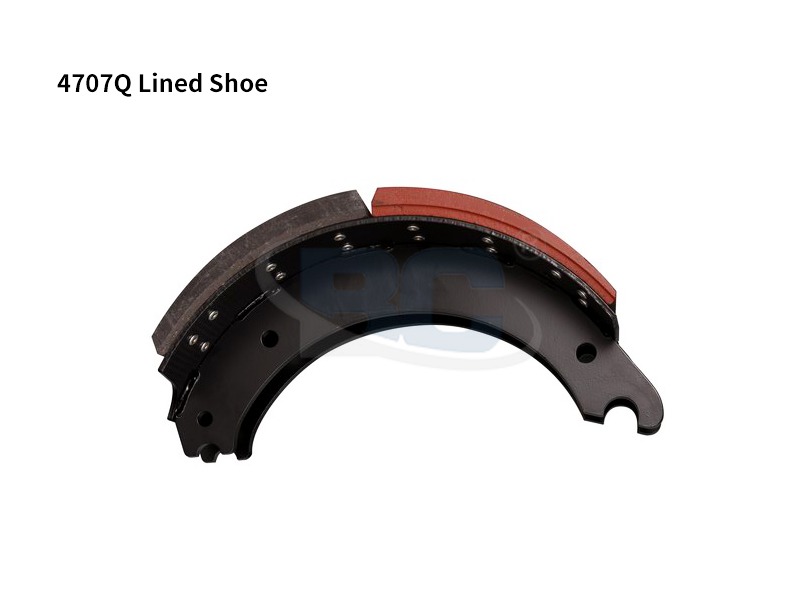 Custom 4707Q Lined Brake Shoe OEM Manufacturers, Exporter, CompanyZhejiang Bangchi Auto Parts Co., Ltd. Is China Custom 4707Q Lined Brake Shoe OEM Manufacturers, Exporter, Company, Part Number:4707Q Prod...View Product →
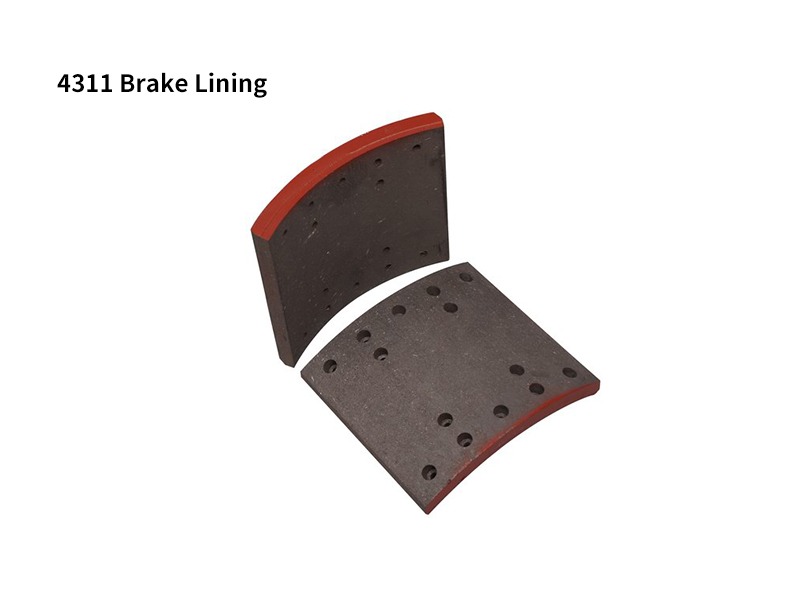 Custom 4311 Brake Lining OEM Manufacturers, Exporter, CompanyZhejiang Bangchi Auto Parts Co., Ltd. Is China Custom 4311 Brake Lining OEM Manufacturers, Exporter, Company, Part Number:4311 Brake Lini...View Product →
Manufacturing consistency keeps the coefficient honest
Friction coefficient is a formulation and process result. Resin type, fiber blend, graphite and metallic content, curing temperature, and grinding all shift it. A manufacturer that cannot hold these variables batch after batch will ship linings stamped 0.40 that perform like 0.36 in service. That is why serious buyers ask for the friction curve and the batch test report, not just the letter code. A controlled assembly process backed by IATF 16949-certified brake component manufacturing changes how much variation you can expect between production runs.
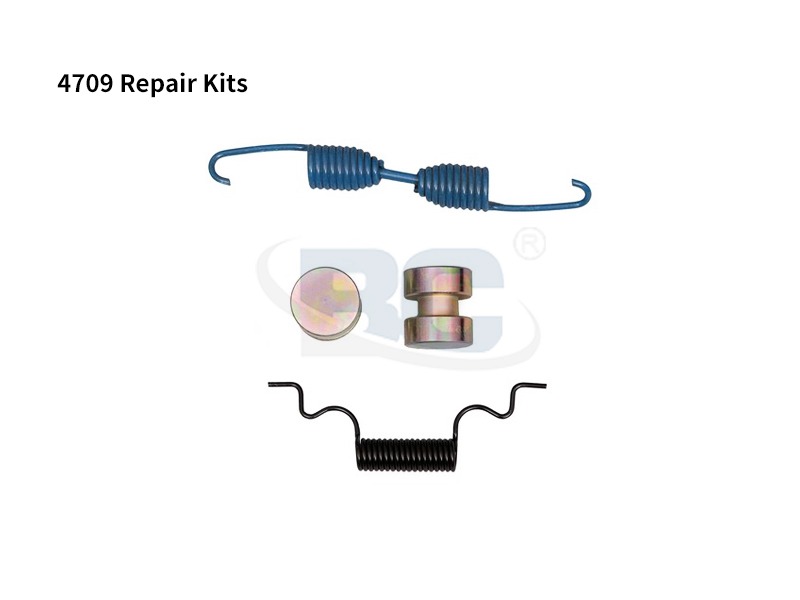
Suppliers with documented quality systems release products with known behavior. The 4709 brake lining, for example, is supplied with documented friction characteristics so a replacement order behaves like the first order. Even the right friction coefficient cannot prevent eventual wear, so knowing the signs that a lining has reached the end of its service life helps you schedule the exchange before the drum is damaged.
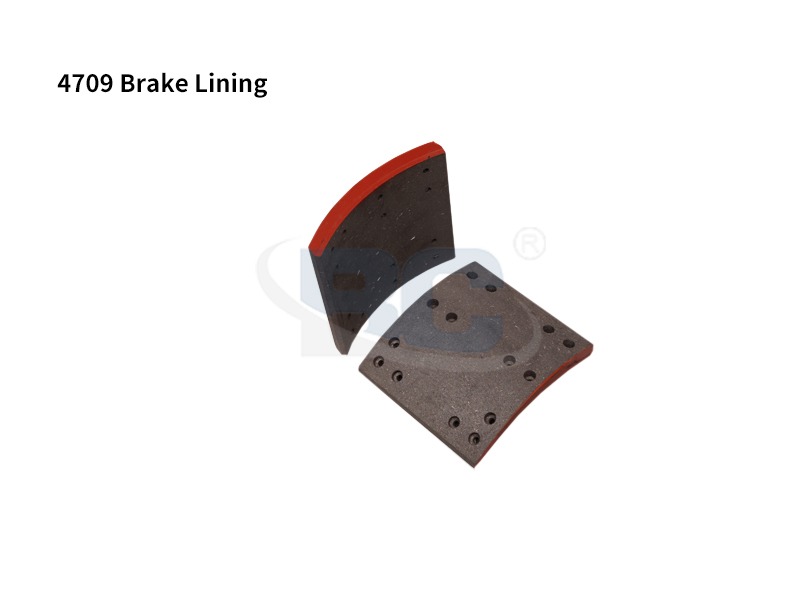 Custom 4709 Brake Lining OEM Manufacturers, Exporter, CompanyZhejiang Bangchi Auto Parts Co., Ltd. Is China Custom 4709 Brake Lining OEM Manufacturers, Exporter, Company, Part Number:4707 Brake Lini...View Product →
A practical way to specify brake shoe lining
If you are rebuilding a brake, procuring linings for a fleet, or reviewing a new product line, the same discipline applies:
- Read the friction code stamped on the original lining and stay within the same class unless the duty cycle has genuinely changed.
- Ask the supplier for the full friction-temperature curve, including hot fade and recovery data, not a single nominal number.
- Keep the same friction grade on both shoes of an axle and, ideally, across all axles in the same brake group.
- Inspect the drum surface — a coarse, cracked, or hard-spotted drum changes the effective friction of any lining.
- Verify batch consistency by checking the manufacturer's quality system and test documentation.
Friction coefficient is not a marketing figure. It is the engineering link between the actuator, the drum, the lining, and the road. Choose it deliberately, verify it with data, and the brake shoe lining will deliver the stopping power, service life, and cost profile the vehicle was designed for.