 English
 简体中文
简体中文Engineering Conclusion of the 4711Q Brake Shoe
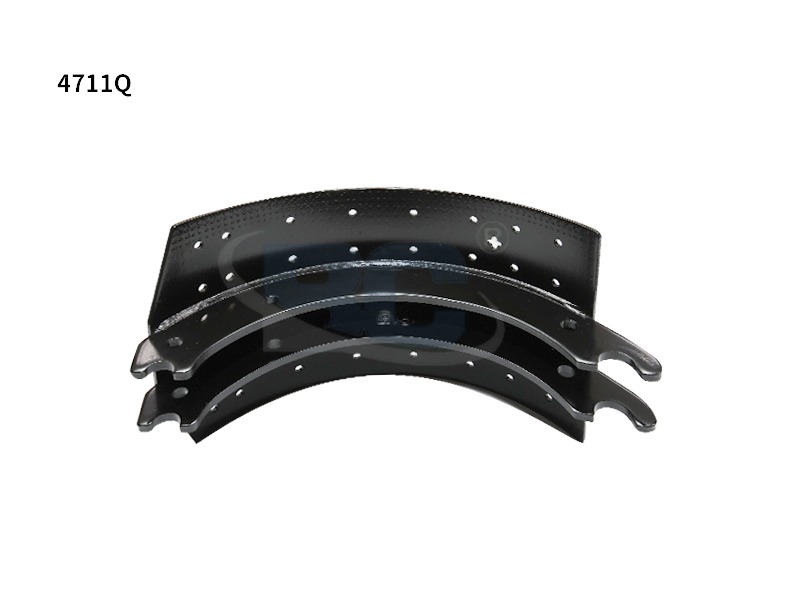
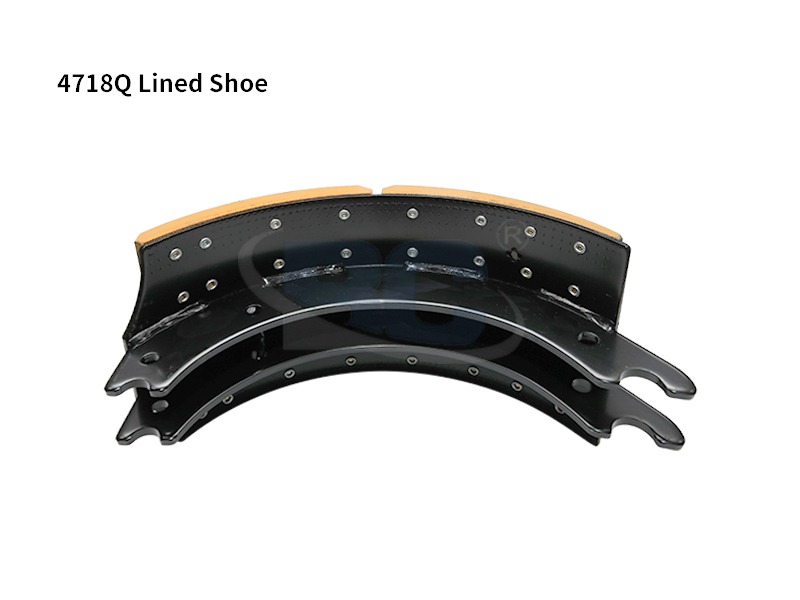
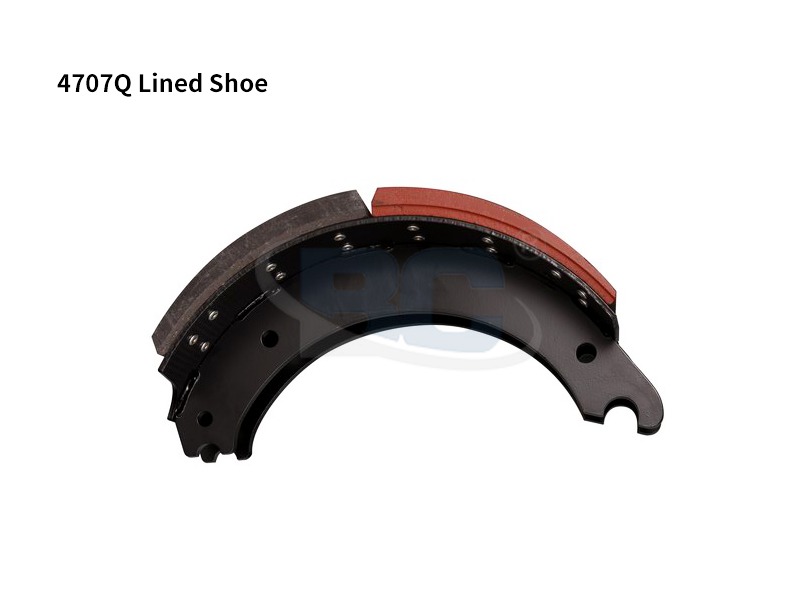
The 4711Q Brake Shoe is an industry-standard heavy-duty friction component designed specifically for Q-Plus cam-style air brake systems. It features a dual-anchor pin design and is characterized by its 16.5" x 7" dimensions. This component is the critical mechanical interface in commercial vehicle braking, engineered to withstand thermal loads exceeding 400°C while maintaining dimensional stability and structural integrity under high-torque deceleration.
Structural Composition and Metallurgical Standards
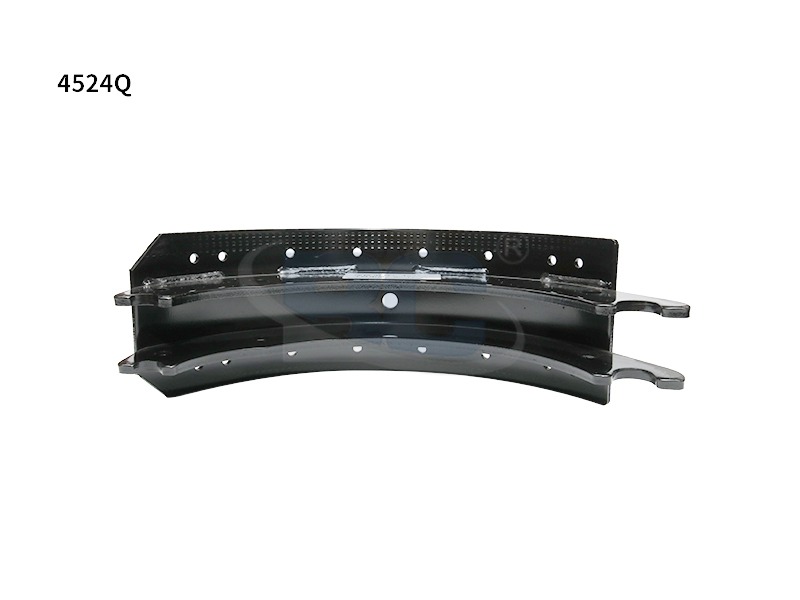
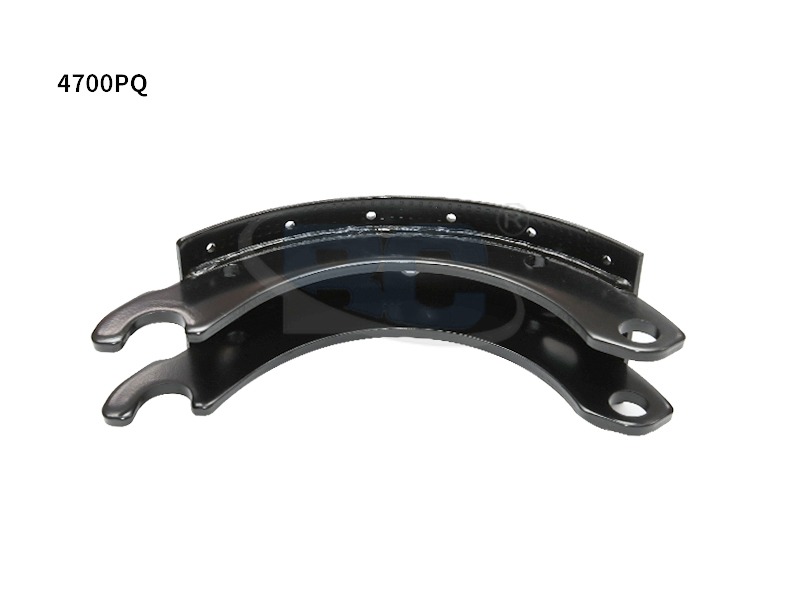
The structural backbone of the 4711Q Brake Shoe is typically fabricated from high-tensile carbon steel (ASTM A36 or equivalent) or Q235B steel. The manufacturing process utilizes precision robotic welding to join the web and the table, ensuring that the arc radius remains consistent across the entire friction surface. This prevents localized "hot spots" that can lead to drum cracking or uneven lining wear.
Key Material Properties
- Tensile Strength: ≥ 450 MPa to prevent deformation under emergency braking pressures.
- Surface Finish: E-coated or powder-coated finish to achieve ≥ 500 hours of salt spray resistance (ASTM B117).
- Welding Penetration: Minimum 80% penetration depth to ensure the table does not separate from the web under shear stress.
Technical Specifications and Dimensional Data
Consistency in dimensions is paramount for proper fitment within the brake drum. The 4711Q Brake Shoe adheres to rigorous tolerances to ensure compatibility with Meritor and Eaton style axle configurations.
| Technical Parameter | Specification Value | Application Significance |
|---|---|---|
| Brake Size | 16.5 x 7 inches | Standard footprint for heavy-duty rear axles. |
| Anchor Pin Diameter | 1.25 inches | Ensures precise pivot movement without play. |
| Number of Rivet Holes | 28 Holes | Standard pattern for FF or GG rated linings. |
| Web Thickness | 0.312 - 0.375 inches | Provides the necessary rigidity to resist twisting. |
Friction Material Performance Characteristics
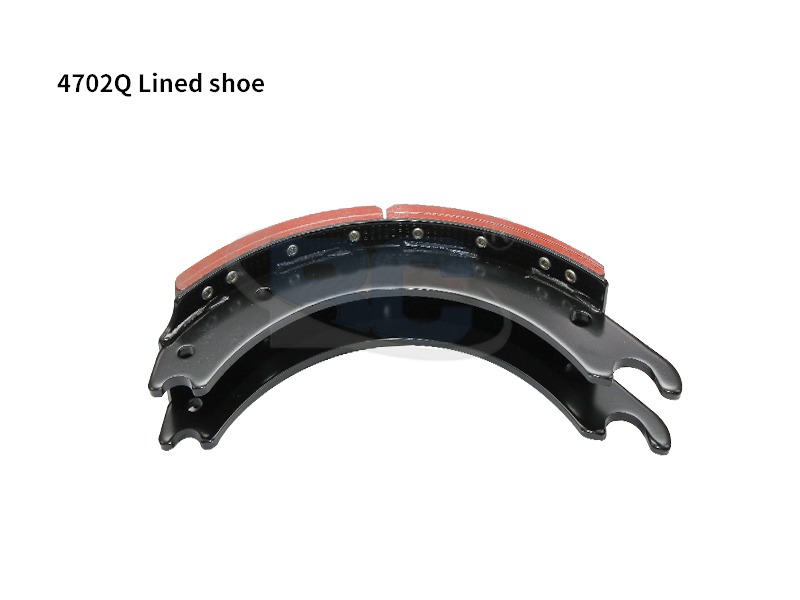
When the 4711Q Brake Shoe is fitted with professional-grade linings, its performance is measured by its coefficient of friction (μ). For industrial fleet applications, linings are typically non-asbestos semi-metallic or low-steel formulations.
Thermal and Friction Performance Metrics
- Normal Friction Coefficient: 0.35 – 0.45 μ (measured via SAE J661).
- Thermal Recovery: Ability to regain friction levels within 10% of baseline after a high-heat cycle.
- Wear Rate: ≤ 0.25 mm per 10,000 miles in standard line-haul conditions.
Installation and Maintenance Protocol
The longevity of the 4711Q Brake Shoe depends on the integrity of the hardware kit used during installation. It is critical to replace the return springs and anchor pins simultaneously with the shoe. Worn springs can cause "brake drag," which increases the interface temperature beyond the 500°C threshold, causing the steel table to lose its tempered hardness. Technicians must verify that the camshaft bushings are within the 0.010" tolerance range to prevent eccentric loading on the shoe web.
Critical Note: Worn springs can cause "brake drag," increasing the interface temperature beyond the 500°C threshold and causing the steel table to lose its tempered hardness.
Critical Advantage of the Q-Plus Design
The "Q" in 4711Q Brake Shoe refers to the Quick-Change or Q-Plus design. This engineering evolution allows for faster replacement by utilizing a simplified spring retention system. Furthermore, the increased web thickness in the 4711Q variant compared to older 4515 models provides a 15% increase in fatigue life, making it the preferred choice for heavy-duty vocational trucks, trailers, and transit buses operating in stop-and-go environments.