 English
 简体中文
Brake shoe material is not a single ingredient; it is a system composed of friction lining, metal backing, drum contact pressure, and the thermal load created by the vehicle's duty cycle.
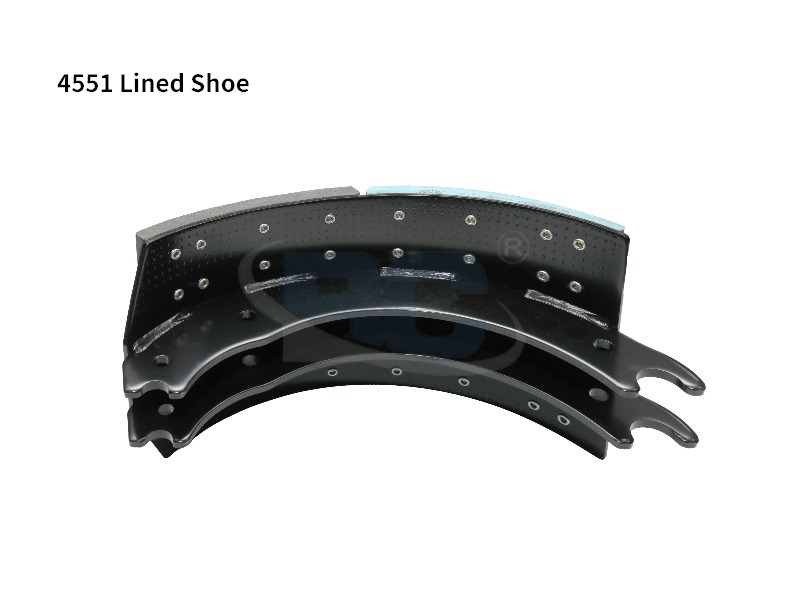
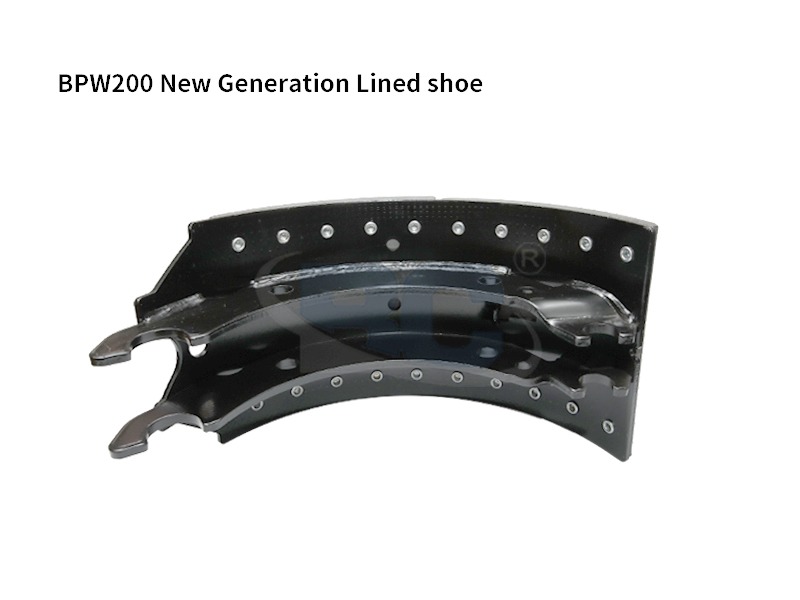
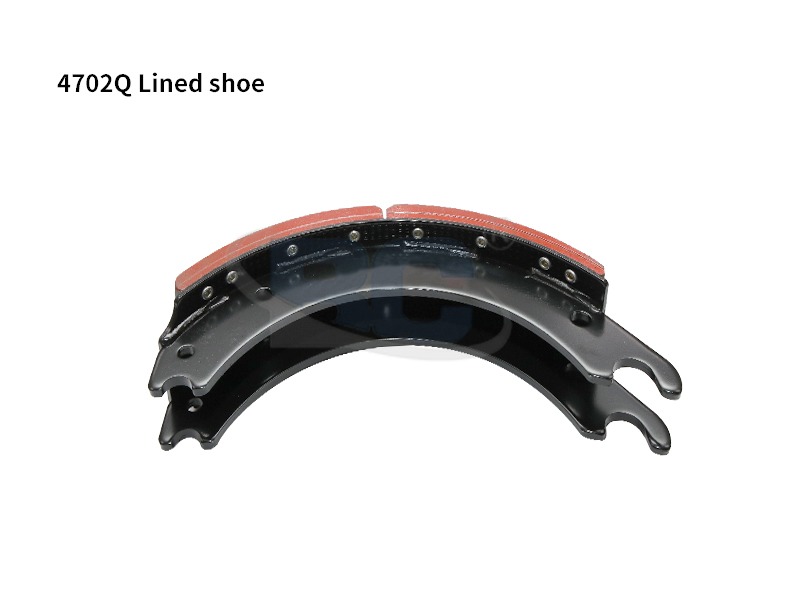
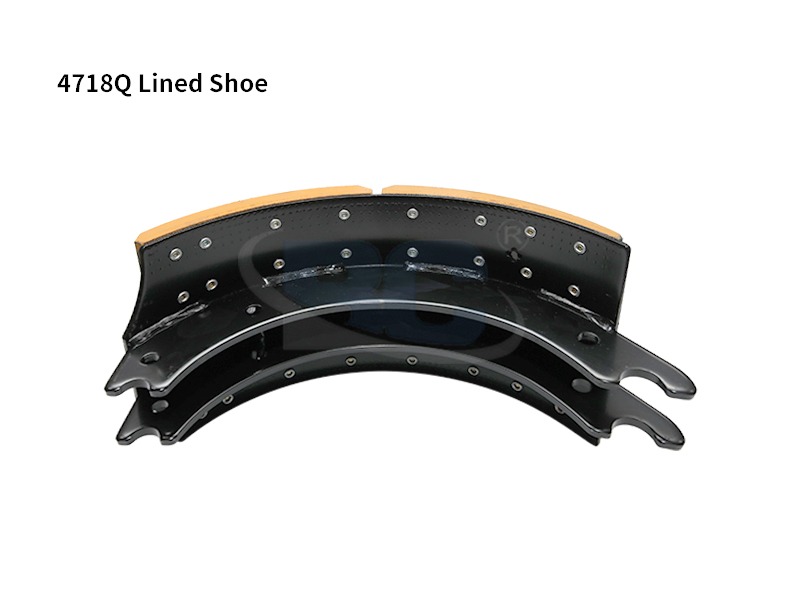
Zhejiang Bangchi Auto Parts Co., Ltd. manufactures heavy-duty brake shoes, lined shoes, and brake linings under FMSI numbering for European and Asian commercial vehicle axle systems. The question of how long a brake shoe lasts begins with the material choices made in the factory and continues with the conditions in the drum.
Material Families and Their Real Wear Rates
Semi-metallic linings are the benchmark for heavy-duty drum brakes because they resist heat fade and wear at sustained pressure.
Friction material families break into three broad groups in commercial vehicle service. The composition changes how the shoe wears, how the drum wears, and what type of road environment the vehicle can support.
| Friction family | Typical composition | Relative wear rate | Expected service life |
| Semi-metallic | Steel fiber, resin, graphite, friction modifiers | Low, baseline | 60,000 to 100,000 km |
| Non-asbestos organic (NAO) | Organic fibers, resin, fillers | Medium | 40,000 to 60,000 km |
| Ceramic-based | Ceramic fibers, metallic particles, bonding resins | Very low in light-duty cycles | 80,000 to 120,000 km when drum heat is controlled |
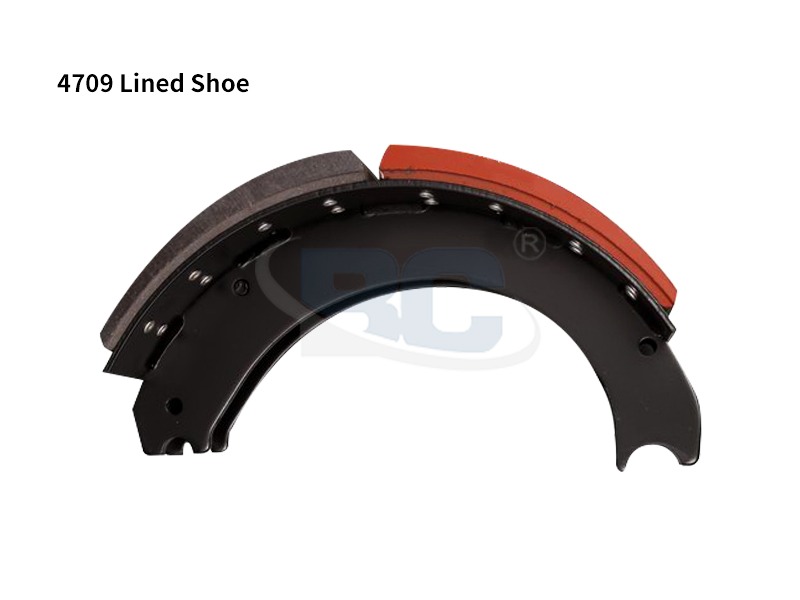
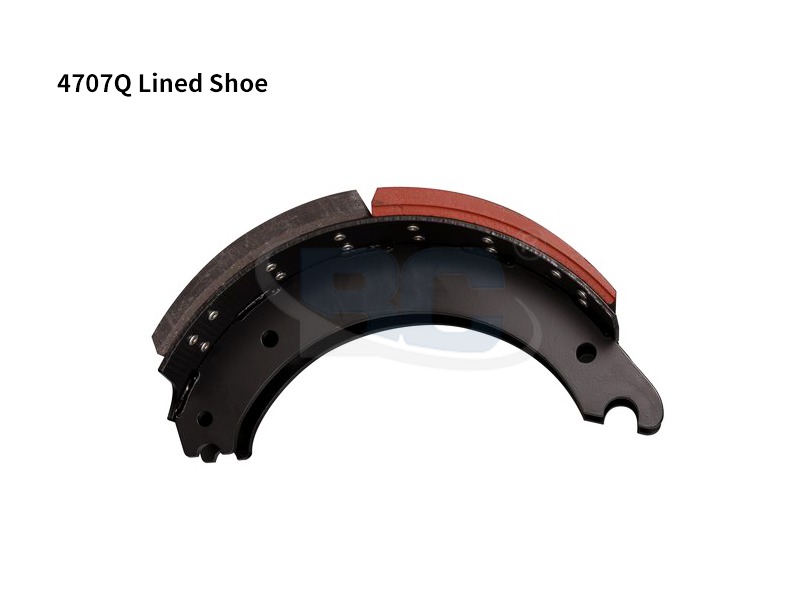
A buyer can start with the wear service life data for the 4700PQ brake shoe to compare a specific FMSI reference against a known field application. FMSI numbering removes guesswork when matching lining part numbers to OEM axle configurations.
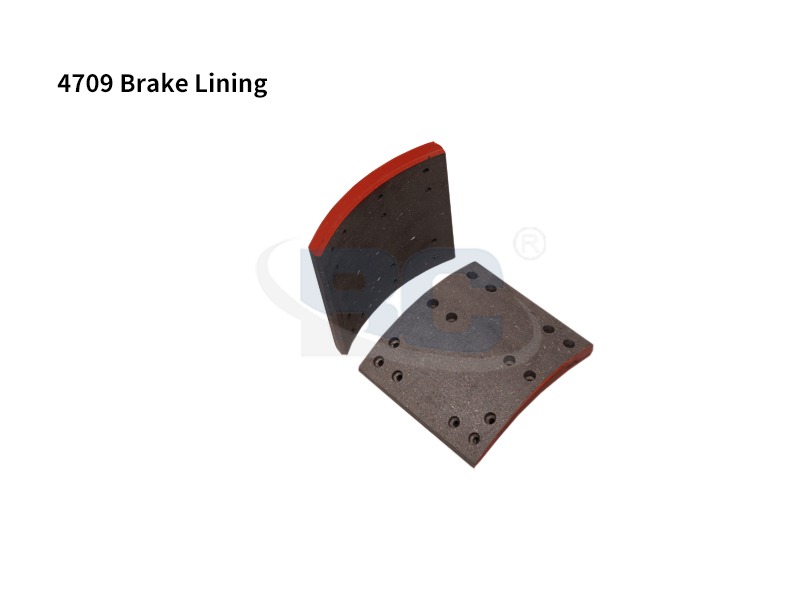 4709 Brake Lining for 16.5 x 7 Inch Drum with 16 Rivet HolesCheck the 4709 brake lining for a 16.5" x 7" drum, featuring 16 rivet holes. It fits BPW200 and VL225 shoe assemblies, both new and old generations, as a direct replacement for common axle configurations.View Product →
Steel Backing versus Casted Backing
Steel backing versus casted backing changes how long a shoe survives inside the drum because stiffness and heat mass control the contact pressure.
The backing table is the structural part that carries the friction material. When the backing flexes, the lining loses full contact with the drum, creating hot spots that accelerate wear. Steel brake shoes and casted brake shoes behave differently under heavy braking.
Steel brake shoe
Steel brake shoes are formed from welded or stamped steel plate. They are lighter than cast versions, absorb some vibration, and are a common choice for line-haul trucks and trailers. The main weakness is web cracking if the shoe is loaded beyond its rated capacity or after relining.
Casted brake shoe
Casted brake shoes are stiffer and resist flex under extreme braking torque. They hold lining contact better in severe service, but they add weight and are more expensive to produce. The casting also creates a mechanically complex part that is more difficult to inspect for hairline defects.
- Lighter than casted construction
- Better suited to high-mileage highway duty
- Lower cost in standard FMSI references
- Stiffer under high braking load
- Maintains lining contact at temperature
- Excellent for severe service and off-road use
For fleet managers, brake shoe basics matter because the backing choice determines whether a 90,000 km interval is realistic or only an aspiration.
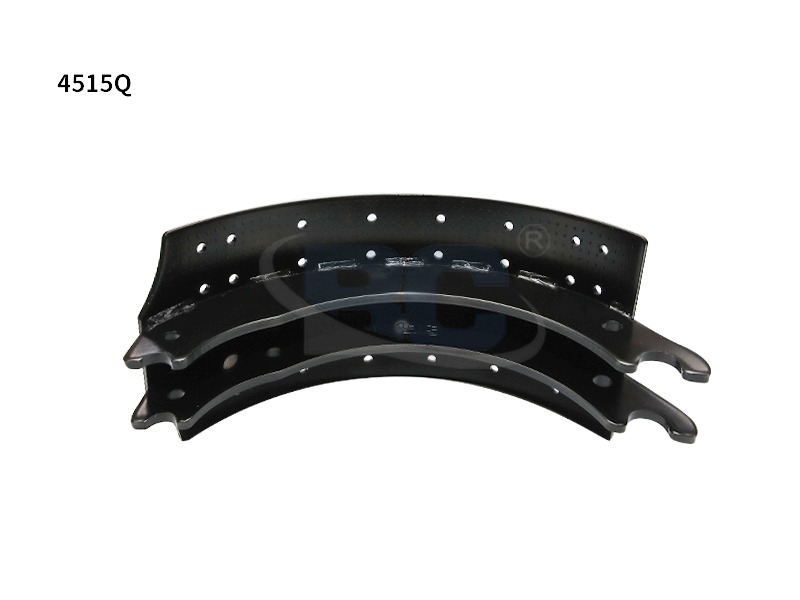 4515Q Brake Shoe with 32 Rivet Holes and OE Number 152.05533The 4515Q brake shoe fits 16.5" x 7" drums and has 32 rivet holes. Its OE number 152.05533/3222 Q1291 aids in matching OEM parts, and it suits BPW200 and VL225 shoe assemblies across generations.View Product →
Drum Condition, Installation, and Duty Cycle
The largest single outside factor in brake shoe wear is not the lining formula; it is the surface condition of the brake drum.
Even the best friction material will wear quickly if the drum is scored, out-of-round, or oversized. The same material can deliver dramatically different life on two trucks that otherwise have the same specification.
- Scored or heat-checked drums cut into the lining and increase friction surface temperature.
- Weak return springs or worn adjusters cause uneven contact and early edge wear.
- Road splash, mud, and abrasive dust enter the drum through worn seals and act as grinding paste.
- Extended mountain descents or repeated stop-start operation push brake shoe surface temperature beyond the resin binder limit.
- Parking brake or emergency brake misuse turns a occasional hold into a persistent drag.
Use a practical inspection sequence before deciding to replace shoes:
- Measure the lining thickness at both ends and at the center.
- Check the drum diameter with an internal gauge to identify oversize or taper.
- Look for cracks in the steel table or casted web.
- Verify the return springs, adjuster, and shoe hold-down hardware.
- Replace the shoes when the lining is at or below the manufacturer's minimum thickness.
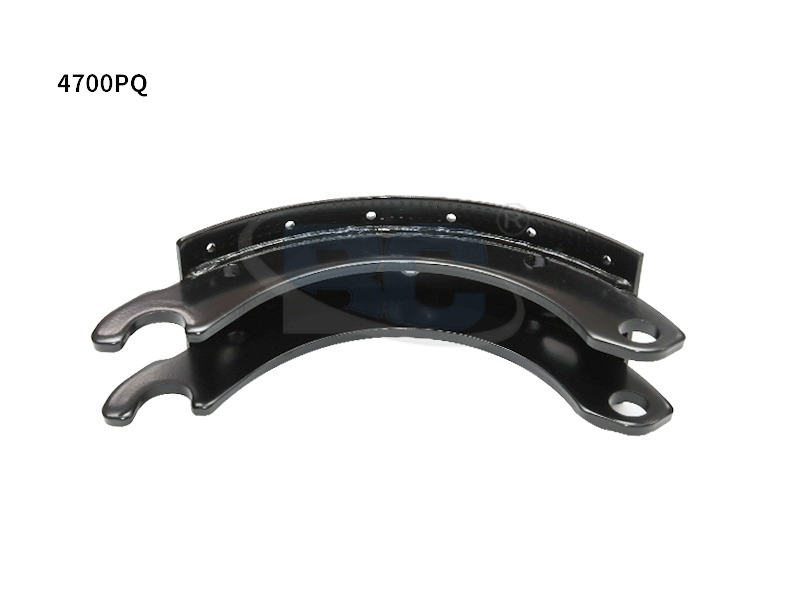 4700PQ Brake Shoe for 12.25 x 4 Inch Drum with 12 Rivet HolesThe 4700PQ lined shoe is designed for a 12.25" x 4" drum with 12 rivet holes. It is compatible with BPW200 and VL225 shoe assemblies, both new and old, and suits fleet inspection needs.View Product →
How Much Each Factor Contributes
Field wear data clusters around the same pattern: friction material formulation drives the largest share of wear, but drum condition is a close second.
The chart below shows the relative contribution of the main variables that determine brake shoe wear and service life in a heavy-duty drum brake.
Relative impact on brake shoe wear
This is why a material upgrade alone will not solve a wear problem. If the drum is rough or the hardware is weak, the extra material life disappears.
Wear Warning Signals and Replacement Targets
The most useful field signal is lining remaining thickness, not calendar age.
Heavy-duty brake shoes are consumable by design. The reference point is not a fixed mileage, but the point where the remaining friction material can no longer absorb the service load without damaging the drum or losing braking force.
Zhejiang Bangchi Auto Parts Co., Ltd. builds shoes that must work with these real-world limits. The company's production line and FMSI reference system are designed to deliver consistent geometry and friction performance across long production runs.
Frequently Asked Questions
Which brake shoe material lasts the longest?
Semi-metallic linings usually give the longest service life in heavy-duty drum brakes when the drum surface is smooth and in specification. Ceramic compounds can last longer in light-duty or controlled thermal environments, but they are less forgiving when a drum is rough.
When should a heavy-duty brake shoe be replaced?
Replace a brake shoe when the remaining lining thickness reaches the minimum specified by the axle manufacturer. In many heavy-duty service guides, that minimum sits around 1.6 mm, although the individual reference should always be checked.
Does drum condition change brake shoe service life?
Yes. A scored, oversized, or tapered drum can reduce brake shoe life by a significant amount because the lining loses full contact. Machining or replacing the drum is often more effective than changing to a different friction material.
Can a steel brake shoe be relined?
Yes. Steel brake shoes can be removed, cleaned, and bonded or riveted with a new lining. However, the shoe table must be inspected for cracks and distortion before reuse. Casted brake shoes follow the same relining process with additional attention to structural integrity.