 English
 简体中文
简体中文Wholesale brake shoe lining orders usually look fine on paper. The price per set is attractive, the delivery date is committed, and the FMSI numbers appear to match. Then the first negative review arrives: a distributor reports premature wear after 20,000 kilometers, a workshop says the rivets sit off-center, and a fleet manager complains that the shoes do not seat correctly on the axle. For commercial vehicle brake components, the cost of a failed batch is always higher than the saving on the initial invoice. A responsible wholesale purchase depends on five decisions:
- confirming the exact application
- verifying the friction material
- selecting the correct shoe construction
- auditing the supplier's quality system
- calculating the total cost per operating kilometer
Verify the Exact Application Before Comparing Prices
Brake shoe linings are application-specific parts, not universal components. The same lining profile can appear in one dimensional range on a BPW axle and in a completely different version on an SAF or Volvo system. If the supplier does not know which axle, which generation, and which brake size the lining belongs to, no price quotation is trustworthy.
FMSI Numbers and OE Cross-References
FMSI (Friction Materials Standards Institute) numbering is the common language of commercial vehicle brake components. A complete FMSI reference identifies the geometrical profile of the lining and the shoe table. When buying wholesale, check that the manufacturer lists the exact FMSI number, and ask whether the part also carries the relevant OE cross-references. On a BPW axle, for example, the lining must match not only the 420 × 200 mm arc but also the rivet hole layout and the drum contour. A shoe that passes a rough visual check can still fail on the bench if the curvature does not match the drum radius. Always request the full part description: FMSI number, OE reference, width, diameter, thickness, and mounting style.
Air Brake, Oil Brake, and Generation Differences
Heavy trucks and trailers use different actuation systems, and the shoe geometry is not always interchangeable between them. Some platforms have separate air and oil versions, particularly on Japanese and European axles. In addition, many axle systems have old-generation and new-generation brake shoes; even if the visual difference looks small, a change in table width or curvature can affect mounting. When you build a wholesale order, separate your stock by generation and actuation type instead of assuming that one part covers all variants. This reduces the risk of sending the wrong component to a customer who does not have time to test-fit parts.
Inspect the Friction Material and Its Performance
The friction material is where the actual performance of the product lives. A perfectly manufactured shoe with poor lining material will overheat, fade, wear the drum, or produce noise. Wholesale buyers are better served by a material grade that is consistent across the full batch than by a high-performance label that nobody in the supply chain can verify.
Friction Coefficient and Temperature Stability
The coefficient of friction is normally specified for the application. A heavy axle moving at highway speed generates much higher surface temperatures than a delivery vehicle working in city traffic, so the lining must be able to hold a stable coefficient at elevated temperatures. Low-cost linings often perform acceptably when cold and then lose braking torque after repeated hard stops. Ask the manufacturer for the friction rating of the material, the temperature range, and the test conditions used to measure them. If the supplier cannot provide these numbers, treat the product as unverified.
Wear Behavior and Drum Compatibility
Wear is not only about lining thickness. A lining that is too aggressive for the drum surface transfers wear to the drum itself, which is expensive to replace in a fleet environment. A good wholesale lining balances the wear of the lining and the drum, produces an even contact pattern, and does not generate excessive dust or noise. If you already stage your own steel shoes, you can purchase standalone brake linings and attach them during assembly, which gives you more control over material grade and inventory. If you prefer a ready-to-install solution, pre-assembled lined shoes remove the need for a riveting station in your own warehouse. Both options are common in wholesale distribution; the choice depends on your market's preference and your own workshop capability.
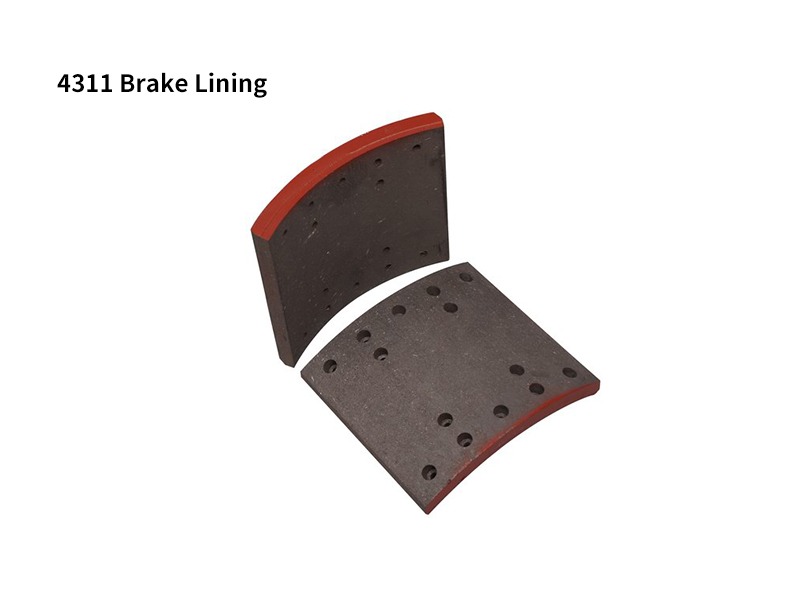 Custom 4311 Brake Lining OEM Manufacturers, Exporter, CompanyZhejiang Bangchi Auto Parts Co., Ltd. Is China Custom 4311 Brake Lining OEM Manufacturers, Exporter, Company, Part Number:4311 Brake Lini...View Product →
Select the Right Shoe Construction for Your Market
The metal part of the brake shoe matters as much as the friction material. Wholesale buyers must choose between stamped steel and casted designs, and between unlined, lined, and repair-kit formats.
Stamped Steel Versus Casted Shoes
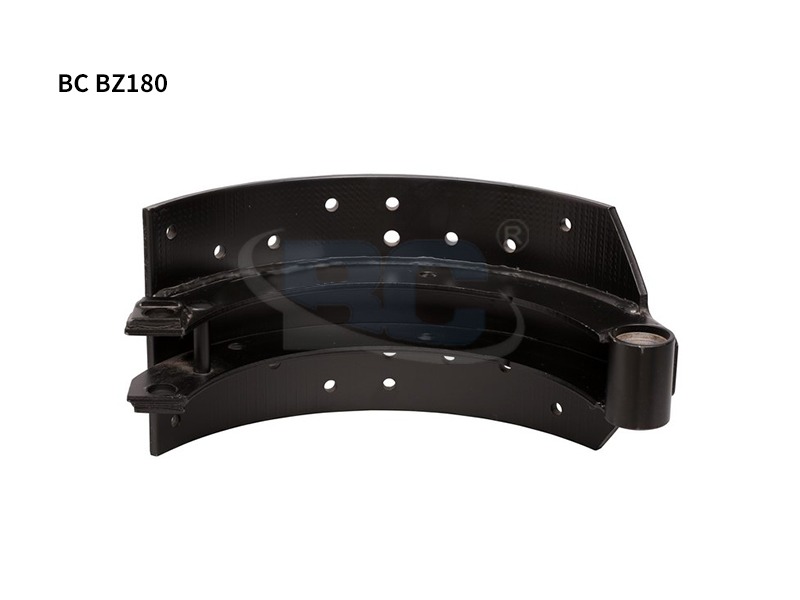
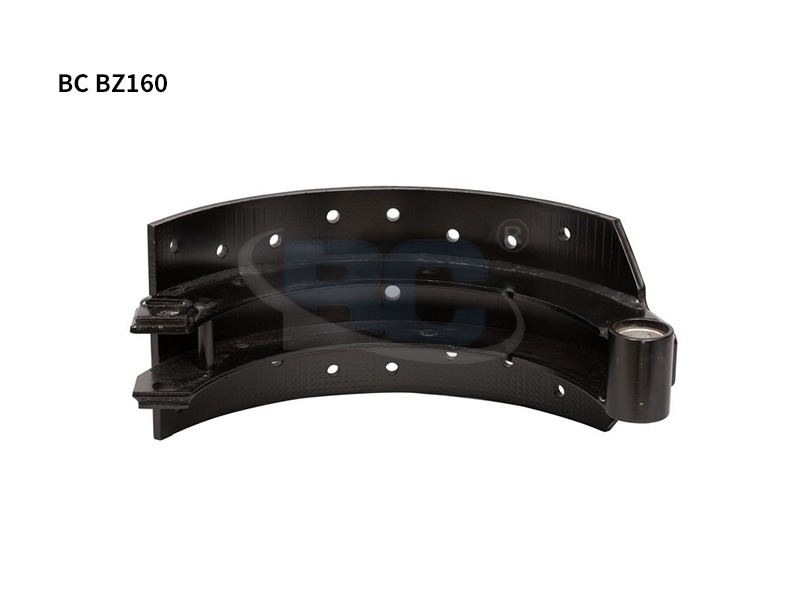
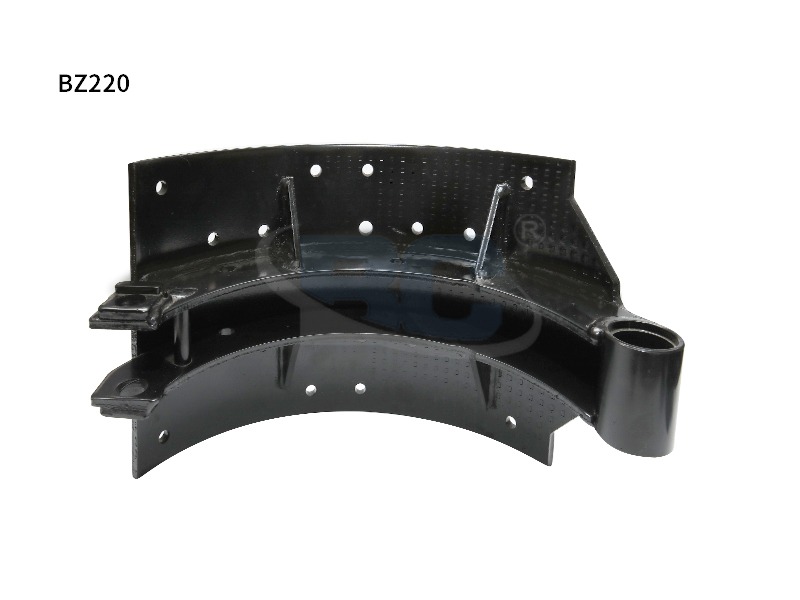
Stamped steel brake shoes are pressed from steel strips, which gives them a predictable shape and lower weight. They are the most common choice for standard heavy-duty applications and offer good dimensional consistency at scale. Casted brake shoes are produced as a single casting and provide higher rigidity, which helps in heavy or high-temperature duties where flexing of a stamped table could cause uneven lining wear. The right choice is determined by the axle application and the preferences of the end user, not by the price difference alone. Casted designs are particularly common on European trailer axles and on platforms where the original equipment uses a cast table; distributors serving that segment can source cast brake shoe options directly from manufacturers rather than through an importer.
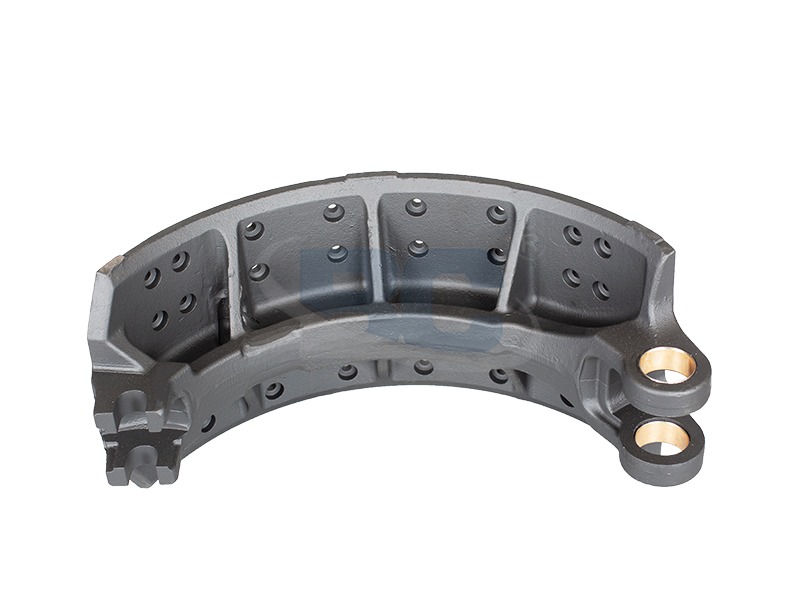 Custom 4515 Casted Brake Shoe OEM Manufacturers, Exporter, CompanyZhejiang Bangchi Auto Parts Co., Ltd. Is China Custom 4515 Casted Brake Shoe OEM Manufacturers, Exporter, Company, Part No:4515 OEM No: S...View Product →
Lined Assemblies, Separate Linings, and Repair Kits
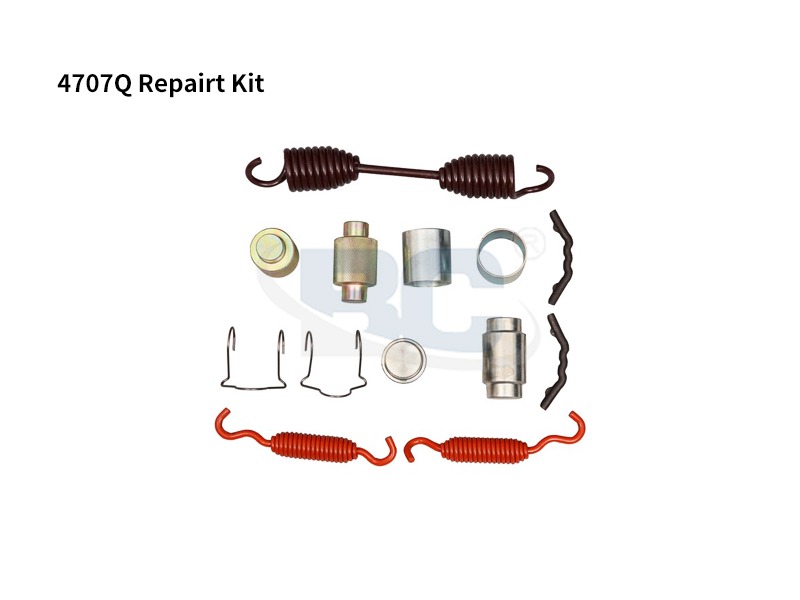
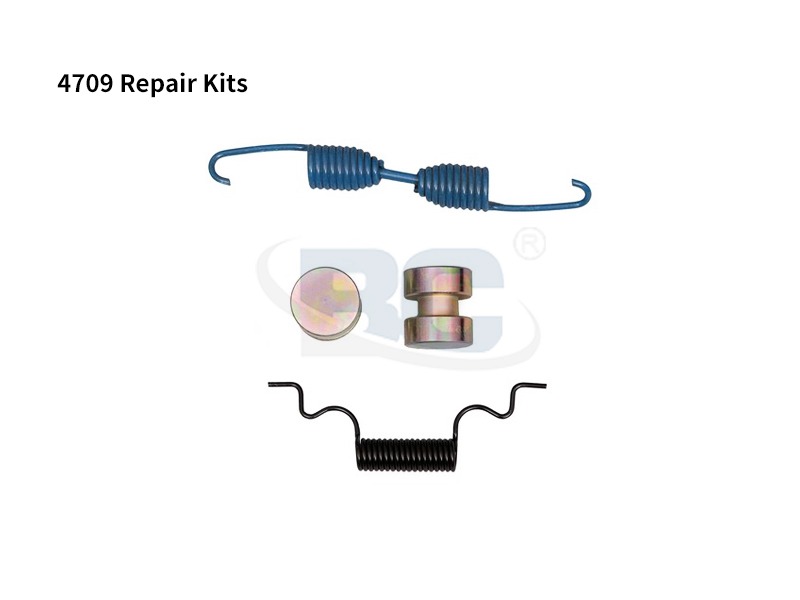
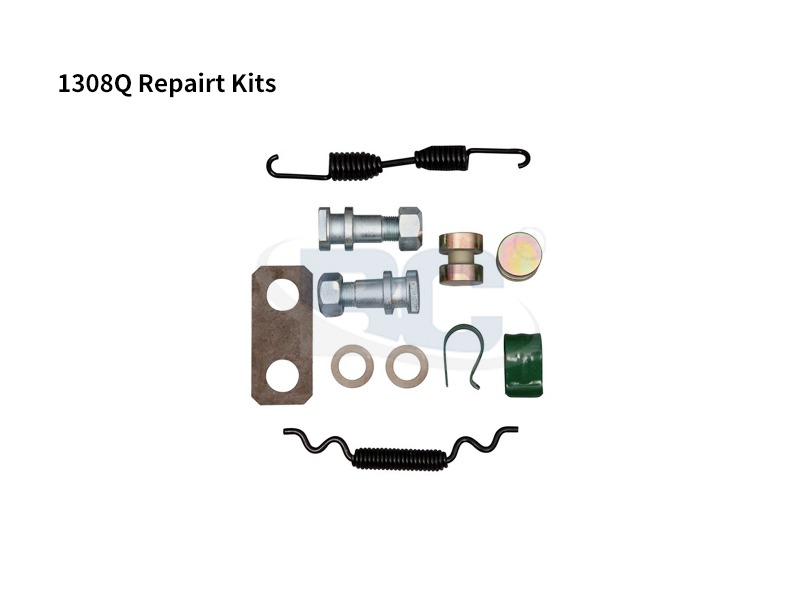
Another decision is the product format. Bare steel shoes give you flexibility but force you to handle lining riveting, which requires the correct tools and quality checks. Pre-assembled lined brake shoes come from the factory with the lining already attached, cured, and ready to mount on the vehicle; this format is popular with distributors who serve workshops that do not operate their own riveting equipment. Lined shoe kits and brake shoe repair kits extend the same convenience to hardware: they include the shoe, lining, and the related springs, retainers, and adjuster components in one box. A distributor who stocks assembled products reduces the chance of a workshop ordering the wrong loose components and makes the return process easier to manage. If you are new to sourcing lined components, reading how brake linings and brake shoes differ helps clarify which product form your customers actually need.
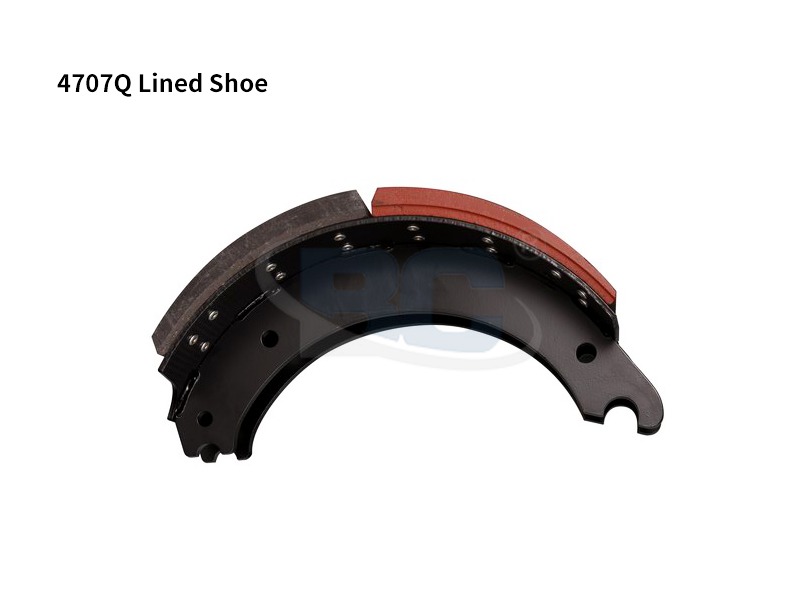 Custom 4707Q Lined Brake Shoe OEM Manufacturers, Exporter, CompanyZhejiang Bangchi Auto Parts Co., Ltd. Is China Custom 4707Q Lined Brake Shoe OEM Manufacturers, Exporter, Company, Part Number:4707Q Prod...View Product →
Audit the Manufacturer's Quality System and Production Discipline
Buying wholesale is a partnership with a factory. The quality of a single sample tells you little if the factory cannot repeat the same result across 10,000 pieces. Inspection time, returns, and lost customer trust all count as cost, so the supplier's process discipline is a purchasing criterion, not a technical detail.
Certification and Dimensional Tolerances
Look for a plant that works under a recognized automotive quality management standard. A manufacturer operating under IATF 16949 is expected to control its processes, document deviations, and trace materials in a structured way. In practice that means the brake shoe table width, arc radius, hole positions, and lining thickness stay within the tolerances of the original part. You can verify this by requesting a dimensional report on the sample and comparing it with the OE drawing. A manufacturer's company profile will show the scale of the operation, the maturity of the production line, and the quality system behind the products. If the profile says nothing about process control, ask directly for quality documentation.
Batch Consistency and Corrosion Protection
Brake shoes sit in warehouses and containers for weeks before they reach the end user. If the metal parts arrive with flash rust, the product looks old and the customer loses confidence. Check that the supplier applies a proper rust-prevention treatment and that the packaging protects the friction surface during transport. Also ask about the proportion of parts that are reworked or inspected before packing; a supplier who already inspects every batch internally saves you from discovering defects in your own quality check.
Compare Total Cost and Supplier Capability, Not Unit Price Alone
The invoice price is only one part of the total cost. You also pay for inspection time, returns, lost customer trust, and the freight of replacement orders. A slightly higher unit price from a disciplined manufacturer is usually cheaper than a rejected container from an unknown source.
Production Capacity and Customization
For a wholesale program to be stable, the factory needs capacity that matches your order pattern. A manufacturer producing millions of brake shoes per year can absorb seasonal peaks without moving your delivery date. If you serve special platforms, the same manufacturer can develop dedicated products from drawings or samples; this is common for private-label programs and non-standard axle applications. Confirm the minimum order quantity, the lead time for stock items, and how long engineering confirmation takes for a custom part.
Samples, Documentation, and Communication
Before committing to a full container, order samples and install them on a test vehicle or a bench. Confirm the marking on the product, the packaging labels, and the documents that will accompany the shipment. A supplier that answers technical questions in clear language is also more likely to solve a problem quickly when it appears. When you have the complete part information, contact the manufacturer directly with your FMSI numbers and axle details; a direct line to the engineering team removes the ambiguity that leads to wrong orders.
| Area | What to Check | Why It Matters |
|---|---|---|
| Application | FMSI number, OE reference, dimensions, generation, air/oil version | Prevents sending the wrong part to a customer |
| Friction material | Coefficient of friction, temperature range, drum compatibility | Prevents overheating, fade, and drum wear |
| Shoe construction | Stamped vs. casted, lined vs. unlined, repair-kit format | Matches workshop capability and end-user demand |
| Quality system | IATF 16949, dimensional report, corrosion protection | Ensures batch consistency and shelf condition |
| Supplier capacity | Production volume, MOQ, lead time, customization | Keeps delivery stable and supports private label |
Brake shoe linings are a safety-critical purchase, and the wholesale buying process should reflect that. When you match the exact application, choose a verified friction material, select the right construction, audit the supplier, and calculate cost across the full service life, the price per piece becomes less important than the reliability of the product and the professional support behind it. That combination is what keeps a wholesale program profitable.